
The impact of mass migration of non-EU people on the French culture and society and its consequences for European security
03.11.2015The summer of 2015 is likely to remain one of the last wake-up calls for Europe, as it is confronted to the challenge of an unprecedented unmanaged mass migration from the South. The media have widely covered the terrible plight of the migrants on overburdened ships in the Mediterranean. However, beyond the humanitarian crisis, we are also witnessing an existential challenge to the future of Europe and its security.
1. For the entire summer, scores of migrants have been pouring into Europe, through the Agean Sea on the island of Kos, through southern Italy and on the mainland through the Balkans, from instable or war-torn countries like Libya, Syria, Iraq, Afghanistan, Sudan, Somalia, Eritrea, Mali, but also from a number of African countries. Few stay in the EU countries they are able to enter first. Most want to reach France, Germany or Britain.
When I was Minister for Europe, in July 2009, I visited Greece to discuss the migration challenge. The Greeks already admitted back then they were overwhelmed, with a 150 000 illegal migrants, mostly flowing from Turkey, caught every year. Arguably, and according to Athens’ own estimate, probably the same number at least was able to make it to mainland Europe and the Schengen space formed by the EU member countries which agreed to abolish boundaries amongst them. Efforts had been or were being made at that time, like the thickening of the mainland border with Turkey, cooperation initiatives with Ankara and Tripoli (in 2010, Italy prided itself for securing from Gadhafi an interruption of the migrants’ flow from Libya in exchange for significant funding), the Frontex agency was being reinforced.
All of this seems far overtaken by events right now. The flux of migrants through the Agean is stronger than ever, flows from Libya, Tunisia, Morocco or Egypt and the Middle-East have considerably increased since the Arab revolutions. The whole southern flank of Europe is overwhelmed by migrants, from Turkey and Greece to Italy and Spain, but is only a transition zone to richer or socially more generous countries.
Numbers have tripled in a year, since 2014. In the very heart of Europe, non-EU states became gateways for illegal migration : Macedonia and Serbia have proved unable or unwilling to take measures to stem the flow, triggering Hungary, the first access to the Schengen space north of the Balkans, to erect a wall on its border with Serbia, after having seen 140 000 illegal migrants crossing it recently. Worse even, each and every European government declines responsibility, accuses other EU countries for being indifferent to the challenge they are facing and asks for the establishment of quotas of migrants whilst often forgetting to acknowledge the increasing burden implied for the countries the migrants intend to reach in the first place. Germany has just announced it was preparing to face an explosion in the number of asylum seekers, from 200 000 to at least 450 000 and probably closer to a million. France is overwhelmed as well and scores of migrants wishing to reach Britain have are concentrated around Calais, next to the Eurotunnel.
This is not a sustainable trend for our countries. Immigration is now seen as an existential threat by most Europeans. The latest EU-barometer poll published by the European Commission in July shows that for all EU national public opinions, immigration has become the top one concern (at 38% in average, from 24% in November 2014), superseding the economy (27%) and employment (24%). Numbers vary (maximum ratings are reached in Malta -65%-, Germany -55%-, Italy-43%- and France -34-) but immigration remains the top one concern. The same poll suggests the concern is only linked to non-EU immigration and a majority of Europeans remain attached to the free movement of people, goods and services.
This is not only a provisional feeling linked to dramatic current events over the summer, but indeed the outcome of a longstanding anxiety and exasperation toward a phenomenon considered less and less controlled and managed by the public authorities and more and more associated with threats which are no longer only economic (employment) but also of a security (organized crime, terrorism) and cultural and identity nature:
- important criminal networks have specialized over time in human trafficking, making a lot of money on the many candidates to illegal immigration to Europe and putting their lives at high risk as we saw again this summer on the Mediterranean and the 71 dead in Austria ;
- like Gadhafi in the past, ISIS, now also settled in parts of the Libyan coast, intends to use and exploit, as it openly admitted it, migrants like a tool or a weapon to destabilize our European democracies, using their values and the rule of law to their own advantage. Candidate countries to EU membership like Turkey, Serbia or Macedonia also play the card of illegal migration to push their case (“help us deal with the flow by taking us on board, otherwise it will be chaos”).
- some terrorists, like Ayub al-Khazzani, the Moroccan jihadist who attempted the attack on the Amsterdam-Paris Thalis train in August, have been able to use the freedom of movement in Europe to get closer to their targets.
- the sensitivity of the topic is naturally linked to the fact that most of the migrants we are talking about are Muslims, in a context where religious and cultural integration has become a particularly difficult subject in European societies torn between diversity and national identity, democratic values and the rule of law, the rhetoric about personal and minority rights, secularism and religious demands often influenced by the turmoil in the Muslim world (the assault of Wahhabism on Muslim communities worldwide, the Arab revolutions, the conflicts in Syria, Iraq, Libya, Afghanistan, the Northern Caucasus, the Sunni/Shia divide, the Israeli-Palestinian peace process…).
In other words, the migration and demographic challenge faced by Europe puts our governments before a moment of truth.
In a very clear and lucid essay published in 2009, Reflections on the Revolution in Europe – can Europe be the same with different people in it? FT journalist Christopher Caldwell went to the core of the European problem with immigration: most national public opinions can blame their governments for not having tried to build a straightforward consensus on immigration. This is one of the big differences with North America, especially Canada.
This also explains the dangerous rise of European populist parties. In France, with the 2017 general election approaching quickly, continuing to ostensibly ignore the growing anger and hostility to immigration in our public opinion amounts to political suicide and a possible accession to power by Marine Le Pen’s Front National, which currently represents a good quarter of French voters and claims to be the first French party since its victory at the European parliamentary election in May 2014.
2. France is indeed a case in point in the European problem with immigration.
- Immigration to France remained essentially European until the 50’ and 60’ but was replaced since by an immigration originating mostly in Northern and Sahelian Africa. Africa is a continent which still has to undergo its demographic transition: distant only about 15 km from the closest European shores (id one discounts the Spanish exclaves of Ceuta and Melilla), Africa is therefore one of the main human reserves in the world, with over a billion people. Political instability, chronic conflicts, underdevelopment combined with the proximity of a much richer but demographically weaker Europe will further lead to ever more massive movements of people from South to North. Because North Africa and sub-Saharan Africa were once part of France or its colonial empire, France is the destination of choice.
- Because it is massively Muslim, i.e. culturally substantially different, this immigration has proved particularly challenging for the French national identity and political consensus. In accordance with its historic tradition, France was able to encourage the effective assimilation of European, mostly Christian and Jewish immigrants. But exactly when a culturally more different, more demanding population started to flow in, the 1968 ideology based on cultural Marxism and community rights had hit and assimilation was abandoned in favour of the apparently more liberal, but in effect much less efficient and fair “integration”. As France’s population transformed profoundly and substantially, this shift led to the division of the society along cultural fault lines, with self-oriented communities living next to each other in growing defiance and fear, around different social, religious, vestimentary norms and different languages. These realities are obfuscated in the French public debate. Suggesting that different cultures do not justify different treatment is often branded as “racist”.
- Immigration to France doesn’t match the needs of the French economy: it has become for the most part linked to asylum and family regrouping. Of the 200.000 foreigners settling in France annually (this doesn’t include the very many clandestines who soon get residency as « sans papiers ») only 7% are linked to labour, the rest living on different welfare subsidies. In 2012, only 16.000 residency permits were granted on the basis of a work contract, while the bureaucracy issued 51.000 transcriptions of wedding contracts concluded abroad, twice the number of 10 years ago. This is all the more unsustainable as the French economy doesn’t create sufficient growth.
Add to this the attraction created for migrants by an excessively generous French social/welfare system: in France, any foreigner can, almost unconditionally in contrast to French workers and taxpayers, benefit from medical care without limits or constraints, thanks to the “State medical aid (AME)”, for an annual expenditure of one billion euros in 2014; periodical “regularization” of illegal migrants, easy access to citizenship, to social and family allowances, to the schooling of children and many other “rights” (housing, free public transport) are significant factors of attraction for migrants.
It should therefore be obvious that such a situation, with a migration flow of unprecedented duration and numbers puts the French social system on the brink of collapse. And because this flow didn’t occur during but after the “glorious thirty”, it actually shows that the famous “French integration model” Gallic politicians are so proud to talk about is not only overwhelmed but appears to be a simple myth.
-there is no longer a clear picture or a control by the French State of the realities of immigration: until the 1990’ the official figure of the number of foreigners was described as “stable” at around 3 million people, an inaccurate assertion given the comparable numbers, each year, of the legal newcomers and the foreigners granted French citizenship (around 150.000 people). The increase in the number of immigrants has probably been around two million every ten years over the past four decades, not taking into account the persons born since in these families.
But this is only a vague assessment, as in France, despite a wide practice around the world and criticism by UN Human rights bodies, it is considered unconstitutional to take into account ethnicity and the cultural or religious background when conducting a census of the population. This is linked both to the ideal of the French Republic (whereby a French citizen is only defined by its belonging as an abstract individual to the French nation, while denying any religious or community affiliation) and the infamous racial laws passed under Nazi occupation by the Vichy government in 1941).There is therefore no official way for the government to get a clear picture of the current composition of the French population and manage its immigration policy in an informed way.
Not only is that irresponsible (countries like the United States, Canada and Australia, use or have used quotas), it is also dangerous: the absence of a clear picture results in strengthening fears about the “great replacement” or the “Islamisation of France”; the negation of cultural and religious differences has a paralyzing effect on public policies, be it on the issue of the wearing of the niqab, the halal meals in schools, the separation of men and women in swimming pools or of the Muslim representative institutions.
In the past, the French state was able to get the Christian and Jewish religious institutions to accept the rules of the « laïcité » (broadly speaking the neutrality of the State and the separation of religion and politics). But the more recent attempts to do so with Islam have only resulted in bodies of disputed legitimacy and strongly influenced from abroad. Salafism and Wahhabism are prospering in France thanks to foreign foundations which favour an interpretation of Islam contrary to African practice as well as to the « Islam of France » which we should be encouraging. The result is an increasingly fragmented and violent French society: on one side, an alienated Muslim French youth, prone to rebellion against the French government, to the hatred of Jews and Christians and to radicalization and jihadism, especially on social networks and in prisons (where 80% of inmates are Muslim) with a growing number of volunteers (in the 2000) joining the Islamic state and different Islamist terrorist groups. As a consequence, anti-Arab and anti-Muslim xenophobia is on the rise.
This worrying situation and its mechanisms have been well analysed by my fellow citizen and Islam specialist Gilles Kepel. In a nutshell, a large part of the French society sees their country as beyond recognition and consider immigration as a symbol of the loss of control over the national destiny, over our collective identity and as an injustice given the social difficulties, as well as a security threat. For how much longer will the French society be able to take these divisions before a violent dislocation occurs? This is the current concern.
3. Under such circumstances, what should we do? It seems to me impossible and highly dangerous that the French government and the political class could further ignore the very subject around which the general election in 2017 will be decided. It is high time my country faces its own responsibilities at all levels:
- the first imperative is to politically change our mindset and part with the denial and powerlessness complex in which France has for too long been locked under the twofold pressure of the left (which has an electoral interest in both wooing immigrants and minorities and having the far-right rise at the expense of the conservatives) and a xenophobic and narrowly nationalistic. In other words, we have to get real. This means also being able to make the distinction, as much as we can, between real refugees, whose protection is prescribed by the Geneva conventions, and ordinary migrants.
- the second is to stop believing the European Union can bring ready solutions or is always part of the solution: a European asylum policy, very much talked about of the summer, already exists, doing more as some advocate will not be possible short a federalization of the EU; the Schengen agreement is, to say the least, not a success (I’ll come back to it later); the FRONTEX agency can ask for more means (though budgets do not exist to fund a mutualized border-guards and costly technological surveillance systems and coast-guards), but its role is limited to support member-states, not to substitute them; development possibly, now mainly in the hands of the EU, was never able to do enough to help stabilization in Africa and the Middle East in a sufficient way; more fundamentally, immigration is not the easiest subject for a cooperative approach amongst EU member states, as I already underlined. EU Summits won’t change this reality. Compulsory national quotas of refugees/migrants (instead of skilled workers), “hotspot” emergency camps, even lists of countries of designated origin (to accelerate the sorting out of asylum claims according to the country of origin) will be no more than short term, symbolic and deeply unpopular measures. Furthermore, the elaboration of a common policy would take too long to be agreed and would result in the usual measures permitted by the confrontation of national interests.
It is only by retaking national control over migration flows to France that we can hope giving a new trial to the integration process of our immigrants:
- First, by abolishing the senseless decisions made by the socialist government which only exacerbated the situation. Strong only in words, the current Valls government has reduced by 23% the number of expulsion of illegals from the French territory. At the same time, the “regularisations” (euphemism for granting permanent residency to illegal migrants) have increased by +30% to 46.000 residency cards granted in 2013 (+16.000 over a year) while 70.000 additional undeclared migrants (6.200 a month !) arrived. The same trend can be observed for the granting of citizenship: 100 000 citizenships are now granted every year, in contrast to 46.000 in 2012. Also, the generalization of the plurennial residency permit has contributed to the explosion of the number of asylum seekers to 60.000 in 2013, a doubling in seven years.
- Second, the legislation pertaining to migrants should be toughened and appropriately enforced: helping illegal immigration should again be considered a criminal offence, as it was until the socialist government changed this principle in 2012. Illegal border crossing should be sanctioned as a criminal offence as anywhere else in the world (the Schengen space has encouraged irresponsibility). Regularizations should be terminated, non-refugees illegals should be systematically expelled, citizenship should no longer be granted quasi automatically. Convicted and jailed foreign criminals should be expelled at the end of their reclusion (the so- called “double peine”); foreigners considered a threat or a risk to national security or with a criminal record should be banished. French national terrorists or would-be terrorists must be stripped of their citizenship when they are dual nationals, following the recent example of Canada. Finally, France should adapt measures such as those developed in Britain by the Cameron government in the framework of his « British first » policy: expulsion of illegal migrants before any appeal in court; obligation for the landlords to document and declare the residency rights of their tenants; prevent banks to open accounts to illegal residents; sanction of bogus school inscriptions; grant of housing aid only two years after the arrival of the legal migrant.
- Third, the criteria of our immigration policy should be revised: the priority should be to encourage an economic immigration based on the expressed needs of the French firms as well as on the professional skills and experience of the applicants. Family regrouping and asylum (on the basis of a better recourse to the list of countries of designated origin) should be carefully reviewed and reduced. Other liberal democracies like Canada have done so in recent years. It is by adopting a generous family regrouping policy in 1976 that France went overnight and with no democratic mandate from a time-limited work-related immigration to massive and standing settlement immigration.
The annual flux of 200,000 immigrants to France (not including the 70,000 illegals) for the past 40 years is a direct effect of this decision. I believe time has come to considerably reduce or cut this policy, like Canada did for instance. It will be more difficult for us to do it, as this will inevitably raise compatibility issues with EU legislation, including the European Court of Human Rights which has promoted a way too generous and unrealistic interpretation of article 8 of the Convention. It is nevertheless indispensable if France is to go back to workforce immigration. Family regrouping would become the exception, to the benefit of some professional categories of immigrants settled in France for a long time.
Putting in place at last the possibility of an ethnic, cultural, religious and geographical population census, if needed through a referendum, will help the assessment and understanding of immigrants’ needs as well as to put our immigration policy back on its (economic) feet.
- Fourth, we need to stop encouraging the flow of migrants to our countries by reviewing our misleadingly attractive social policies and safety measures. France is probably the top attractive country in Europe for migrants because of its welfare state. Given the state of our economy, of our social deficits, maintaining such a system is suicidal: not only does it trigger and encourage mass immigration; it is also seen illegitimate by French taxpayers who fund it and have become convinced the French welfare state is a one-way street benefiting unemployed foreigners rather than French workers. No wonder Central and Eastern European countries refuse quota systems for the dispatching of migrants: why should they share the burden of the consequences of our social system? Social entitlements should be reserved in priority to nationals. Again, the model of the recent Canadian reforms in 2014 comes to mind. The money saved on subsidies could be reinjected in development or military deployment actions. Italy provides another example in a different field: in 2013-2014, Rome put in place a rescue system for migrants relying on its navy, « Mare Nostrum », for a monthly cost of 9 million euros; the effect was immediate; within the year, the number of migrants went from 30.000 to 160.000.
- Fifth, managing migratory flows should become a major consideration for the EU external policy and for NATO, not only in the development and humanitarian aid fields but also for expeditionary operations, whatever their political framework is. Military intervention is sometimes necessary, like today against ISIS in the Middle-East. As I am finishing writing this article, a poll shows 55% of the French in favour of an armed intervention against ISIS, including on the ground. But in order to succeed in creating acceptable stability conditions for the population to stay, such operations must be sufficiently planned, prolonged, equipped and funded. They also must rely on a realistic strategy. Countries like France, Britain or the Netherlands must benefit from the solidarity of the other EU states commensurated to the solidarity these states could in turn benefit in dispatching refugees.
- sixth, the Schengen agreements needs reinforcing and reviewing : they were concluded at a time when mass immigration had not taken the dimensions it took since ; moreover, these agreements were designed first and foremost for European foreign nationals themselves with a view to eventually comfort the freedom of movement within the European space following a federalizing logic. But they were built on an illusion: the belief that the neighboring countries, which would de facto manage our borders, would check on theirs as we would do ourselves.
There are two possibilities:
+ One is to renegotiate the Schengen agreements to limit them to the only member states actually able to efficiently manage their borders. In 2011, the access of Bulgaria and Romania to the Schengen space was delayed because of the risks linked inter alia to human trafficking. The participation of Greece in the Schengen space could today be put in question, as Athens admits not being able either to efficiently control its 15,000 Km sea borders or to stem the flow of illegals coming from Turkey. Italy and Spain continue to let migrants transit to France.
+ A second possibility is to resume the national control of our borders, which the Schengen agreements actually permit. Such a move will not suffice to respond to all challenges (returns of EU nationals from Syria, migration of Eastern European Roma) but it will compel each state to take its responsibilities. The core of the European freedom of movement of persons could be preserved for EU citizens through the instauration of an electronic system of identification inspired by the Nexus system which exists between the United States and Canada since their bilateral agreement on their common border back in 2011.
- Finally, in a consistent way with all ideas described so far, there should be a revision of the European and possibly international legislation on immigration and asylum. As Tony Blair argued in his memoirs a few years ago (A Journey), treaties and legislation in these fields are obsolete and more adapted to the world of 1945 which resuscitated them than to our present realities.
It is up to us to take inspiration from the methods and policies developed by other great democratic nations open to immigration in order to retake control over our national destiny, when confronted to unprecedented demographic changes at the confines of our continent. The leaders of European countries and institutions have a duty to be lucid and courageous on a sensitive topic which now requires a discourse of truth and a determined action. If they fail, populist governments estranged to any kind of European spirit and political liberalism might well take over and do it in a much more brutal way.
Tweets about us
#RigaConf TweetsAbout Riga
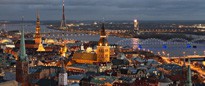
Founded in 1201, Riga offers its visitors a vast historical heritage and modern dynamism that is unparalleled.
 READ MORE
Contact Us

Ms. Katrīna Allikas
Contact person for speakers, official delegations & general issues
- [email protected]
- (+371) 22572285
- View Map