Download App


Agenda
Programme
- Day 1November 6, 2015
- Day 2November 7, 2015
- 15:00 - 15:10Welcoming remarks
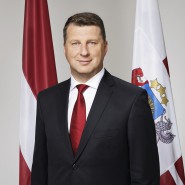
Welcoming remarks by H.E. Mr Raimonds Vējonis, President of the Republic of Latvia
Opening remarks by Mr Raimonds Bergmanis, Minister of Defence of the Republic of Latvia - 15:10 - 16:30RISE OF GEOECONOMICS
Europe has survived one of the most serious financial crises in its history. EU growth is low and unemployment remains discouragingly high in certain countries. How can the EU preserve its role and influence in the new geopolitical and geo-economic conditions? If Europe needs to strengthen its position in global markets, then an ambitious trade and investment agenda have to be implemented sooner rather than later. Closer engagement with EU’s strategic partners is instrumental for economic growth and Europe’s global position. The Trans-Atlantic Trade and Investment Partnership (TTIP) has both great economic value and geostrategic significance. How much will political considerations influence economic outcomes of the TTIP? Will the TTIP provide a future agenda for trade and investment ensuring a stronger position of the EU and the United States global markets? And what do we foresee with regard to other important economic and political powers, like Russia, India and China?
Speakers
H.E. Mrs Laimdota Straujuma, Prime Minister of the Republic of Latvia
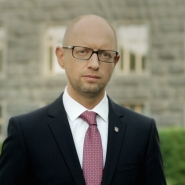
H.E. Mr Arseniy Yatsenyuk, Prime Minister of Ukraine
Mr Valdis Dombrovskis, Vice-President of the European Commission
Mr Anthony L. Gardner, U.S. Ambassador to the European Union
Moderator: Dr Daniela Schwarzer, Senior Director of Research, Director of the Europe Program at the German Marshall Fund of the United States - 16:35 - 16:55Coffee Break Conversation - THE EURO’S LIFELINE?
The re-election of the Syryza Party in Greece (Alexis Tsipras’ leftist party) was just one of the many upsets in the growing anti-Euro trend throughout the Eurozone. Euro value stagnation, ineffective management of smaller economies and reluctance to renegotiate all lend credence to rumours of a weakening Eurozone. However, actions taken have stabilized markets, as well as provided economic security for thousands of Europeans. What then is the future of the Eurozone? We assess the current state of this economic experiment, and if European unity will decide to stay strong in times of tribulation or collapse to economic needs.
Speakers
Mr Philip Stephens, Associate Editor, Financial Times
Ms Elisabeth Braw, Contributor, Politico / Newsweek - 17:00 - 18:30NATO IN DEFENCE OF GLOBAL STABILITY
There is a perception that NATO is now facing challenges to which it is ill-equipped to respond - the threat of hybrid war, waves of refugees, and the undiminished scourge of ISIL, the so-called “Islamic State”. For NATO, strengthening defence capabilities and showing that it is agile enough to act in real-time is imperative Russia’s aggressive military posture and on-going provocations mean that NATO’s Readiness Action Plan has to be brought up to a new level. What parts of the toolkit require adaptation to address the new reality? How well prepared are we to respond to conventional and asymmetric threats? What results can we expect from the Warsaw Summit?
Speakers
Mr Jānis Garisons, State Secretary of the Ministry of Defence of the Republic of Latvia
Dr Patrick Keller, Coordinator of Foreign and Security Policy, KOnrad Adenauer Foundation
General Sir Richard Shirreff, former Deputy Supreme Commander NATO Europe
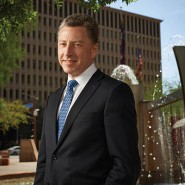
Amb Kurt Volker, Executive Director of The McCain Institute for International Leadership, Arizona State University
Moderator: Dr Žaneta Ozoliņa, Vice Chairman of Latvian Transatlantic Organisation, Professor of the Department of Political Science, University of Latvia - 18:35 - 19:15Coffee Break Conversation - CATCHING UP TO THE NEXT GENERATION OF WARFARE
As technology has evolved rapidly in the 21st century, so has the concept of modern warfare. Digital and remote forms of attacks blur the lines of conflict zones and the definition of combatants. 4th Generation Warfare (4GW) tactics are both desirable and feared, and act as a fission between Russian-NATO relations. With Daesh and others mastering 4GW, how can NATO quickly and effectively adapt to the new generation of warfare?
Speakers
Dr András Rácz, Senior Research Fellow, Finnish Institute of International Affairs, Finland
Ms Elīna Lange-Ionatamišvili, Senior Expert, NATO Strategic Communications Centre of Excellence - 21:00 - 22:30WHAT WILL BRING MOLDOVA AND GEORGIA CLOSER TO THE EU?
The 4th Eastern Partnership Summit in Riga reconfirmed the importance of the Eastern neighbourhood in EU foreign policy. While the EU membership perspective for Eastern partners with Association Agreements remained off the table, acknowledgement of European aspirations was reflected in the Summit Declaration. The EU currently faces numerous foreign policy challenges, including with respect to refugees as well as threats posed by ISIL and a revisionist Russia. Such constellations of circumstances mean that the EU could become distracted and lose its strategic focus on Europe’s East. How should Moldova and Georgia use the Eastern Partnership with the EU to ensure their common destiny and future together with the European Union?
Sessions are held under the “Chatham House Rule” and therefore will not be shown online.
Speakers
H.E. Ms Natalia Gherman, Deputy Prime Minister, Minister of Foreign Affairs and European Integration of the Republic of Moldova
Dr David Bakradze, State Minister of Georgia on European and Euro-Atlantic Integration
Amb Pirkka Tapiola, Head of the EU Delegation to Moldova
Mr Victor Chirilă, Executive Director of the Foreign Policy Association (APE), Moldova
Mr Kakha Gogolashvili, Director of EU Studies at the Georgian Foundation for Strategic and International Studies
Moderator: Roland Freudenstein, Deputy Director and Head of Research at the Wilfried Martens Centre for European Studies - 21:00 - 22:30BELARUS: A ‘SPECIAL CASE’ FOR WESTERN FOREIGN POLICY
The illegal annexation of Crimea, military operations in eastern Ukraine and recent economic difficulties have impacted Belarus’s perception of stability. While Russia’s financial support to Belarus has been reduced, Belarus has been searching for ways to warm up its connections with the
West. It provided a platform for the negotiations on Ukraine and released political prisoners. The Kremlin’s demand for opening of a Russian military airbase on the territory of Belarus has not received what could be described as an outpouring of public support and this move highlights the question of how much Belarus’s future is being shaped from within and without. Given then signs and tendencies toward increasing dependency, does Belarus really exhibit its own capacity to manoeuvre on foreign policy? With an eye to recent developments, have prospects for Belarus nonetheless improved for specific areas and aspects of cooperation with western partners?
Sessions are held under the “Chatham House Rule” and therefore will not be shown online.
Speakers
Mr Andrejs Pildegovičs, State Secretary of the Ministry of Foreign Affairs of the Republic of Latvia
Dr Alexei Pikulik, Academic Director of Belarusian Institute for Strategic Studies
Mr Balázs Jarábik, Visiting Scholar at the Carnegie Endowment for International Peace
Dr Pavol Demeš, Senior Non-Resident Fellow at the German Marshall Fund of the United States
Mr Andrei Sannikov, Coordinator, “European Belarus” civil campaign
Moderator: Dr Constanze Stelzenmüller, Robert Bosch Senior Fellow with the Center on the United States and Europe at Brookings - 21:00 - 22:30STRENGTHENING UKRAINE’S EUROPEAN ROOTS
Challenges to Ukraine’s sovereignty and integrity are the result of both its own internal weaknesses and external aggression. Russia has annexed Crimea, sponsored separatists and terrorists in Donbas and is doing things to purposefully inhibit and injure Ukraine’s economic potential. Ukraine has managed to withstand these assaults with some international support, but it’s in desperate need for more injections of international assistance. The Ukrainian government has managed to make important steps forward, but progress is still insufficient. The government’s administrative capacity has to be increased and corruption addressed vigorously to meet expectations of the Ukrainian nation.
The ruling coalition ought to be more focussed on European values, while Europe needs to do its part in provision of financing for national currency stabilization and elimination of the remaining EU import quotas on Ukrainian goods. What is not being done that must now be done to secure Ukraine’s European future?
Sessions are held under the “Chatham House Rule” and therefore will not be shown online.
Speakers
H.E. Mr Geoffrey R. Pyatt, Ambassador Extraordinary and Plenipotentiary of United States of America to Ukraine
Dr Peter Balás, Head of Support Group for Ukraine, European Commission
Ms Orysia Lutsevych, Manager, Ukraine Forum, Chatham House, the United Kingdom
Mr Oleh Rybachuk, Chair and Co-founder of Centre UA
Moderator: Ms Alyona Getmanchuk, Director of the Institute of World Policy, Ukraine
RC Views
Towards Reassurance and Solidarity in the Euro-Atlantic Community
Riga Conference Papers 2015 “Towards Reassurance and Solidar- ity in the Euro-Atlantic Community” is a collection of analytical articles compiled by the Latvian Institute of International A airs (LIIA) for The Riga Conference 2015.
26.01.2016
READ MORE
About Riga
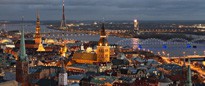
Founded in 1201, Riga offers its visitors a vast historical heritage and modern dynamism that is unparalleled.
 READ MORE
Contact Us

Ms. Katrīna Allikas
Contact person for speakers, official delegations & general issues
- [email protected]
- (+371) 22572285
- View Map