

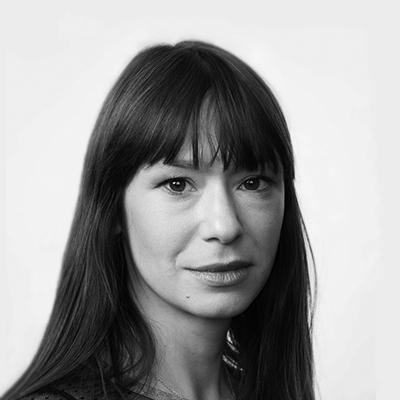
Prof. Benedetta Berti
Head of Policy Planning in the Office of the Secretary General at NATO
Dr Benedetta Berti is Head of Policy Planning in the Office of the Secretary General at NATO. She is also Associate Researcher at the Centre for Security, Diplomacy and Strategy at Vrije Universiteit Brussels, Visiting Professor at the College of Europe and a Senior Fellow at the Foreign Policy Research Institute. An Eisenhower Global Fellow and a TED Senior Fellow, in the past decade Benedetta has held research and teaching positions at West Point, The Institute for National Security Studies and Tel Aviv University, among others. Dr. Berti is the author of four books, including "Armed Political Organizations. From Conflict to Integration" (Johns Hopkins University Press, 2013). Her work and research have appeared, among others, in Foreign Policy, Foreign Affairs, the National Interest, the Wall Street Journal and The New York Times; as well as in Civil Wars, Democratization, Government & Opposition, Mediterranean Politics, the Middle East Journal, Parameters, Studies in Conflict and Terrorism, Terrorism and Political Violence. She holds a BA in Oriental Studies from the University of Bologna, and a MA and PhD in International Relations from The Fletcher School (Tufts University).
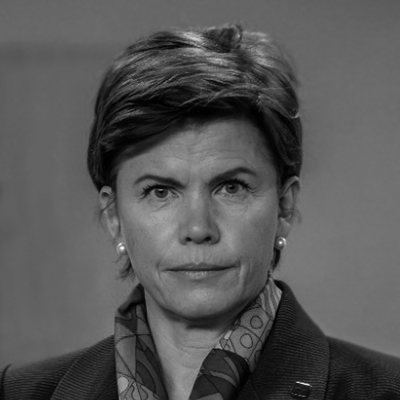
Baiba Braže
Assistant Secretary General of NATO for Public Diplomacy
Ambassador Braže advises the NATO Secretary General on issues within her remit, oversees the coordination of all Strategic Communications activities across all NATO civilian and military bodies and commands, and also directs all public diplomacy activities (except press and media, which are directed by the NATO Spokesperson on behalf of the Secretary General).
ASG PDD directs the Public Diplomacy Division (PDD), which plays a key role in conveying the Alliance’s strategic and political messages to opinion formers and to the public in general.
Baiba Braže was born in Riga, Latvia. She holds two Masters degrees from the University of Latvia: one in Law (1990) and another in Communication Science (2002).
Ambassador Braže served most recently as Latvia’s Ambassador to the United Kingdom (August 2016-early May 2020), prior to which she was Director General Security Policy and International Organizations (June 2011-January 2016) and Director General of the Communications Directorate (February 2016-July 2016) at the Latvian Foreign Ministry in Riga.
Ambassador Braže previously served as Latvia’s Ambassador to the Netherlands and Permanent Representative to the Organization for the Prohibition of Chemical Weapons (July 2003-August 2008), prior to which she was Director of the Europe Department, served as Foreign Policy and National Security Advisor to the Prime Minister in Riga. She has held numerous other posts since joining the Foreign Ministry in August 1993, both at home (Legal Department, International Organizations Department) and abroad (United Nations, New York).
In addition to Latvian, Ambassador Braže is fluent in English and Russian, and speaks Dutch proficiently.
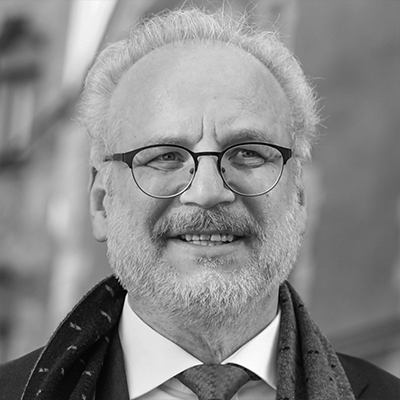
H.E. Egils Levits
President of the Republic of Latvia
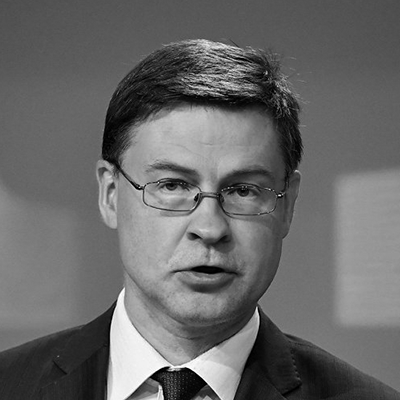
Valdis Dombrovskis
Executive Vice-President of the European Commission for An Economy that Works for People
Valdis Dombrovskis is Executive Vice-President of the European Commission responsible for an Economy that Works for People, also in charge of Trade (since October 2020). Before this, he was Vice-President responsible for the euro, social dialogue, financial services and the Capital Markets Union.
In Latvia, he was his country’s longest-serving head of government with three terms as prime minister. He served as Finance Minister, was a Member of the Latvian Parliament and elected twice to the European Parliament.
In his pre-political life, he worked as chief economist at the Bank of Latvia and before that, as a research assistant at Mainz University, at the Institute of Solid-State Physics in Latvia and the University of Maryland.
Valdis Dombrovskis was born on 5 August 1971 in Riga, and holds degrees in both physics and economics.
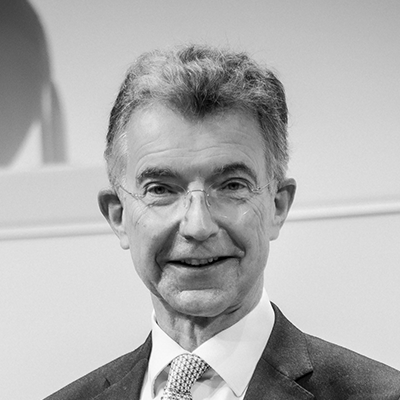
Amb. Christoph Heusgen
Chairman of the Munich Security Conference
Ambassador Christoph Heusgen has been Chairman of the Munich Security Conference (MSC) since 2022. He teaches Political Science at the University of Saint Gallen. Christoph Heusgen was Permanent Representative of Germany to the United Nations between 2017 and 2021. Prior to this appointment and since 2005, Heusgen was the Foreign Policy and Security Adviser to Federal Chancellor Angela Merkel. He served as Director of the Policy Unit for High Representative Javier Solana in the General Secretariat of the Council of the European Union from 1999 to 2005. Between 1988 and 1999, Heusgen served in various capacities at the Foreign Office in Bonn, including Deputy Director-General for European Affairs from 1997 to
1999. Heusgen is a graduate of the University of Saint Gallen in Switzerland, studied at Georgia Southern College in the United States, and at the Sorbonne in Paris.

H.E. Edgars Rinkēvičs
Foreign Minister of the Republic of Latvia
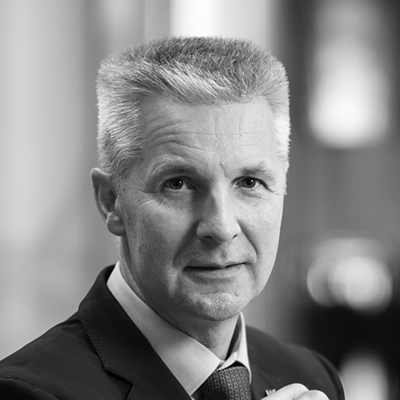
Dr. Artis Pabriks
Deputy Prime Minister, Minister of Defence of the Republic
Serving as Minister of Defence Dr Artis Pabriks introduced comprehensive national defence, which is designed to ensure security and crisis preparedness across all sectors, including preparedness for military conflicts. In 2004, he was elected as a Member of the Latvian Parliament and later as Minister of Foreign Affairs.
He served as a minister until 2007. From 2007 until 2010 he was a Member of the Parliament. In 2010 he became Minister of Defence and worked in that position until 2014, when he was elected as the Member of European Parliament. As an academician, the main fields of his research activity are political theory, ethnic policy, multiculturalism, and foreign and security policy. He is also the author and co-author of numerous publications on these topics. In 1996, Dr Pabriks became the first Rector of Vidzeme University College, later becoming a Professor there. He has been a Professor at Riga International School of Economics and Business Administration since 2010. He has also worked as a policy analyst and researcher in several NGOs.
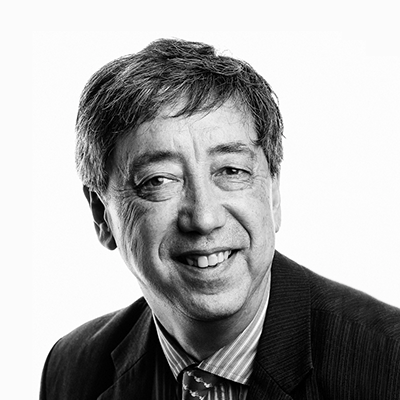
Bobo Lo
Independent International Relations Analyst
Bobo Lo is an independent international relations analyst. He is also a Nonresident Fellow at the Lowy Institute, Sydney; a Senior Fellow at the Center for European Policy Analysis (CEPA), Washington DC; and an Associate Research Fellow at the French Institute of International Relations (IFRI). Previously, he was Head of the Russia and Eurasia Programme at Chatham House, and Deputy Head of Mission at the Australian Embassy in Moscow.
Dr Lo has written a number of books, including A Wary Embrace: What the China-Russia Relationship Means for the World (Lowy Institute and Penguin Australia, 2017); Russia and the New World Disorder (Brookings and Chatham House, 2015); and Axis of Convenience: Moscow, Beijing and the New Geopolitics (Brookings and Chatham House, 2008).
Recent shorter writings include: ‘Turning point? Putin, Xi, and the Russian invasion of Ukraine’, Lowy Analysis, 25 May 2022; ‘The world that Vladimir Putin wants to see’, Australian Financial Review, 25 February 2022; ‘Masters of our fate: global order in the post-pandemic era’, Horizons, Winter 2021; ‘The Sino-Russian partnership and global order’, China International Strategy Review, December 2020; and ‘Global order in the shadow of the coronavirus: China, Russia and the West’, Lowy Analysis, July 2020.
Bobo Lo has an MA from Oxford and a PhD from Melbourne University.

Krišjānis Kariņš
Prime Minister of Latvia
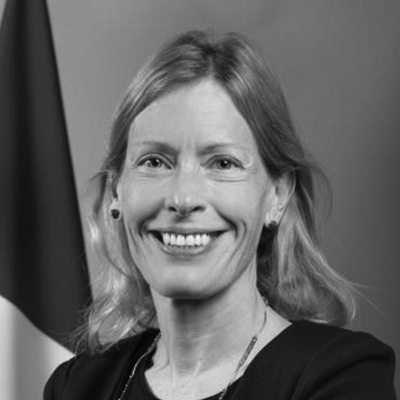
Alice Guitton
Director General for International Relations and Strategy, Ministry for the Armed Forces
Graduated from the Paris Institute of Political Studies in 1997 and the French National School of Administration in 2000, Alice Guitton began her career as Desk Officer for the United Nations and International Organisations Directorate (Ministry of Foreign Affairs, Paris) before being appointed First secretary at the French Embassy in the United Kingdom (London).
In 2009, she became Director for Democratic Governance at the Directorate-General for Globalisation, Development and Partnerships (Ministry of Foreign Affairs, Paris), then Member of the Cabinet of the High Representative of the European Union for Foreign Affairs & Security Policy/Vice-President of the European Commission (Baroness Catherine Ashton), and finally advisor to the Secretary General of the European External Action Service, Brussels.
From 2012 to 2015, she was Deputy permanent representative of France to the North Atlantic Treaty Organization (NATO) before being appointed Ambassador and Permanent Representative to the Conference on Disarmament.
In 2018, she is appointed Director General of International Relations and Strategy.
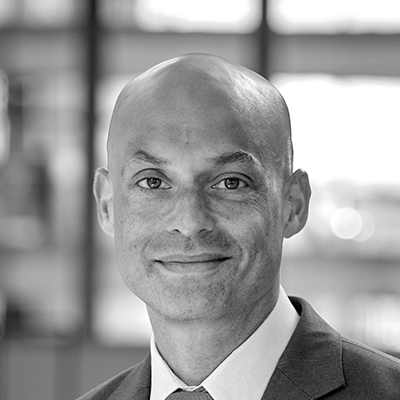
James Appathurai
Deputy Assistant Secretary General for Emerging Security Challenges, NATO
James Appathurai was appointed to this post in September 2021. As DASG, he works on policy development and implementation in the fields of Emerging and Disruptive Technologies, cyber security, counter-terrorism, the security implications of climate change, and hybrid defence. Mr. Appathurai previously served as DASG for Political Affairs and Security Policy, as well as Special Representative to Central Asia and the Caucasus. He was NATO’s Spokesperson from 2004 to 2010. He served as Deputy Head and Senior Planning Officer in the Policy Planning and Speechwriting Section of NATO’s Political Affairs Division from 1998 to 2004. He served in the Canadian Defence Department from 1994 to 1998.
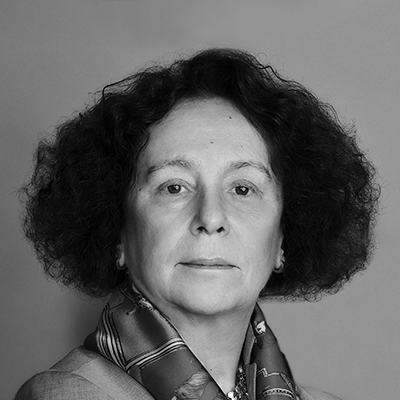
Ana Palacio
Former Minister of Foreign Affairs of Spain
Ana Palacio is an international lawyer specializing in international and European Union law. From 1994 to 2002, she was a member of the European Parliament, where she chaired the Legal Affairs and Internal Market as well as the Citizens Rights, Justice and Home Affairs Committees. Ana Palacio served as Minister of Foreign Affairs of Spain (2002-2004) and was a member of the Spanish Parliament (2004-2006) where she chaired the Joint Committee of the two Houses for European Union Affairs. She has been Senior Vice-President and General Counsel of the World Bank Group and Secretary General of ICSID (2006-2008). Palacio has been a member of the Executive Committee and Senior Vice-President for International Affairs of AREVA (2008-2009) and served on the Council of State of Spain (2012-2018).
Ana Palacio serves on various advisory and executive boards. She is a member of several think-tanks and organizations, such as the Executive Committee of the Atlantic Council of the United States, the European Council on Foreign Relations (ECFR) and the Elcano Royal Institute, among others.
Ana Palacio is a Visiting Professor at the Edmund E. Walsh School of Foreign Service at Georgetown University. She maintains a monthly column at Project Syndicate and is a recurrent participant and speaker at international conferences and fora.
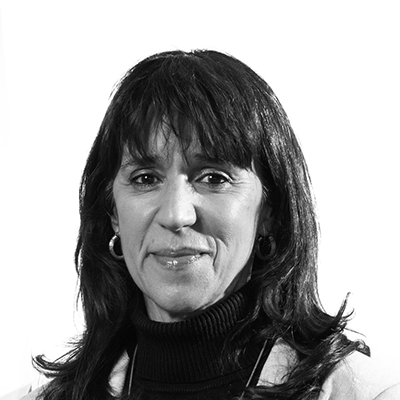
Helena Carreiras
Portugal’s Minister of National Defence
Helena Carreiras is the current Minister of Defense of Portugal.
She was director of the National Defense Institute between 2019 and 2022. She has been an Associate Professor with tenure at Iscte-University Institute of Lisbon, where she headed the School of Sociology and Public Policy between 2016 and 2019. She holds a PhD in Social and Political Sciences from the European University Institute in Florence. She was also deputy-director of the National Defense Institute (2010/2012), deputy director of the CIES - Sociology Research and Studies Centre (2015) and the IPPS - Institute for Public and Social Policy (2018/2019). She was also vice-president of the Research Committee on Armed Forces and Conflict Resolution of the International Sociological Association (ISA) and served as president of ERGOMAS (European Research Group on Military and Society) between 2016 and 2019. Her research interests are in gender and society, armed forces, civil-military relations, security and defense and research methodology. Her work has focused on gender integration in military institutions and gender aspects of international security. She is the author of Gender and the Military: Women in the Armed Forces of Western Democracies (Routledge, 2006) and co-editor of Researching the Military (Routledge, 2016), Qualitative Methods in Military Studies: Research Experiences and Challenges (Routledge, 2013) and Women in the Military and in Armed Conflict (Springer, 2008).
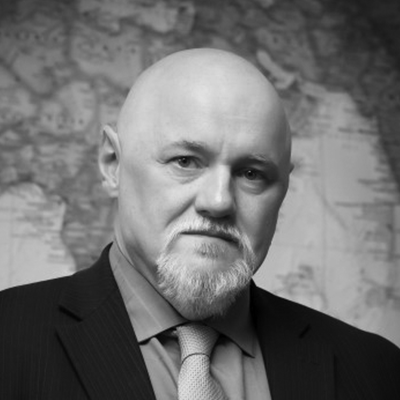
Claude Moniquet
Chief Executive Officer at The European Strategic Intelligence and Security Center
Claude Moniquet is a retired French journalist (working mainly with L'Express and Quotidien de Paris) and a former intelligence agent at the French Directorate-General for External Security (DGSE), operating extensively in eastern Europe and the Balkans.
He is the co-founder and director of the European Strategic Intelligence and Security Center (ESISC), a strategic analysis, economic intelligence and lobbying agency based in Brussels.
He began his career as a journalist specialising in eastern Europe, especially Poland. In the early 1980s, he was contacted by the DGSE due to his contacts in Poland. Until the early 2000s, he worked simultaneously as a journalist and an intelligence agent.
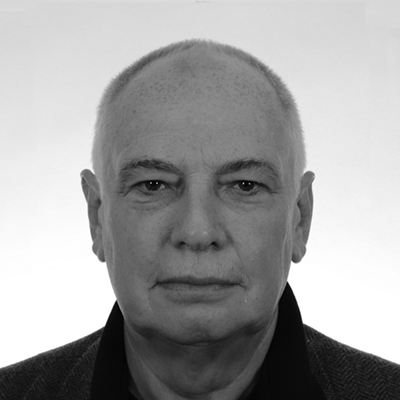
Prof. Julian Lindley-French
Chair & Founder of TAG – Geopolitics, Strategy and Innovation; Chairman of The Alphen Group
Professor Dr Julian Lindley-French MA (Oxon.), MA (Dist.), PhD.
Educated at the University of Oxford, UEA and at the European University Institute in Florence, Italy, Professor Dr Julian Lindley-French has four advanced degrees and has held three professorial chairs. He is a Distinguished Visiting Research Fellow at the National Defense University in Washington; Senior Fellow at the Institute for Statecraft in London; Director of Europa Analytica in the Netherlands; and a Fellow of the Canadian Global Affairs Institute and Chair of The Alphen Group, a high-level strategic ‘do-tank’ Thealphengroup.home.blog
In November 2017 he co-published the The Future Tasks of the Adapted Alliance with General John R. Allen, Admiral Giampaolo di Paola and Ambassador Sandy Vershbow. In March 2021 he will publish a major new book for Oxford University entitled Future War and the Defence of Europe with US General (Ret.) John Allen and US LTG (Ret.) Frederick (Ben) Hodges.
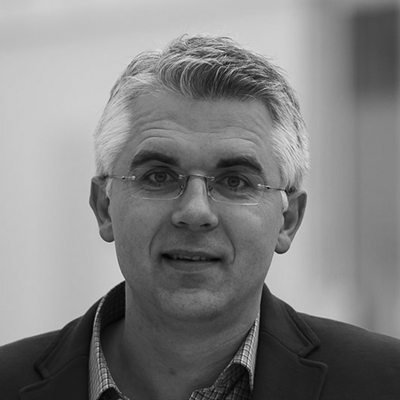
Dr. Ainius Lašas
Dean of The Faculty of Social Sciences, Arts and Humanities at The Kaunas University of Technology
Ainius Lašas is the Dean of the Faculty of Social Sciences, Arts and Humanities at Kaunas University of Technology. Before joining the university, he held a lectureship at the University of Bath (UK), a Senior Research fellowship at St. Anthony College, University of Oxford and a Postdoctoral fellowship at the United Nations University (Japan). His research focuses on informal political culture and its practices in transitional democracies.
By education and profession, Dr. Lašas is both a political scientist and a journalist. He is a regular contributor to the Lithuanian media, commenting extensively on regional and local political developments.
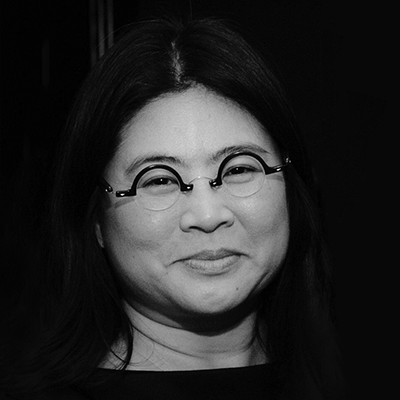
Mercy A. Kuo
Executive Vice President at Pamir Consulting, Columnist at The Diplomat
Mercy A. Kuo is Executive Vice President at Pamir, a global risk intelligence consultancy in metro Washington DC, and contributing author on US Asia policy at The Diplomat. She is a member of the National Committee on US-China Relations and Institute for International Strategic Studies. Dr. Kuo has held executive leadership positions as president and executive director of the Washington State China Relations Council in Seattle, managing director and research director at the Committee of 100, a US-China relations leadership organization in New York City, and director of the Southeast Asia and Strategic Asia programs at a US foreign policy think tank. She formerly served as an all-source analyst specializing in Northeast and Southeast Asian political, security, and military issues at the Central Intelligence Agency. Her select publications include “The China Factor in EU-US Relations: Fault Lines and Futures,” Security Policy Library, December 2019 Norwegian Atlantic Committee, “The Geopolitics of Energy in the South China Sea,” World Energy (Eni S.p.a), June 2019; and “China’s Strategic Orientation: Assessing Alternative Futures,” China in the 21st Century: History, Security and International Relations, Vol. 3 (Praeger 2014). She holds a Ph.D. in modern history from Oxford University and is proficient in Chinese, Polish, and Italian.
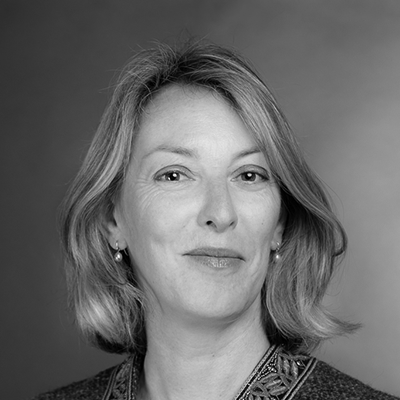
Prof. Suzanne Raine
Affiliate Lecturer at the Centre for Geopolitics at Cambridge University
Suzanne Raine writes and speaks on terrorism, risk analysis and warning.
She is a Visiting Professor in the Department of War Studies at KCL and works at the Centre for Geopolitics at Cambridge University.
She served for 24 years in the British Foreign and Commonwealth Office on foreign policy and national security issues, including postings in Poland, Iraq and Pakistan.
She specialised in counter-terrorism, holding a number of senior domestic appointments including Head of the Joint Terrorism Analysis Centre from 2015-2017.
She is also a member of the Board of Trustees of the Imperial War Museum, the Royal United Services Institute (RUSI) and Stop The Traffik, an NGO.
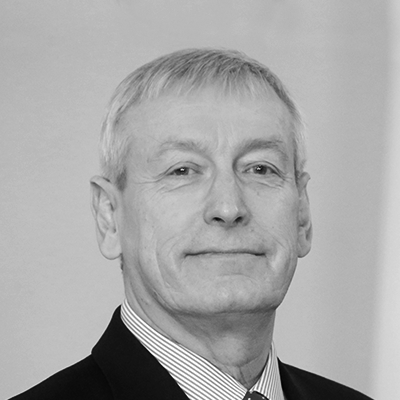
Jānis Kažociņš
National Security Adviser to the President of Latvia and Secretary of the National Security Council
Mr Kažociņš has been the National Security Adviser to the President of Latvia and Secretary of the National Security Council since January 2016. Born in the UK of Latvian parents, he served for 30 years in the British Army. He retired as a Brigadier in 2002 to live in Latvia. From 2003-2013 he was Director of Latvia’s external intelligence service. In 2011 he was Chairman of NATO’s Civilian Intelligence Committee.
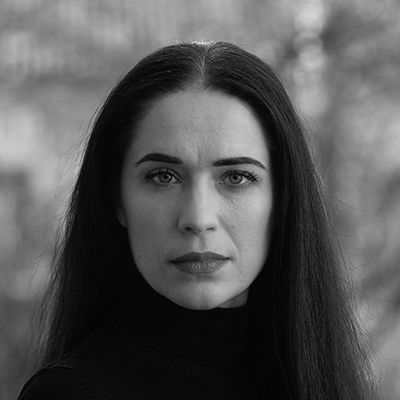
Dr. Hanna Shelest
Director of Security Programmes at the Foreign Policy Council "Ukrainian Prism" and Editor-in-chief at UA: Ukraine Analytica
Dr Shelest also is a non-resident senior fellow at CEPA (Washington DC). Before this, she had served for more than ten years as a Senior Researcher at the National Institute for Strategic Studies under the President of Ukraine, Odesa Branch. In 2014, Dr Shelest was a Visiting Research Fellow at the NATO Defense College in Rome. She had experience in PR and lobbying for government and business, as well as teaching at universities and defence academies. Dr Shelest was an adviser of the Working Group preparing Ukrainian Navy Strategy 2035 and was involved in working groups developing the Foreign Policy Strategy of Ukraine, Asian Strategy for MFA, and Ukraine's NATO Public Communication Strategy. She led different policy-related projects, including Scorecards of the Ukrainian Foreign Policy (2015-2021); Ukraine-NATO: Enhanced Level (2021-2022); The Hybrid War Decade: Lessons Learned to Move Forward Successfully (2019), etc.

Alena Kudzko
Vice President of GLOBSEC and the Director of the GLOBSEC Policy Institute think tank in Bratislava
Alena Kudzko is Vice President of GLOBSEC and the Director of the GLOBSEC Policy Institute think tank in Bratislava, where she oversees policy development, research, and programming in the areas of defence and security, the future of Europe, global order, technology and society, and strategic communication. Before joining GLOBSEC, she worked at various NGOs and academic institutions in Belarus, Estonia, and Hungary, specializing in the area of foreign relations, democratization, and community development. Alena graduated with honours and as the Outstanding Academic Achievement Award winner from Central European University in Budapest/Vienna with a Master's degree in International Relations and European Studies. She previously studied international politics, languages and music at California State University, Bakersfield (as a U.S. State Department Global Undergraduate Fellow), Belarusian State University in Minsk, and the Estonian School of Diplomacy in Tallinn.
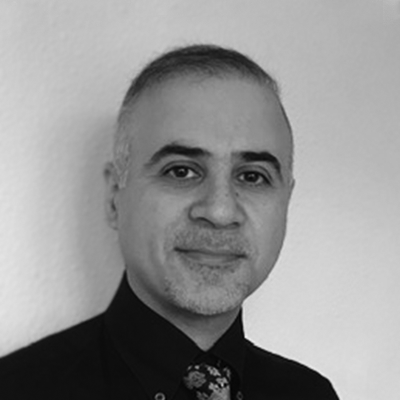
Dr. Seyed Ali Alavi
Lecturer in Near and Middle Eastern / Iranian Studies at School of Languages, Cultures and Linguistics, SOAS, University of London
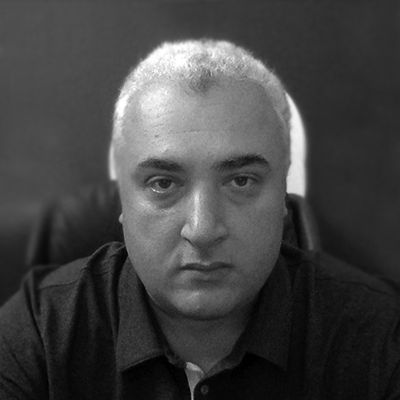
Dr. Sergi Kapanadze
Founder and a chairman of the board of a Georgia-based think – GRASS (Georgia's Reforms Associates)
Dr Sergi Kapanadze is a founder and a chairman of the board of a Georgia-based think – GRASS (Georgia's Reforms Associates). He is also a Professor of Peace Studies, International relations and European integration at the Ilia State University (Tbilisi) and a Jean Monnet Professor at the Caucasus University (Tbilisi). In 2016-2020 Dr. Kapanadze was a vice-speaker of the Parliament of Georgia from the European Georgia party. In 2015-2016 he was a member of the OSCE Panel of Eminent Persons on European security. Dr. Kapanadze has previously held the post of the deputy Foreign Minister (2011-2012) and other senior posts at the foreign service of Georgia, during which he led Georgian delegations in various negotiations with Russia, European Union and United States. He holds PhD in International relations from the Tbilisi State University (2011) and MA in International Relations and European Studies from the Central European University (2003, Budapest, Hungary). He was awarded a Presidential of Order of Excellence in 2011 and holds the diplomatic rank of Envoy Plenipotentiary.
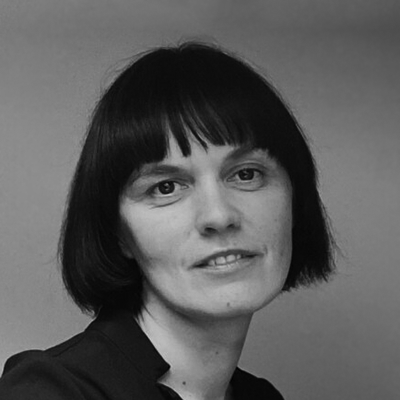
Dr. Tatsiana Chulitskaya
Senior researcher at the Faculty of Diplomacy and Political Science, Vytautas Magnus University (VMU) (Lithuania)
Tatsiana is a senior researcher at the Faculty of Diplomacy and Political Science, Vytautas Magnus University (VMU) (Lithuania). She got her PhD from the Vilnius University in 2014. From 2011 up till present Tatsiana also cooperates with the Belarusian informal educational project and think tank SYMPA/BIPART (Belarus) within which she is in position of an academic director and expert. Her research interests are public policy analysis, public administration reforms, civil society and civic participation in non-democratic regimes, reforms in the post-Soviet countries and Belarusian studies. She has been recently involved into several international research projects including: EU-STRAT project focused on Eastern Partnership (EaP) program analysis.
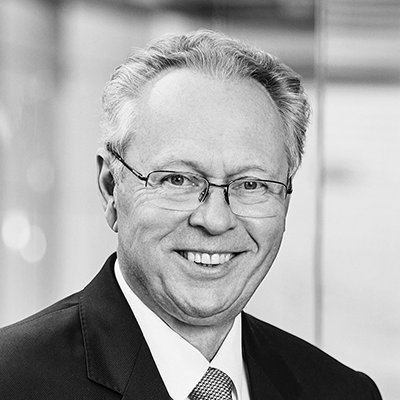
Dr. Juris Binde
President and CEO of Latvijas Mobilais Telefons
President and CEO of Latvijas Mobilais Telefons SIA since 1992, Chairman of Management Board since 2004, Professor of Vidzeme University of Applied Sciences. From 1987 to 1992 was Chief Technologist and Head of Technology Department in the Scientific Research Institute VEF. From 1978 - Industrial Association VEF as Engineer -Designer.
On 1978 graduated Riga Polytechnical Institute in the Specialty of Engineer Designer – Technologist of Radio Electronic Equipment (Mg.sc.ing, Dipl.ing). Improved his knowledge in year 2000 in Columbia University (USA). In 2007 graduated doctoral program in the University of Latvia with degree Doctor of Economics (Dr.oec).
Author and co-author of more than 40 scientific publications.
Vice-President of Latvia Information and Telecommuncation Association (LIKTA) and member of Latvian Employers Confederation’s Council.
Chairman of Advisory Council of The University of Latvia.
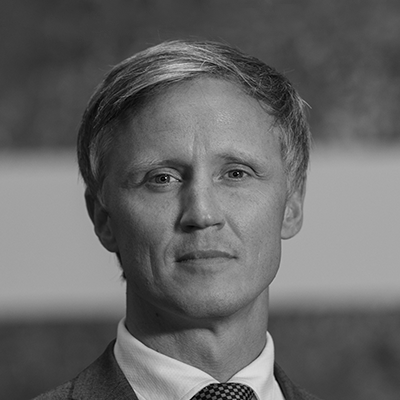
Rihards Kols
Chairman of Foreign Affairs Committee of Latvian Parliament
Rihards Kols is a Member of the Parliament of the Saeima (the Parliament) of the Republic of Latvia since his re-election in 2018. R.Kols serves as the Chairman of the Foreign Affairs Committee of the Saeima and as the Representative of the Saeima to the OECD.
He is also the Deputy Chairman of the political party ‘’National Alliance’’, guardsman at the National Guard of Republic of Latvia, member of the European Leadership Network and is a Millennium Fellow at Atlantic Council.
Prior to current duties, Mr Kols was the the Deputy Chairman of the Foreign Affairs Committee of the Saeima, a Member of the European Affairs Committee of the Saeima and a Member of the Parliament. R.Kols also served as the Parliamentary Secretary to the Prime Minister, Parliamentary Secretary of the Ministry of Culture of the Republic of Latvia, an international affairs analyst at the Latvian British Chamber of Commerce and an intern at the Royal Institute of International Affairs “Chatham House” at the Russia and Eurasia Programme.

Jānis Garisons
State Secretary of the Ministry of Defence of the Republic of Latvia
Jānis Garisons is the State Secretary of the Ministry of Defense of Latvia since August 2015. In this capacity, Mr Garisons is overseeing rapid defence budget and capabilities increase to prepare the country for the challenges it faces. In his previous position as the Undersecretary of State – Policy Director in Latvia’s Ministry of Defence, he was the architect and organizer of Latvia’s defence policy, defence planning and international operations’ policy, both nationally, and representing Latvia within the NATO, the European Union, and other international cooperation formats. He joined the Ministry of Defence after an
established career at the Ministry of Foreign Affairs of Latvia, where he served as the Director of the Security Policy Department. In his nine years of foreign service, he was dealing with arms control issues, Russia and CIS, and was posted as the First Secretary at the Embassy of Latvia in Oslo, Norway.
In 1996 he received a Master degree in History from the University of Latvia, and in 2014 he earned his Master degree in Strategic Studies from the U.S. Army War College. In 2007 he received the State Award of Latvia.
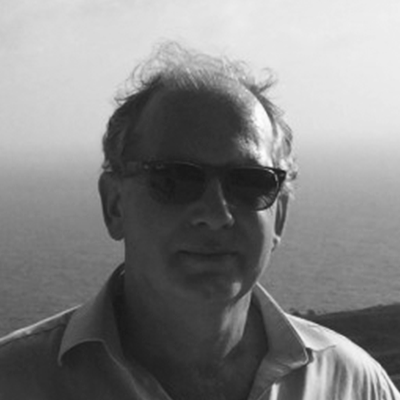
Tim Reilly
Research Fellow to the Centre of Rising Powers in the IR department at Cambridge
In 2016 Tim Reilly was appointed a Research Fellow to the Centre of Rising Powers in the IR department at Cambridge. Tim is a Russian speaker (Moscow State Institute of International Relations) and was earlier educated at Cambridge and Durham. His PhD at the Scott Polar Research Institute at Cambridge was concerned with the Sino-Russian geo-economic relationship in the Eurasian Arctic, and its links to the Pacific Arctic region, Space, including issues of governance and technology and the international political economy.
After serving in the Parachute Regiment where he served three years in the Arctic amongst other deployments, Tim worked as Government Affairs Adviser to Shell in the nineties, responsible for the CIS region. He later worked for Kroll as VP for Oil & Gas. Tim has spent over 25 years living and working in the CIS, including Russia, Ukraine, central Asia and the Caucasus. He regularly writes in the papers on Russian/ Sino-Russian and Arctic matters, in The Times, Financial Times, Wall Street Journal, La Tribune, etc.
Tim was called as an expert witness to both the UK’s House of Commons Environmental Audit Committee on the Arctic, and in 2015, the House of Lords Select Committee on the Arctic. Most recently he was an author of papers for the UK Parliament’s Defence Committee on UK Arctic defence policy, and for the UK’s Chief of the Defence Staff. Tim is an adviser to the MoD’s Arctic Network Assessment team, and now runs his own Arctic commercial consultancy; he also consults and lectures in Arctic/Polar matters at various UK/US Think Tanks/institutions, including Chatham House, RUSI, CNA, the U.S.’ Space Command, the MoD, and NATO (Rome, UK and Tartus) , as well as educational and commercial establishments in the UK, EU and U.S.
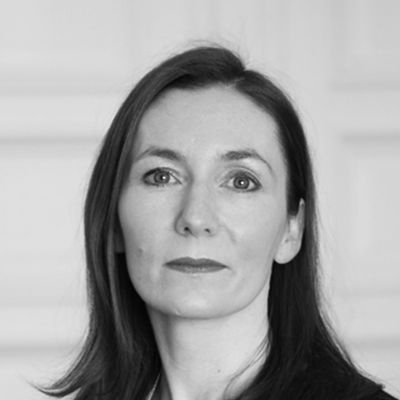
Dr. Claudia Major
Head of the International Security Division at the German Institute for International and Security Affairs
Dr Claudia Major heads the security policy research group at the renowned Stiftung Wissenschaft und Politik (SWP) in Berlin. She researches, advises and publishes on security and defence policy issues in Germany, Europe and in the transatlantic context. Her expertise lies in particular in the field of German security and defence policy and the classification of political events with reference to NATO and the EU.
Previous positions in her professional career include the Center for Security Studies at the ETH Zurich, the German Council on Foreign Relations (DGAP), the EU Institute for Security Studies (Paris), the NATO Department of the German Foreign Office and Sciences Po Paris. Claudia is also a member of various committees, such as the Advisory Board for Civilian Crisis Prevention of the German Foreign Office and the German-British Königswinter Conference. She holds a diploma from the Free University of Berlin and Sciences Po Paris and a PhD from the University of Birmingham (UK).
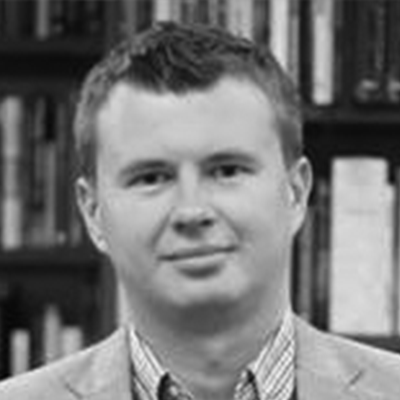
Dr. Aliaksei Kazharski
Researcher, the Institute of European Studies and International Relations of the Comenius University, Lecturer at the Department of Security Studies of Charles University in Prague
Dr. Aliaksei Kazharski received his PhD from Comenius University in Bratislava (Slovakia) in 2015. As a doctoral student, he spent time as a guest researcher at the University of Oslo (Norway), University of Tartu (Estonia) and the Institute for Human Sciences in Vienna (Austria). He has also been a visiting researcher at the University of Vienna and has worked as a researcher and lecturer at Charles University in Prague (Czech Republic) and Comenius University in Bratislava. Aliaksei’s doctoral dissertation was published by Central European University Press as a monograph in 2019 (Eurasian Integration and the Russian World: Regionalism as an Identitary Enterprise). He has also contributed to the work of regional think tanks and debate platforms such as the GLOBSEC Policy Institute and Visegrad Insight. Aliaksei’s main areas of research have been Central and Eastern Europe, Russia, regionalism and regional integration, and identity in international relations. He has published his scholarship on these subjects in Geopolitics, Problems of Post-Communism and other academic journals with an international impact.

Dr. Viktorija Rusinaite
Deputy Director of Community of Interest on Hybrid Influencing in Hybrid CoE in Helsinki
Viktorija Rusinaite, PhD is a Deputy Director of Community of Interest on Hybrid Influencing in Hybrid CoE in Helsinki. She is leading Deterrence project focusing on promoting skills for strategic approach to deterrence of hybrid threats. In the framework of this project Hybrid CoE holds table top exercises, events and publishes materials on different aspects of modern deterrence. Before joining Hybrid CoE, Viktorija served as Head of the European Security Program at Vilnius Institute for Policy Analysis (VIPA) and curator of the annual foreign policy and security conference ‘Vilnius Consultations’ in Vilnius, Lithuania.
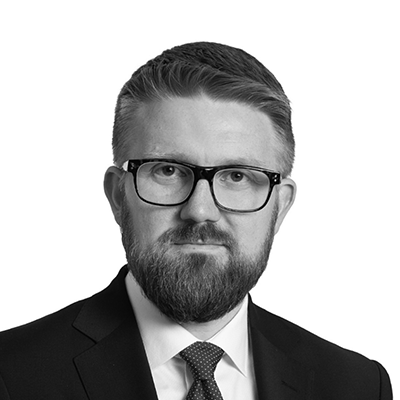
Eivind Vad Petersson
State Secretary to the Norwegian Minister of Foreign Affairs
Eivind Vad Petersson is the State Secretary to Anniken Huitfeldt, the Norwegian Minister of Foreign Affairs. He has previously been a foreign and defense political advisor with the Labour Party’s Storting group, as well as a diplomat at Norwegian embassies in South-Sudan, South-Africa and Germany. Prior to this he has worked as a trainee with the Norwegian Ministry of Foreign Affairs, and as a communications advisor at Universities Norway (UHR).
In 2007 he graduated with a master’s degree in European and international public policy at the London School of Economics. He also has bachelor degrees in international studies and European studies respectively, both from the University of Oslo. Petersson has held various positions of trust in the Labour Party at local and county levels, and has been the Deputy Chairman at the Norwegian Children and Youth Council (LNU).
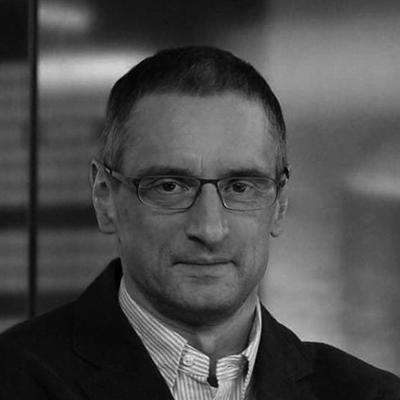
Prof. Sergei Medvedev
Professor at Briva Universitate in Riga, Affiliated Professor at Charles University in Prague
Sergei Medvedev is a professor at the Free University in Riga and Charles University in Prague, a Fellow at the Helsinki Collegium for Advanced Studies at the University of Helsinki, and a program host at Radio Liberty, Riga. Previously, he was Professor at the Higher School of Economics in Moscow, Russia, in 2004-2020. Before that, he worked at the Marshall Center for Security Studies in Germany, the Finnish Institute of International Affairs (Helsinki), the Stiftung Wissenschaft und Politik (Ebenhausen), the Istituto Affari Internazionali (Rome) and the Institute of Europe (Moscow). He is the author of numerous books, including the award-winning “Return of the Russian Leviathan” (Polity Press, Cambridge, 2020). His new book “A War Made in Russia” is forthcoming with the same Polity Press, Cambridge, in 2023.
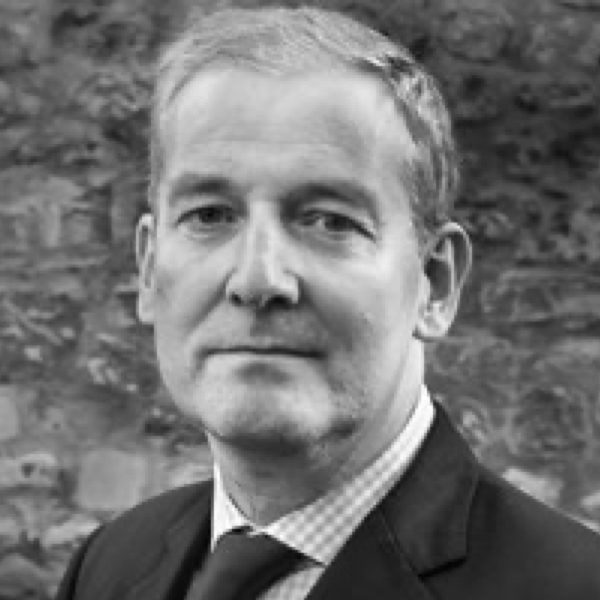
Nick Redman
Oxford Analytica’s Director of Analysis and the Editor in Chief of the Oxford Analytica
Nick Redman is Oxford Analytica’s Director of Analysis and the Editor in Chief of the Oxford Analytica Daily Brief. He leads the firm’s team of analysts and oversees the global network of 1500 experts, delivering actionable insight and trusted judgements that allow governments and companies to succeed in complex global environments.
Prior to joining Oxford Analytica in 2019, Nick was the Director of Editorial at the International Institute for Strategic Studies, an independent non-partisan think tank focused on questions of international security and geopolitical risk. He was editor of Strategic Survey: The Annual Assessment of Geopolitics, and of the Adelphi monographs, as well as serving in client-facing roles, directing research and delivering briefings and presentations to government and private-sector clients.
From 2002 to 2010 Nick worked at the Economist Intelligence Unit, initially as Senior Editor for Eastern Europe on the ViewsWire service providing political and economic analysis and forecasting, and from 2005 as Editor in Chief of ViewsWire. He redesigned and taught a BA course on security in the former Soviet states at the Department of War Studies, King’s College London, in 1998/99, after which he started his career in political and economic analysis at Oxford Analytica. Twenty years on he has returned to lead our team of world-class analysts.
Nick holds a DPhil in International Relations from St Antony’s College, Oxford, an MPhil in International Relations from Queens’ College, Cambridge and a BA (first class) in International Relations and Strategic Studies from Lancaster University.
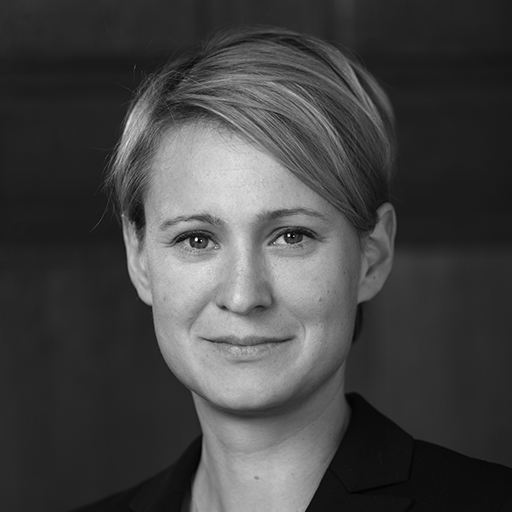
Dr. Jana Puglierin
Senior Policy Fellow for the European Council on Foreign Relations, Head of the ECFR Berlin
Dr. Jana Puglierin is a senior policy fellow at the European Council on Foreign Relations and head of its Berlin office since January 2020. She also directs ECFR’s Re:shape Global Europe project, which seeks to develop new strategies for Europeans to understand and engage with the changing international order.
She headed the Alfred von Oppenheim Centre for European Policy Studies at the German Council on Foreign Relations (DGAP) from December 2015 to December 2019, and was a research fellow with its Berlin Future Forum from September 2013 to November 2015. Before joining DGAP, she worked as an adviser for a member of the Bundestag on disarmament, arms control, and non-proliferation, as well as German and European foreign and security policy. Between 2003 and 2010, she was researcher and lecturer to the chair of political science and contemporary history as well as in the program for North American studies at the University of Bonn. In summer 2010, she held a lectureship at the Chemnitz University of Technology.
After her Abitur in Siegen in 1997, she spent a year in Paris – where she completed the Cours de civilisation française de la Sorbonne. She then studied political science, public law, and sociology at the University of Bonn from 1998 to 2003, as well as at Venice International University for a semester in 2002. In studying for her doctorate at the University of Bonn, she focused on the life and thought of political scientist John Herz, and conducted research in the United States.
Puglierin was an associate at Stiftung Neue Verantwortung in Berlin from October 2010 to October 2011. In November 2017, she was a visiting fellow at the American-German Situation Room, a joint initiative of the American Institute for Contemporary German Studies and the German Marshall Fund. She was part of the Konrad Adenauer Foundation’s Working Group of Young Foreign Policy Experts between 2007 and 2016.
She has been a member and deputy spokesperson of the Advisory Board of the Federal Academy for Security Policy since June 2022. She is also a member of the board of the European Movement Germany and the board of the German Atlantic Society.
Her work focuses on German and European foreign, security, and defence policy, as well as Germany’s role in Europe and transatlantic relations.
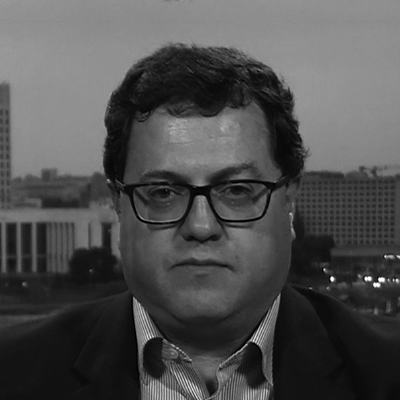
Arkady Ostrovsky
Russia and Eastern Europe Editor for the Economist
Arkady Ostrovsky is Russia and eastern Europe editor for The Economist. Prior to this role, he was the Moscow bureau chief for The Economist reporting on the annexation of Crimea and the war in Ukraine among many other subjects. He joined the paper in March 2007 after 10 years with the Financial Times where he covered Russian politics and business, including the Yukos affair. His articles were among the first to warn of the resurgence of the security state under Putin. At The Economist, Arkady also writes about Russia-American relations, European security, Russia and China, Ukraine, Georgia and other former Soviet republics.
He is the author of the 2016 Orwell Prize winning book The Invention of Russia: The Journey from Gorbachev’s Freedom to Putin’s War published in 2015 by Atlantic Book in the UK and in 2016 by Viking in the US. He is regular contributor to radio and television programs around the world, including the BBC and NPR.
Arkady holds a doctorate degree in English Literature (University of Cambridge, 1998) and has contributed to the first Cambridge History of Russian Theatre as well as to collections of essays on theatre history published in the America, UK, France, Russia and Brazil. Arkady’s translation of Tom Stoppard’s trilogy, “The Coast of Utopia” and “Rock’n’Roll” have been published and staged in Russia. He is married with three children and lives in London with his family.
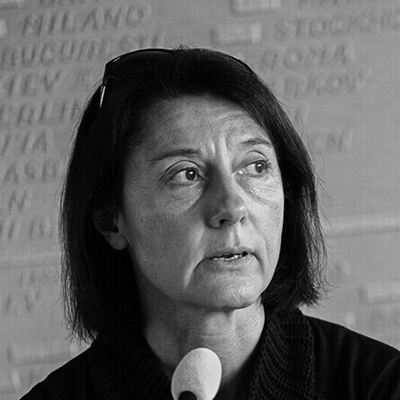
Kadri Liik
Senior Policy Fellow at the European Council on Foreign Relations
Kadri Liik is a senior policy fellow at the European Council on Foreign Relations. Her research focuses on Russia, Eastern Europe, and the Baltic region.
Before joining ECFR in October 2012, Liik was the director of the International Centre for Defence Studies in Estonia from 2006 until 2011, where she also worked as a senior researcher and director of the Centre’s Lennart Meri Conference. Throughout the 1990s, Liik worked as a Moscow correspondent for several Estonian daily papers, including the highest-circulation daily in Estonia, Postimees, as well as Eesti Päevaleht and the Baltic News Service. In 2002, she became the foreign news editor at Postimees. In 2004, she left to become editor-in-chief at the monthly foreign affairs magazine, Diplomaatia. She was also the host of “Välismääraja”, a current affairs talkshow at Raadio Kuku in Tallinn.
Liik holds a BA in Journalism from Tartu University (Estonia) and an MA in International Relations specialising in diplomacy from Lancaster University.

H.E. Māris Riekstiņš
Ambassador of Latvia to Russia
Māris Riekstiņš is a Latvian politician and diplomat and a former Foreign Minister of Latvia (November 2007 – April 2010). He is the current Ambassador of Latvia to the Russian Federation.
Riekstiņš' career in the Ministry of Foreign Affairs of Latvia began in 1992 as a Desk Officer of the Political Department of the Europe Division, followed by the position of the Director of the Western Europe Division. In 1993, he became the Under-secretary of State, soon assuming the duties of the State Secretary of the Ministry of Foreign Affairs. He remained in that position until his posting as the Ambassador of Latvia to the United States in 2004, and additionally non-resident Ambassador to Mexico. For most of 2007 Riekstiņš was Chief of Staff to the Prime Minister of Latvia Aigars Kalvītis. In November 2007 Riekstiņš was elected to the post of the Minister of Foreign Affairs of Latvia and held this position until April 2010, when his party stepped out of the government. In February, 2011 Ambassador Riekstiņš commenced his duties as the Permanent Representative of Latvia to NATO in Brussels.
In his career Riekstiņš has also been Head of the Latvian Delegation for Accession to NATO, Chairman of the Advisory Council for Latvia's membership of the World Trade Organization, Head of Delegation of Latvia in WTO talks in Seattle (1999), Doha (2000) and Cancun (2003). He has led the delegation for the U.S.-Baltic Partnership Charter and also been the Head of Latvian delegation for Estonian-Latvian sea border delimitation (agreement concluded in 1997 and ratified), as well as Lithuanian-Latvian sea border delimitation (agreement concluded in 1999, not ratified yet).
Riekstiņš has a law degree from the University of Latvia, preceded by graduation of the Faculty of Pedagogy of the Latvian Academy of Sport Education.
Rachel Tausendfreund
GMF's Editorial Director
Rachel Tausendfreund is editorial director at GMF, overseeing the organization’s research output and publication planning.
Before joining GMF, Rachel was editorial director at the European Council on Foreign Relations and editor at the German Council on Foreign Relations (DGAP). At the DGAP, she was a member of the editorial team of the bimonthly foreign policy magazine Internationale Politik and ran IP-Journal, an online magazine covering German and European foreign policy. She has researched and published on issues relating to German, American, and transatlantic politics, as well as international trade policy and European foreign policy.
Rachel earned her BA in her native state of Michigan before moving to Germany where she got her MA in European Studies and Politics and then did doctoral research and teaching on European trade policy. She is a native English speaker and speaks fluent German and basic French.
Pavel K. Baev
Research Professor, Peace Research Institute Oslo
Pavel Baev is a nonresident senior fellow in the Center on the United States and Europe at Brookings and a research professor at the Peace Research Institute Oslo (PRIO). He specializes in Russian military reform, Russia’s conflict management in the Caucasus and Central Asia, and energy interests in Russia’s foreign and security policies, as well as Russia’s relations with Europe and NATO.
Baev graduated from the Moscow State University in 1979 with a master’s degree in political geography, and worked in a research institute in the former USSR Ministry of Defense. After receiving a doctorate in international relations from the Institute for the U.S. and Canadian Studies, Moscow in 1988, he worked with the Institute of Europe in Moscow until October 1992, when he joined PRIO. From 1995 to 2001 he was a co-editor of Security Dialogue, a quarterly policy-oriented journal produced at PRIO. From 2000 to 2004, Pavel was the head of the Foreign and Security Policies program. He held the NATO Democratic Institutions Fellowship from 1994 to 1996.
Baev is the author of several books, including "The Russian Army in a Time of Troubles" (SAGE, 1996) and "Russian Energy Policy and Military Power: Putin’s Quest for Greatness" (Routledge, 2008). Some of his most recent reports include “The limits of authoritarian compatibility: Xi’s China and Putin’s Russia,” Brookings Institution, 2020; “The Iranian Revolution at Forty” (with Suzanne Maloney et al), Brookings Institution, 2020; “Transformation of Russian Strategic Culture: Impacts from Local Wars and Global Confrontation,” French Institute of International Relations, 2020; “Russia’s Syrian Predicament Grows Unmanageable,” PONARS Eurasia Memo, 2020; “New Perspectives on the Black Sea Theater in Russian Strategic Culture,” George C. Marshall European Center for Security Studies, 2019; “Russian Nuclear Modernization and Putin’s Wonder-Missiles: Real Issues and False Posturing,” French Institute of International Relations, 2019; and “An ambiguous partnership: The serpentine trajectory of Turkish-Russian relations in the era of Erdoğan and Putin” (with Kemal Kirişci), Brookings Institution, 2017.
Baev’s articles on the Russian military posture, Russian-European relations, and peacekeeping and conflict management in Europe have appeared in Armed Forces & Society, Cambridge Review of International Affairs, Contemporary Security Policy, European Security, International Peacekeeping, Jane’s Intelligence Review, The Journal of Peace Research, The Journal of Slavic Military Studies, Problems of Post-Communism, Security Dialogue, Studies in Conflict & Terrorism, and The World Today. He also has a weekly column published in the Eurasia Daily Monitor and is the author of the blog, Arctic Politics and Russia's Ambitions.
András Braun
Program Officer at the International Republican Institute
András joined IRI's Transatlantic Strategy Division in June 2021 and works as Program Officer in the Institute's Bratislava Office. Previously he was working for a Hungarian think tank's representation office in Brussels, and also got experience in the EU's enlargement policy while he was a Blue Book Trainee at the European Commission. He earned his Ph.D. degree in political sciences in 2020 from the Eotvos Lorand University in Budapest, Hungary. He also had the opportunity to study the democratic transition of the Western Balkans while he was in Sarajevo and Belgrade between 2016 and 2017.
Dr. Balkan Devlen
Senior Fellow at Macdonald-Laurier Institute
Dr. Balkan Devlen is a professor and foreign policy thinker with two decades of experience across three continents. He teaches, speaks, and writes on foreign policy, great power politics, and the best ways of thinking about and preparing for the future - anticipation, forecasting, and strategic foresight. Currently, he is Senior Fellow at Macdonald-Laurier Institute, where he leads the Transatlantic Program and Adjunct Research Professor at the Norman Paterson School of International Affairs at Carleton University. Dr. Devlen teaches graduate-level courses on Transatlantic security, geopolitical forecasting, strategic foresight, and global catastrophic and existential risks. He also provides training, gives talks, and facilitates workshops on forecasting and strategic foresight for a wide variety of organizations. Previous clients include governmental agencies in the U.S., Canada, and Europe, Fortune 500 companies, UN agencies, non-governmental organizations, and leading universities in the US, Canada, and Europe. Previously he held faculty positions in Denmark, the US, and Turkey.
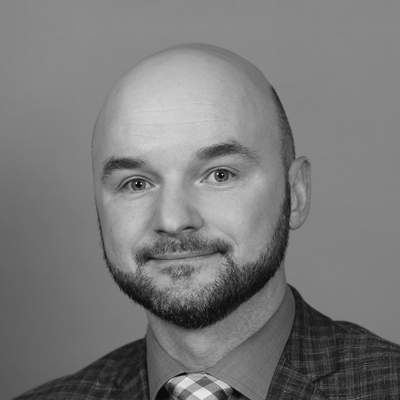
Dmitri Teperik
Chief Executive of the International Centre for Defence and Security
Dmitri is the Chief Executive of the International Centre for Defence and Security, based in Estonia. His previous roles included work at the Estonian Ministry of Defence where he was in charge of the field of defence-related research, industry and development. He served as Estonian national coordinator at the NATO Science and Technology Organization. Dmitri holds an MSc; his areas of expertise include informational and psychological resilience, Russian influence activities in Estonia and Ukraine, interdependencies between communication and behavior, Ukraine’s national security and resilience.
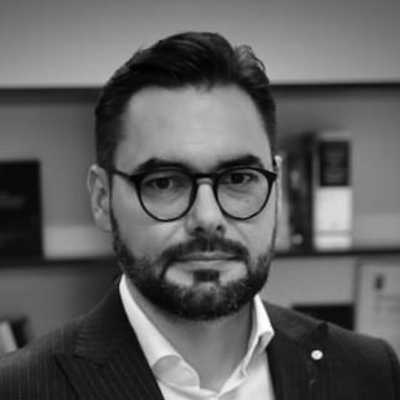
Dr. Iulian Groza
Director of the European Policy and Reform Institute
Iulian Groza is an expert in international relations, European affairs and good governance with a particular focus on EaP countries, EU, Transatlantic cooperation and Russia. He is a former Deputy Foreign Minister of the Republic of Moldova in charge for European integration and international law. Before that he served in different capacities at the Ministry of Foreign Affairs and European Integration, including as Director General and Deputy Director of the Directorate for European integration and was in charge for the coordination of EU-Moldova political dialogue and reform process in line with Moldova’s commitments with the EU. He was also posted to Brussels at the Moldovan Mission to the EU. Currently, Iulian Groza leads the Institute for European Policies and Reforms (IPRE) - a Moldovan think-tank that aims at promoting the European integration process of the Republic of Moldova. He also is a Board member of the Institute for Strategic Initiatives (IPIS). Mr. Groza holds a University Degree in Law. He also did postgraduate European Studies at Birmingham University and NATO Security Studies at SNSPA in Bucharest. He is a J.D. candidate in law at the Moldovan State University. He is fluent in English, Russian and Romanian (native) languages. Mr. Groza is a career diplomat and holds a diplomatic rank of Minister-Counsellor. He is also an FCO Chevening Scholar.
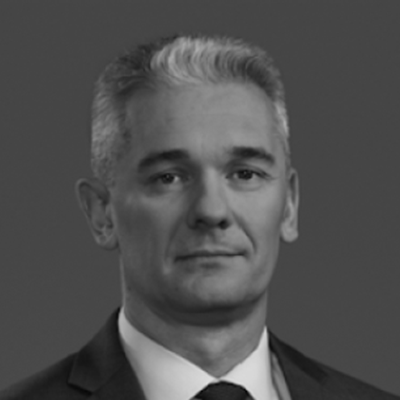
Valery Kavaleuski
Sviatlana Tsikhanouskaya's Representative on Foreign Affairs and Head of the Cabinet
Valery Kavaleuski is Deputy Head and Representative for Foreign Affairs in the United Transitional Cabinet headed by Sviatlana Tsikhanouskaya. He also directs a representation office in Kyiv, Ukraine. He formulates foreign policy priorities, implements agreements, and develops international engagements to realize democratic change in Belarus. In diplomatic service, he specialized in bilateral relations with the US. Prior to joining Tsikhanouskaya's team, Kavaleuski worked in the World Bank Group in Washington, DC. He graduated from Belarus State University (BA in international relations) and Georgetown University School of Freign Service (MS in Foreign Service).
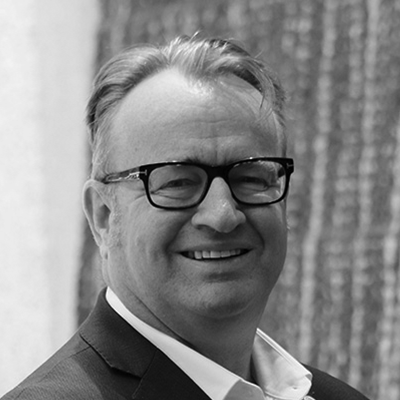
Simon J Draper
Former Director General United Nations, Human Rights and Commonwealth Division, New Zealand Ministry of Foreign Affairs & Trade
Simon Draper is an experienced diplomat with extensive international background in negotiation and relationship management.
He joined the Asia New Zealand Foundation in September 2015, coming from the Ministry of Foreign Affairs and Trade (MFAT) where he had worked in various roles since 1991. These roles included director United Nations, Human Rights and Commonwealth Division, which saw him driving New Zealand's successful campaign for a United Nation's Security Council seat. His other roles at MFAT include a four-year posting to the New Zealand Embassy in Seoul, and he has had several leadership positions including as New Zealand’s Consul-General to French Pacific Territories and director of the chief executive’s office. Before joining MFAT, he worked in the banking and consultancy sectors.
Since joining the Asia New Zealand Foundation, Simon has enhanced its international focus and created new opportunities for New Zealanders to experience Asia first-hand. He is a respected commentator on Asia and has a long-running fortnightly column that is published in newspapers across New Zealand and on Stuff.co.nz, one of the country’s biggest news media sites.
Simon speaks working level Korean, French and Italian.
Established in 1994, the Asia New Zealand Foundation Te Whītau Tūhono is New Zealand’s leading authority on Asia. It provides experiences and resources to help New Zealanders build their knowledge, skills and confidence about Asia. The Foundation works with influential individuals and organisations across New Zealand and Asia, and is supported by its network of Asia and New Zealand Honorary Advisers, who are comprised of leading businesspeople, academics, current and former politicians, and diplomats.
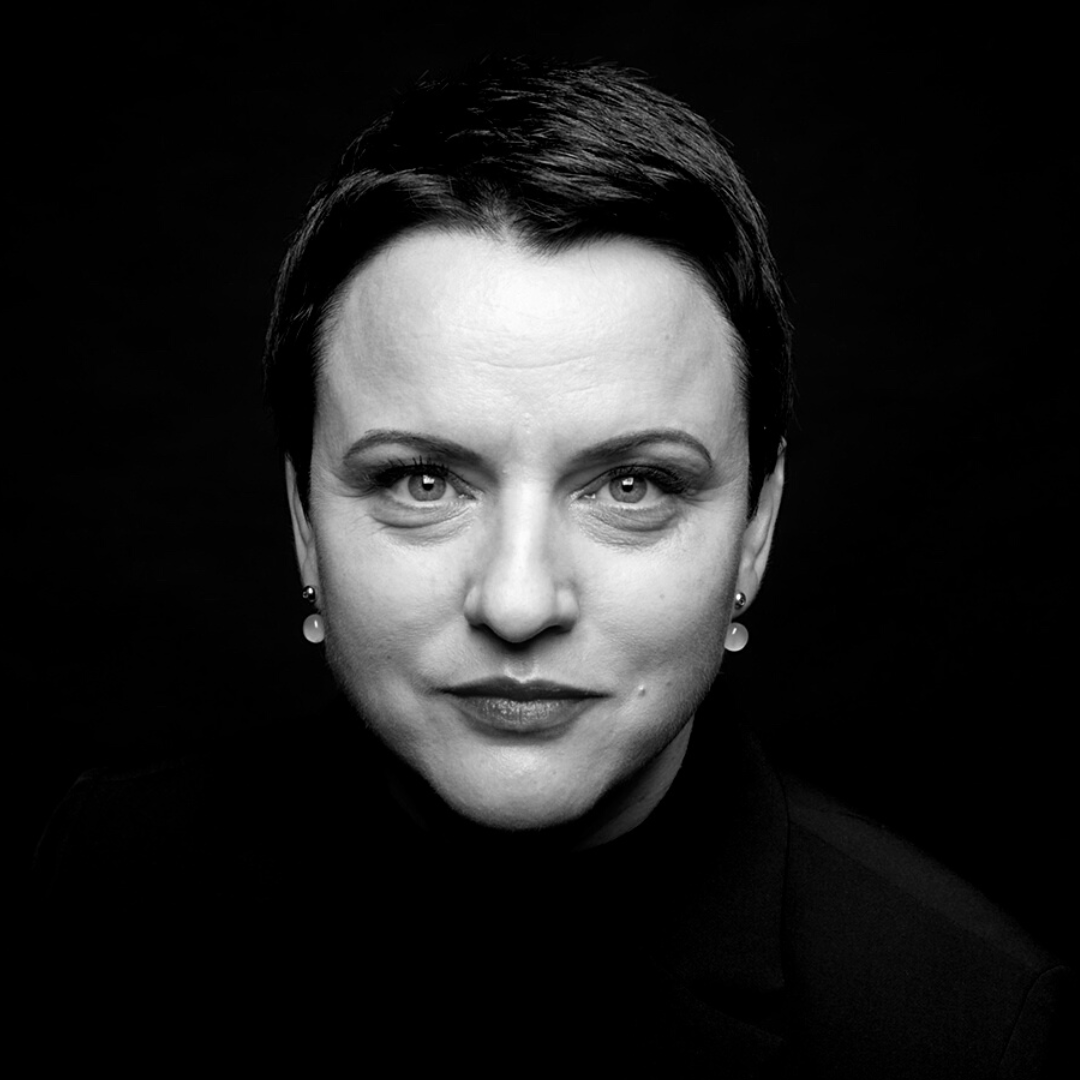
Dr. Gunda Reire
Advisor To The Minister at Ministry of Foreign Affairs Latvia
DR. GUNDA REIRE
Latvijas Republikas ārlietu ministra padomniece un Starptautisko pētījumu centra
direktore, darbojas arī kā lektore Rīgas Juridiskajā augstskolā un Rīgas Stradiņa
universitātē. Apvienojot politikas akadēmisko un praktisko jomu, pildījusi
Stratēģiskās analīzes komisijas, kas darbojās prezidentes Vairas Vīķes-Freibergas
paspārnē, priekšsēdētājas vietnieces pienākumus. Bijusi Saeimas priekšsēdētājas
biroja vadītāja, vairāku ministru padomniece. Latvijas Universitātē ieguvusi doktora
grādu politikas zinātnē, starptautiskajā politikā. Studējusi arī Humbolda Universitātē
Berlīnē un Freiburgas Alberta Ludviga Universitātē. Bijusi Fulbraita programmas
stipendiāte zinātniskajā pētniecībā Džona Hopkinsa Universitātes SAIS
Transatlantisko attiecību centrā. Gundas pētnieciskās intereses aptver starptautisko
mieru un drošību, daudzpusējo politiku, Krievijas pētniecību un stratēģisko
komunikāciju.
DR. GUNDA REIRE
Advisor to the Minister of Foreign Affairs of the Republic of Latvia and Director of
the Center for International Studies. She also holds the position of Visiting Lecturer at
the Riga Graduate School of Law and the Riga Stradiņš University. Combining both
academic and practical spheres of politics, she has served as Deputy Chairperson of
the Strategic Analysis Commission under the auspices of the President of Latvia,
Chief of Staff of the Speaker’s Office, and Advisor to several ministers. She holds a
doctoral degree in Political Science and International Relations from the University of
Latvia. Reire has also studied Political Science at the Humboldt University of Berlin
(Germany) and Albert Ludwig University of Freiburg (Germany), and she has held a
Residing Fulbright Research Fellow position at the John Hopkins University’s SAIS
Center for Transatlantic Relations. Her core research interests include international
peace and security, multilateral cooperation, strategic communication and Russia
studies.
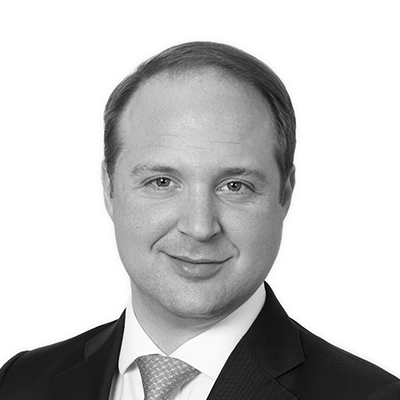
Erik Brattberg
Senior Vice President, Albright Stonebridge Group, part of Debrons Global Advisors
Erik Brattberg is a Senior Vice President at the Albright Stonebridge Group, a geopolitical advisory firm based in Washington, DC. He is also a Nonresident Senior Fellow at the Atlantic Council’s Europe Center.
Mr. Brattberg is a recognized expert on European politics and transatlantic relations. Prior to joining ASG, he served as Director of the Europe Program at the Carnegie Endowment for International Peace, where he developed and led several major initiatives related to U.S. dialogue with the European Union on topics including China, technology, and defense policy.
Previously, Mr. Brattberg held numerous roles in leading think tanks on both sides of the Atlantic. He served as Director for Special Projects and Senior Fellow at the McCain Institute for International Leadership; Ron Asmus Policy Entrepreneur Fellow at the German Marshall Fund; Senior Fellow at the Atlantic Council’s Scowcroft Center for Strategy and Security; and a Visiting Fellow at European Policy Centre in Brussels, among others.
Mr. Brattberg has written articles for numerous outlets, including The Washington Post, The Financial Times, Politico, Foreign Policy, and Foreign Affairs, and is a frequent commentator in major U.S. and international media including Bloomberg, CNBC, CNN, NBC News, NPR, and BBC World News. He is a regular speaker at international conferences and think tank events and has testified before the European Parliament’s Committee on Foreign Affairs and the U.S.-China Economic and Security Review Commission. He is a member of the steering committee of the bipartisan Transatlantic Democracy Working Group.
He received an M.S. in Foreign Service from Georgetown University, which he attended as a Fulbright scholar, and an M.A. and a B.A. in Political Science from Uppsala University.
He is based in Washington, D.C.

Dr. Fredrik Löjdquist
Director of The Stockholm Centre for Eastern European Studies
Fredrik is the Director of the Stockholm Center for East European Studies (SCEEUS). He is former Swedish diplomat, with previous missions such as special envoy and ambassador for the Swedish Presidency of the EU in Georgia in 2009, ambassador to the Organization for Security and Cooperation in Europe (OSCE) from 2012 to 2017, and most recently, Sweden's first ambassador and special envoy for hybrid threats based in Stockholm 2018-2021. He has also been on diplomatic missions in Vilnius, Moscow and Vienna, represented Sweden in the OSCE Structured Dialogue on European Security 2017-2021 and been a member of the steering board of the European Centre of Excellence for Countering Hybrid Threats, based in Helsinki.
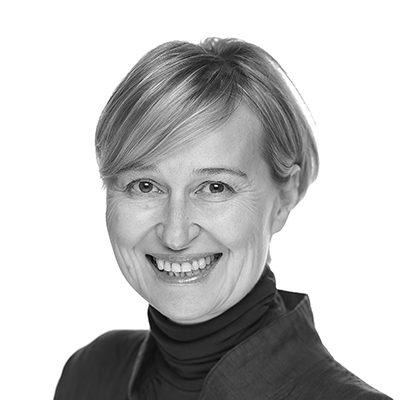
Prof. Gulnaz Sharafutdinova
Professor of Russian Politics, King's Russia Institute at the King’s College London
Gulnaz Sharafutdinova is Professor of Russian Politics at King's College London and Interim Director of King's Russia Institute. Her research interests focus on Russian national and regional politics, political economy, and social psychology. She is an author of an award-winning The Red Mirror: Putin's Leadership and Russia's Insecure Identity (Oxford University Press, 2020), an earlier book, Political Consequences of Crony Capitalism Inside Russia (Notre Dame University Press, 2010), and numerous articles.
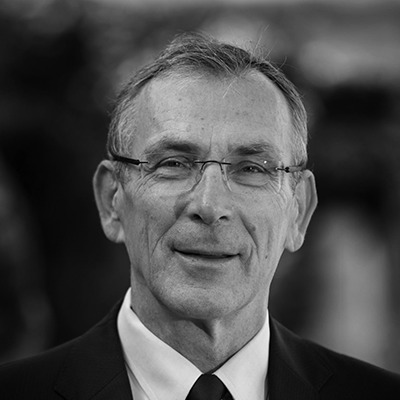
Andris Piebalgs
Professor at the Florence School of Regulation in the European University Institute
Andris Piebalgs is a Professor at the Florence School of Regulation in the European University Institute. He is the Chairman of the Implementation Committee of the International Methane Emissions Observatory.
Before joining the FSR Andris Piebalgs was EU Commissioner for Energy and EU Commissioner for Development. He is a key figure in the formation of the EU’s renewable energy and energy efficiency policies and made a crucial impact in the creation of the European energy market.
His work now focuses on the decarbonisation challenges in the energy sector. He authored and co-authored numerous publications on the gas sector decarbonisation challenges.

H.E. Aviva Raz-Shechter
Special Envoy for Women – Peace and Security
Ambassador Aviva Raz Shechter joined the MFA as a career diplomat more than three decades ago. Since then she has held various portfolios at the Ministry and abroad. She is currently the first Special Envoy for the implementation of UNSCR 1325-WPS.
Ambassador Raz Shechter’s first diplomatic mission was as Deputy Consul-General in Montreal, Canada. After the opening of Israel's embassy in Amman, Jordan, she was appointed the political Counselor (1997-1998). Upon her return from Amman, she became head of the Lebanon Desk at MFA’s Political Research Center and MFA's member in the political-military team for the talks with Lebanon headed by General Menachem Einan.
From 2000-2005 Ambassador Raz Shechter was Minister-Counselor and head of Public Diplomacy at the Embassy of Israel in Washington DC. She then became Director of the Department for Combating Antisemitism and Holocaust Remembrance. During her tenure in this post (2005-2011) Ambassador Raz Shechter established the Global Forum for Combating Antisemitism (GFCA) and was Co-Head of Israel's delegation to the International Task Force on Holocaust Remembrance (IHRA).
On completion of this post, she was nominated as Deputy Director General for Middle East Affairs and the Peace Process (2011-2016).
In September 2020, Ambassador Raz Shechter completed four years' service as Ambassador & Permanent Representative to the United Nations & Other International Organizations in Geneva.
Ambassador Raz Shechter holds B.A and M.A on Middle East Studies (with honors) from Hebrew University and is the recipient of the "Golda Meir Fellowship".
Languages: Hebrew, English, French, Arabic and German
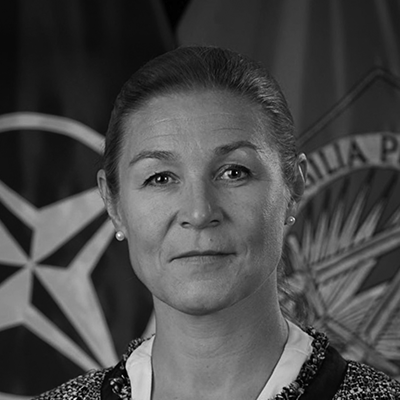
Charlotte Isaksson
Swedish Armed Forces
After being the Senior Gender Advisor, European External Action Service between September 2016 and August 2022, she is now back serving at the Swedish Armed Forces Headquarters. In the EEAS, she was the penholder for the EU’s Strategic Approach to Women, Peace and Security (WPS) and its Action Plan. During her professional career, she has worked primarily with gender equality and WPS in the domain of Security and Defence, including in operations and missions. She was Gender Advisor to SACEUR and the functional manager for integrating gender perspectives within NATO Allied Command Operations at SHAPE from 2011 to 2016. She served earlier within the Directorate of Operations at the Swedish Armed Forces Headquarters, as well as prior positions in the Swedish Armed Forces and with the Swedish Ministry of Defence.
As an institutional entrepreneur, she has been the originator and primus motor for several transformative projects such as Genderforce, which established and institutionalised well-known structures, e.g., the function of a military gender advisor and the Gender Coach Programme.
Furthermore, she is the founder of the Nordic Centre for Gender in Military Operations, which has been the NATO Department Head concerning gender training since 2013. She is part of the Advisory Board of the Swedish International Training Centre (SWEDINT). Apart from her long military background, she holds a degree in Sociology (Lund University) and another in International Relations (Cambridge University). She is currently pursuing her PhD (University of Bristol) on the Political Economy of the Women, Peace, and Security agenda.
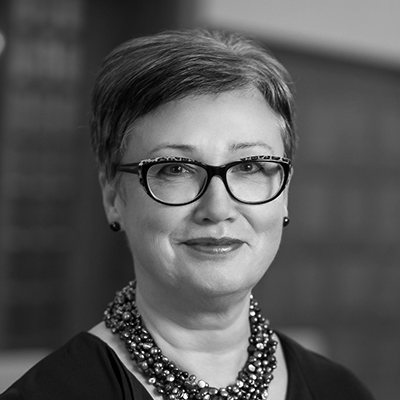
Prof. Žaneta Ozoliņa
Chairwoman of the Latvian Transatlantic Organisation

Christopher Skaluba
Director of the Scowcroft Center for Strategy and Security, Transatlantic Security Initiative at Atlantic Council
Christopher Skaluba leads the Transatlantic Security Initiative in the Atlantic Council’s Scowcroft Center for Strategy and Security, where he and his team direct a broad portfolio of programming related to NATO and transatlantic security as well as manage a vast network of expert fellows. Before joining the Atlantic Council, Chris served as a career civil servant in the Office of the Secretary of Defense, rising from presidential management fellow to the senior executive service. Among his roles in the Pentagon, Chris served as the principal director for strategy and force development, where he was responsible for assessing the future of international security and crafting the Defense Department’s strategies to develop a prepared, capable, and effective US military. Chris also served a lengthy tenure as the principal director for European & NATO Policy, where he formulated and implemented US defense policy for Europe and conducted defense relationships with thirty-one European nations. In this capacity, he helped inaugurate the European Deterrence Initiative in the aftermath of Russia’s 2014 invasion of Crimea. In other roles, Chris served as the acting deputy assistant secretary of defense for Middle East Policy and in the Pentagon’s Policy Planning office, working primarily on long-term competitive strategy development. His private sector experience includes completion of the Walt Disney Company’s management development program. He is a graduate of the Maxwell School of Citizenship and Public Affairs at Syracuse University where he earned a Master of Arts in International Relations and where he intermittently serves as an adjunct Professor of Practice in International Relations. He also holds a Master of Arts in English from Syracuse, teaching numerous classes in writing and rhetoric while pursuing his degrees. Chris holds a Bachelors’ degree in English and History from Penn State University. His writing and commentary are widely solicited and have appeared in the New York Times, the Washington Post, National Public Radio, the Economist, USA Today, War on the Rocks, and on various
Atlantic Council platforms. He was the editor-in-chief of the seminal essay series, NATO 20/2020: Twenty Bold Ideas to Reimagine the Alliance After the 2020 US Election, where he was also a contributing author.
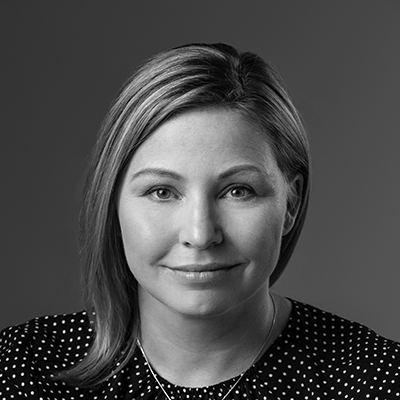
Heather Exner-Pirot
Senior Fellow at the Macdonald-Laurier Institute and a Fellow at the Woodrow Wilson International Centre for Scholars
Heather Exner-Pirot is a Senior Fellow at the Macdonald-Laurier Institute and a Fellow at the Woodrow Wilson International Centre for Scholars. She sits on the Boards of the Canadian Rural Revitalization Foundation, Saskatchewan Indigenous Economic Development Network, and The Arctic Institute, and is the Managing Editor for the Arctic Yearbook. She has published on energy security, Indigenous economic development, regional Arctic governance, and Arctic innovation. Dr. Exner-Pirot obtained a PhD in Political Science from the University of Calgary in 2011.
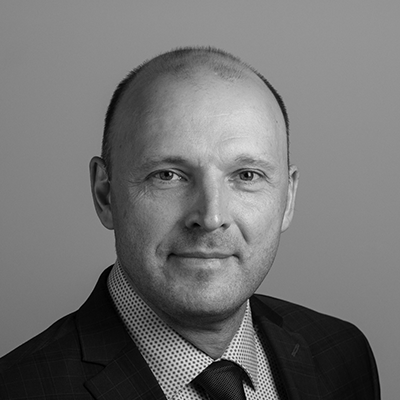
Toms Rostoks
Director of the Centre for Security and Strategic Research at the Latvian National Defence Academy
Toms Rostoks, PhD, is the director of the Centre for Security and Strategic Research at the Latvian National Defence Academy. His current research interests are mainly related to Latvia's security and defence policy, Baltic security, extended deterrence, and the deterrent effects of military tripwires. T. Rostoks is the author of many academic publications including the edited volume 'Deterring Russia in Europe' (Routledge 2018) and articles in JCMS: Journal of Common Market Studies, Journal of Baltic Studies, Journal on Baltic Security, and Communist and Post-Communist Studies. T. Rostoks has been a visiting researcher at academic institutions in the U.S. and Germany.
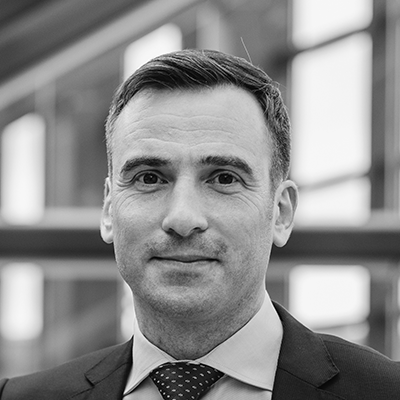
Mārtiņš Staķis
Chairman of the Riga City Council
Mārtiņš Staķis has been the Mayor of Riga since October 2020. He is leading the new ruling coalition which aims to modernize the city and to provide sustainable development solutions.
The new coalition is particularly focused on areas of urban development that received less attention during previous municipal administrations. These areas are attracting investment, good governance and moving towards climate-neutrality.
Riga Investment and Tourism Agency was founded under Staķis' leadership, thereby launching a new era in the city's relations with investors and international business. The reorganised Riga Energy Agency is committed to the goal of making Riga the first climate-neutral capital city in the Baltics.
Mārtiņš Staķis is liberal and advocates for modern patriotism by serving on the Latvian National Guard and inspiring young people as a volunteer coach. Mayor Mārtiņš Staķis has a strong background in entrepreneurship and he has served as a member of parliament from 2018 to 2020. He is married to Ilze Staķe-Paidere, and has of two sons – Edvards and Lūkass.
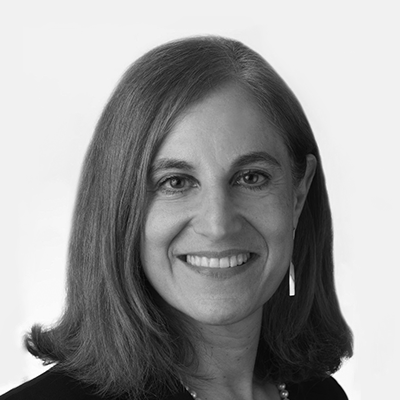
Bonnie S. Glaser
Director of the Asia Program, German Marshal Fund of the United State
Bonnie S. Glaser is director of the Asia Program at the German Marshall Fund of the United States. She was previously senior adviser for Asia and the director of the China Power Project at the Center for Strategic and International Studies. Ms. Glaser is concomitantly a nonresident fellow with the Lowy Institute in Sydney, Australia, and a senior associate with the Pacific Forum. For more than three decades, Ms. Glaser has worked at the intersection of Asia-Pacific geopolitics and U.S. policy.

Agata Szmigiel
Cyber Security expert
Agata is a professional with an educational background in national security of Poland. She specializes in the field of cyber security and is currently working in private sector. Agata's previous professional experience includes roles at Wroclaw School of Banking, EY Global Delivery Services, Credit Suisse. She is an alumnus of the Academy of Young Diplomats of the European Academy of Diplomacy.
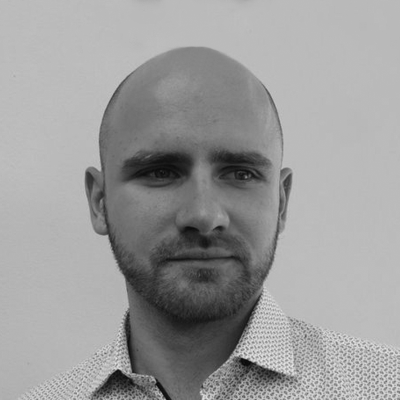
Adam Potocnak
Research fellow and lecturer at the Centre for Security and Military Strategic Studies, University of Defence in Brno
Adam holds M.A. in security and strategic studies and is researching for his PhD at Masaryk University in Brno, Czech Republic. He focuses his research on the analysis of armed conflicts, rivalry between great powers, US-Russian relations and nuclear strategies, and the security of the Caucasus region. Adam is also a research fellow and lecturer at the Center for Security and Military-Strategic Studies of the University of Defense in Brno.
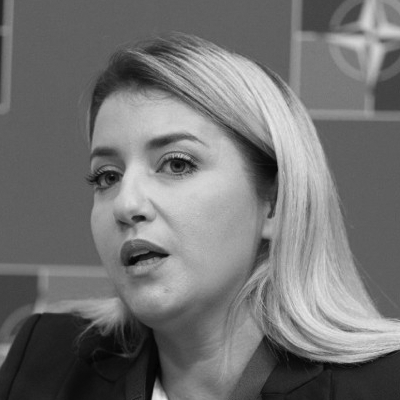
Juxhina S. Gjoni
President of the Youth Atlantic Treaty Association (YATA)
Juxhina is the President of the Youth Atlantic Treaty Association (YATA). She holds an MSc in Strategic Studies and an MSc in International Law. Her professional experience includes Assistant Professor at the European University of Tirana, Department of International Relations. She was also a Director of the Department of Human Resources at the Ministry of Environment of the Republic of Albania.
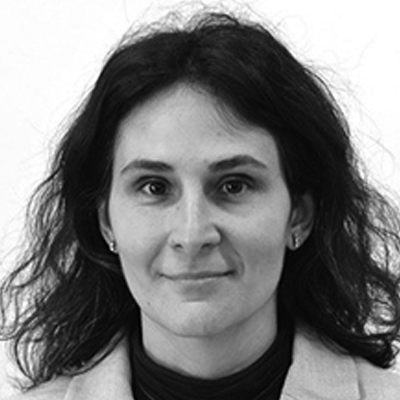
Dr. Silvia Maria Colombo
Senior Researcher and Faculty Advisor at the NATO Defense College in Rome
Silvia is a Senior Researcher and Faculty Advisor at the NATO Defense College in Rome. Previously she held senior research positions at the International Affairs Institute (IAI) in Rome and acted as the head of the Mediterranean and Middle East Programme and of Italy’s Foreign Policy Programme. Silvia’s research focuses on contemporary politics in the Middle East and North Africa (MENA) region, the EU and US foreign policy towards and their role in conflict in the Middle East as well as the implication for NATO.
Anete is currently a Youth Delegate of Latvia to the United Nations. Her professional background includes communications consulting at the State Chancellery of the Republic of Latvia. Anete is a graduate in Social Sciences and Humanities with focus in international security. She is experienced in competitive debate and in organizing high-profile conferences.

Amb. Sanita Pavļuta-Deslandes
Ambassador, Head of the United Nations Security Council Task Force
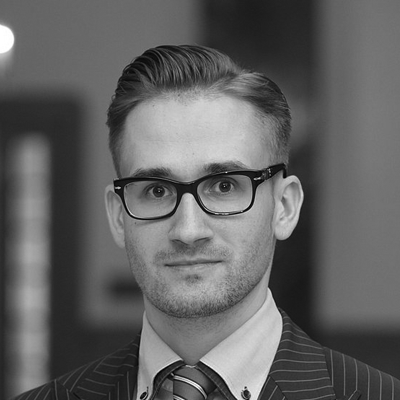
Dr. Rihards Bambals
Head of Strategic Communications at State Chancellery of the Republic of Latvia
Rihards is the Head of Strategic Communications at State Chancellery of the Republic of Latvia. Prior to that he was a career diplomat with 11 years of experience in foreign and security policy. It included two years as a seconded stratcom expert at the East Stratcom Task Force, EEAS, (2019-2021), and three years at the Latvian Permanent Delegation to NATO (2016-2019). Rihards holds a PhD in Political Science (International Politics).
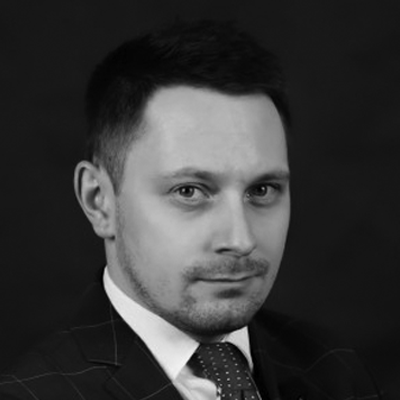
Dr. Daniel Szeligowski
Head of Eastern Europe Programme at the Polish Institute of International Affairs (PISM)
Daniel is the head of Eastern Europe Programme at the Polish Institute of International Affairs (PISM). He holds a PhD in Political Science and Public Administration and specializes in foreign and domestic politics of Ukraine, EU-Ukraine relations and the Eastern Partnership. He is an editorial board member of “Strategic Panorama”, a scientific journal on Ukraine’s foreign affairs and national security.
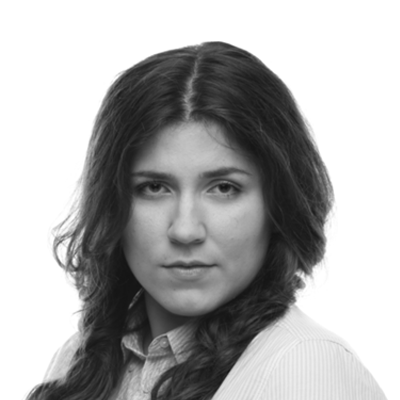
Anna Kovalenko
Ukrainian political figure, activist, and journalist, defense and security expert.
Anna is a Ukrainian political figure, activist, and journalist. She was a member of the Ukrainian parliament that took office in 2019 from the party "Servant of the People". Her roles included Deputy Head of the Office of the President of Ukraine and Deputy Minister of Community and Territory Development of Ukraine. Anna was also centurion of the 39th Maidan Women's Self-Defense Hundred, a former adviser to the three Ministers of Defense of Ukraine and Minister of Information Policy of Ukraine. She is a defense and security expert.
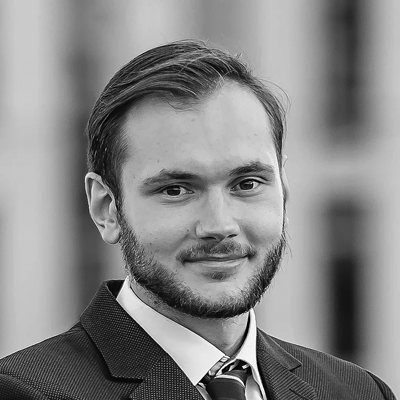
Michael Martin Richter
EU Innovative Training Network Research Fellow, University of Bremen
Michael is a PhD candidate. He is currently seconded as a policy expert at the Foreign Investors Council in Riga. His usual base is at the Research Centre for Eastern European Studies at the University of Bremen. There, Michael conducts research on EU-Ukraine relations, in particular on cooperation on economic and judicial reforms.

Dr. Kristine Zaidi
Associate Director of Programmes, UK Research and Innovation - Arts and Humanities Research Council.
Kristine holds a PhD in Political Science (International Relations). Her research interests include leadership and management, decision-making in foreign policy, Russia’s foreign policy. For the last 14 years she has been working at the UK Research and Innovation where she is currently an Associate Director for Programmes at Arts and Humanities Research Council. Kristine previously worked at the Ministry of Defence and the State Chancellery of the Republic of Latvia.
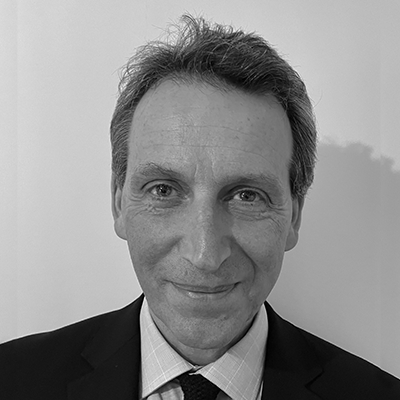
John Raine
Senior Adviser for Geopolitical Due Diligence, International Institute for Strategic Studies
John Raine was a member of the British Foreign Service from 1984 to 2017. He served throughout the Middle East with postings in Kuwait, Iraq,Syria,Saudi Arabia and in Pakistan. He also served on secondment to UK and US Armed Forces in Afghanistan after 9/11 and in Iraq 2003-2004. He held a number of senior positions in the UK's National Security community before his retirement in 2017.
Since 2017 John has been the Senior Adviser on Geopolitical Due Diligence at the International Institute for Strategic Studies (IISS) and an adviser and NED for HSBC (Middle East).
John is also Chair of the Marshall Aid Commemoration Commission, Trustee of the HALO Trust and Deputy Chair of the Board of Governors of Lincoln University.

Tomas Jermalavičius
Head of Studies and Research Fellow at the International Centre for Defence and Security (ICDS) in Tallinn, Estonia
Tomas Jermalavičius is Head of Studies and Research Fellow at the International Centre for Defence and Security (ICDS) in Tallinn, Estonia. Prior to joining ICDS in the end of 2008, he was a lecturer and Lithuania’s Senior National Representative at the Baltic Defence College (BALTDEFCOL) in Tartu, Estonia, and, in 2005-08, the Dean of the College. In 1998-2001 and in 2005, he was with the Defence Policy and Planning Department of the Lithuanian Ministry of National Defence, including as department’s Deputy Director. Since 2017, he also has been a visiting lecturer at the Natolin Campus of the College of Europe in Warsaw. At ICDS, he focuses on various aspects of defence policy and strategy, regional security and defence cooperation in the Baltic area, impact of emerging disruptive technologies on security and defence, energy security, and societal resilience. He holds a BA in political science from the University of Vilnius, an MA in war studies from King’s College London and an MBA degree from the University of Liverpool.
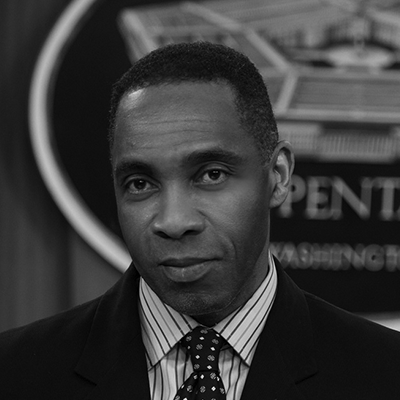
J.J. Green
National Security Correspondent at the WTOP Radio
J.J. Green is the national security correspondent at WTOP radio, in Washington, DC and host of Global with JJ Green on YouTube. He reports daily on international security, intelligence, foreign policy, terrorism and cyber developments and provides regular on-air analysis on both radio and TV. This past September (2022) he interviewed the leaders of the CIA, FBI, NSA, DIA, NGA and NRO all at the same time, on the same stage, during an important panel discussion about international security. Green hosts the weekly podcast Target USA, which examines the threats facing the US. He also hosts the weekly broadcast program The Hunt, and conducts in-depth interviews with experts on ISIS, al-Qaida, the Taliban and other emerging terror threats. He has been embedded with the US military three times in war zones. Green is the recipient of the 2017 Gerald R. Ford Presidential Foundation award for Distinguished Reporting on National Defense for his series Anatomy of a Russian Attack. He has also received dozens of other awards, including a National Edward R. Murrow Award in 2009 for "Hidden Hunter", a series about life aboard a U.S. Navy nuclear submarine.
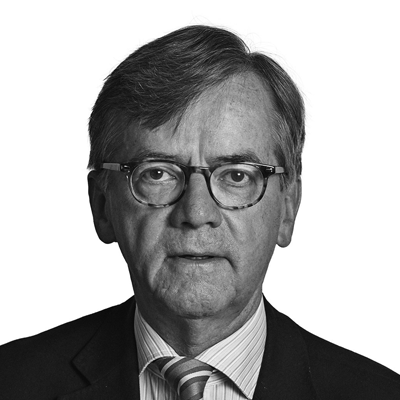
Amb. (ret) Carsten Sondergaard
Ambassador (ret), Denmark
Ambassador Sondergaard has had an extensive diplomatic career. He served as Danish Ambassador to NATO, Germany, Turkey and Ireland. From 2018 to 2022 he was Danish Ambassador to the Russian Federation. Carsten has recently joined the Danish Foreign Policy Society.

Dr. Una Aleksandra Bērziņa-Čerenkova
Political scientist, Head of the Asia program at the Latvian Institute of International Affairs
Dr. Una Aleksandra Bērziņa-Čerenkova is a political scientist, China scholar, Head of Political Science PhD programme and China Studies Centre at Riga Stradins University, Head of the Asia program at the Latvian Institute of International Affairs. After having defended her doctoral dissertation on traditional Chinese discourse, she has held a Senior visiting research scholar position at Fudan University School of Philosophy, Shanghai, China, and a Fulbright visiting scholar position at the Center for East Asia Studies, Stanford University. Bērziņa-Čerenkova is a European China Policy Fellow at MERICS and an affiliate of the Lau Institute at King's College, London.
Dr. Bērziņa-Čerenkova publishes on PRC political discourse, contemporary Chinese ideology, EU-China relations, Russia-China, and BRI, her most recent monograph is "Perfect Imbalance: China and Russia" (World Scientific, 2022).
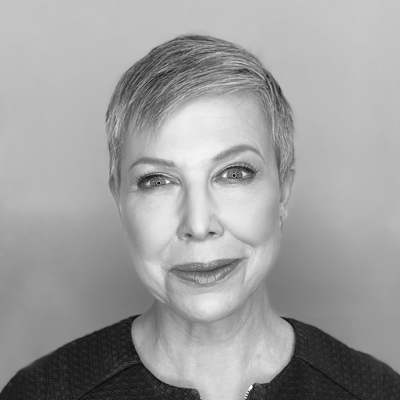
Kimberly Dozier
Visiting Fellow at the Observer Research Foundation America, Analyst at the CNN, Contributor at the TIME Magazine contributor
Kimberly Dozier is a TIME Magazine contributor who covers foreign policy, intelligence, and national security. She's just completed a Council on Foreign Relations Fellowship based in New Delhi, India, focusing on India's border conflict with China.
Past posts include AP Intelligence Writer, and 17 years as an award-winning CBS News TV correspondent. She's covered conflict in Iraq, Afghanistan, Pakistan, Egypt, Israel and Palestinian areas, Kosovo and Northern Ireland, and won awards including a Peabody and several Edward R. Murrow awards. Her book Breathing the Fire, Fighting to Survive and Get Back to the Fight details recovering from a 2006 Baghdad car bomb attack that killed her CBS News camera team and the Army captain they were filming.
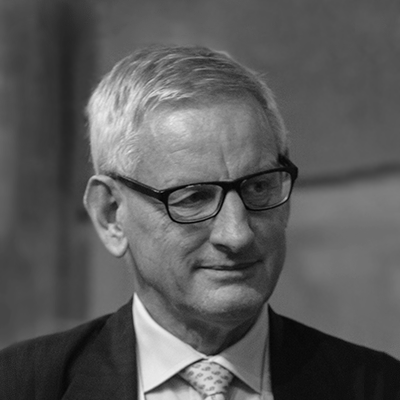
Carl Bildt
Co-Chair of the European Council on Foreign Relations
Carl Bildt is Co-Chair of the European Council on Foreign Relations, contributing columnist to Washington Post as well as columnist for Project Syndicate. He serves as Senior Advisor to the Wallenberg Foundations in Sweden and is on the Board of Trustees of the RAND Corporation in the US.
He has served as both Prime Minister and Foreign Minister of Sweden. March 2021, Mr Carl Bildt was appointed WHO Special Envoy for the Access to COVID-19 Tools Accelerator (ACT-Accelerator).
Subsequently he served in international functions with the EU and UN, primarily related to the conflicts in the Balkans. He was Co-Chairman of the Dayton peace talks on Bosnia and become the first High Representative in the country. Later, he was the Special Envoy of UN Secretary General Kofi Annan to the region.

Vitnija Saldava
Vitnija Saldava is the current Public Policy Manager for the Baltics, Bulgaria and Romania at Meta, based out of their regional office in Warsaw. She holds a Masters degree from Harvard University in International Relations, with a focus on National Security. In her former professional roles she worked at the NATO Public Diplomacy Division in Brussels, NATO Maritime Headquarters in London and as the global media lead at Transparency International Secretariat in Berlin. She also spent many years covering Europe and former CIS countries as an international TV news journalist for Associated Press, based out of Moscow, London and Tallinn. There, she covered such crucial stories such as the Ukraine war, political unrest in Russia, Syrian peace talks and the refugee crisis.
H.E. Arndt Freytag Von Loringofen
Germany’s Ambassador to Poland (NATO’s first Chief of Intelligence)
Dr. Arndt Freytag von Loringhoven was born on 12 November 1956 in Munich, Germany. He graduated from New College, Oxford, in 1980 (Master of Arts) and earned a PhD degree from the Max-Planck-Institute for Biochemistry in Martinsried, Germany (1984). He joined the German Foreign Ministry in 1986. Having served at the German Embassies in Paris (1989-1992) and Moscow (1992–1994, 2002–2005) he also held various posts in the Foreign Ministry such as member of Policy Planning Staff (1994–1998), speech writer of Foreign Minister Joschka Fischer (1998–2002), European correspondent (2005–2007) and Director of European Affairs (2010–2014).
He was German Ambassador to the Czech Republic (2014–2016) and took up his position as Ambassador to the Republic of Poland on 15 September 2020.
He also held two positions in intelligence. From 2007–2010 he was seconded from the Foreign Office to be Vice President of the German Intelligence Service (Bundesnachrichtendienst). In 2016 he was appointed NATO´s first Assistant Secretary General for Intelligence and Security (until 2019).
Teimuraz Janjalia
Deputy Minister of Foreign Affairs of Georgia
Mr. Teimuraz Janjalia, born in 1974, joined the International Economic Relations Department of the Ministry of Foreign Affairs of Georgia in 1998.
From 2004 to 2007 he served as a Chief of the Regional Economic Cooperation Division of the International Economic Relations Department of the MFA of Georgia.
In 2007, when the Embassy of Georgia was opened in Riga, Mr. Teimuraz Janjalia came to the Republic of Latvia as a Charge d’affairs of Georgia a.i. and from 2008 – 2011 served as the Counselor and the Deputy Head of the Mission.
In 2011 Mr. Teimuraz Janjalia returned to Georgia and served as the Deputy Director of the European Integration Department of the MFA of Georgia, in 2012 he became a Director of the International Economic, Cultural and Humanitarian Relations Department of the MFA.
In 2013 he was appointed as an Ambassador Extraordinary and Plenipotentiary of Georgia to the Republic of Latvia.
From 2018 – 2021 he assumed his duties as the Director of International Economic Relations Department of the MFA of Georgia.
Since June 2021 Mr. Teimuraz Janjalia is the Deputy Minister of Foreign Affairs of Georgia.
Mr. Teimuraz Janjalia speaks Georgian, English, German and Russian, he is married and has 3 children.
Mr. Teimuraz Janjalia has been awarded by the Order of the Three Stars of the Republic of Latvia.
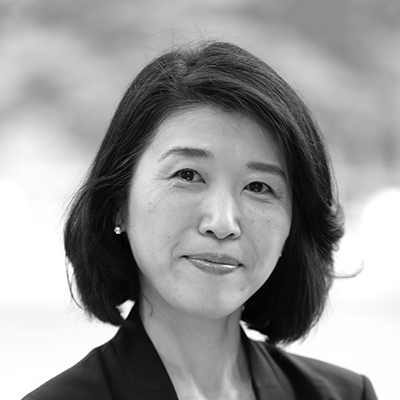
Prof. Yoko Hirose
Professor at the Faculty of Policy Management at Keio University
Yoko Hirose is a professor at the Faculty of Policy Management at Keio University.
Professor Hirose graduated with a Bachelor of Arts degree from the Faculty of Policy Management at Keio University before gaining a master's degree from the Graduate Schools for Law and Politics at the University of Tokyo, where she also studied toward a doctoral degree. Following this, she earned a Ph.D. in Media and Governance from Keio University.
Professor Hirose specializes in international politics and regional studies, focusing in-depth on the former Soviet Union as her particular area of expertise. From 2016 to the present, she has served on several government committees, including as an advisor to Japan's National Security Secretariat (NSS) from 2018 to 2020.
She is the author of Crossroads of Caucasian International Relations (2008, Shueisha Shinsho), which won the 25th special prize for Asia-Pacific studies from the Asian Affairs Research Council of Japan, as well as numerous other books. Recently published works include the Unrecognized States and the World without Hegemony (2014, NHK Books) and Hybrid Warfare: Russia's New National Strategy (Kodansha Shinsho, 2021).
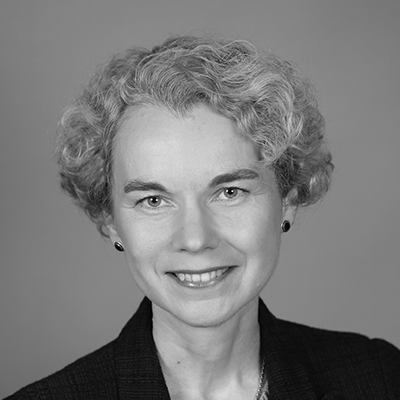
Dr. Kristi Raik
Director of the Estonian Foreign Policy Institute at the International Centre for Defence and Security
Dr. Kristi Raik is the Director of the Estonian Foreign Policy Institute at the International Centre for Defence and Security since February 2018. She is also an Adjunct Professor of International Relations at the University of Turku. She has previously served inter alia as a Senior Research Fellow and Acting Programme Director at the Finnish Institute of International Affairs in Helsinki and an official at the General Secretariat of the Council of the European Union in Brussels. Kristi has published, lectured and commented widely on European security and EU foreign policy, including the EU’s relations with Russia, Ukraine and other Eastern neighbours. Kristi is also an expert of the foreign and security policies of the Baltic states and Finland. She has provided expert contributions to the Estonian, Finnish, EU and NATO institutions. Kristi has a PhD from the University of Turku.
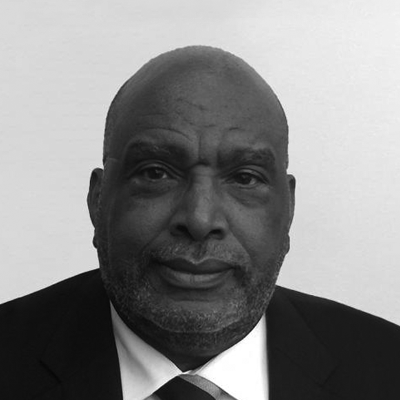
Amb. (ret) C. Steven McGann
Founder of The Stevenson Group
Ambassador C. Steven McGann (ret), Founder of The Stevenson Group, a consulting firm based in Washington, D.C. that identifies opportunities in the defense/security sector and implements specialized advisory services which focus on strengthening public-private partnerships.
McGann, a retired Senior Foreign Service Officer with the rank of Minister-Counselor, was Ambassador to the Republics of Fiji, Nauru, Kiribati, and the Kingdom of Tonga and Tuvalu. Ambassador McGann also was assigned as Chief of Mission (ad interim) of the United States Embassy in Dili, Timor-Leste. He previously was the Deputy Commandant and International Affairs Adviser of the Dwight D. Eisenhower School for National Security and Resource Strategy at the National Defense University (NDU). McGann also served as the Vice Chancellor, College of International Security Affairs at NDU.
Ambassador McGann is a member of the Board of Trustees at Claremont McKenna College, Claremont, CA. McGann has a B.A. in political science from Claremont Men’s College and pursued graduate studies in comparative government at Cornell University. Ambassador McGann was nominated to the Board of Visitors of the Army War College, Carlise, PA. He earned an M.S. from the Industrial College of the Armed Forces and is a graduate of the Naval War College Joint Force Maritime Combatant Commander Course. McGann also is an affiliate of the Center for Australia, New Zealand and Pacific Studies, Walsh School of Foreign Service, Georgetown University.
Ambassador McGann also serves on the boards of the Women’s Refugee Commision, (WRC), the United Nations Association-National Capital Area (UNA-NCA), the Association of Black American Ambassadors (ABAA) and the Diplomats and Consular Officers Retired (DACOR). He is a member of the advisory councils of The Una Chapman Cox Foundation, Our Secure Future (OSF) a WPS advocacy group, and several foreign affairs organizations that address diversity and gender equity.
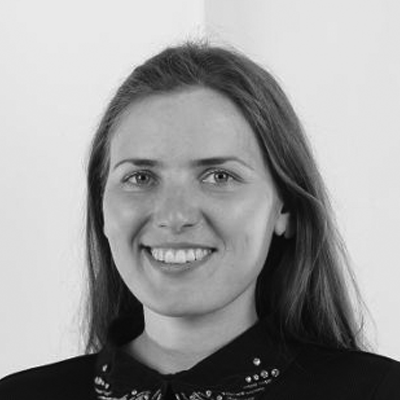
Nora Biteniece
Consultant, Strategic Communication Coordination Department, State Chancellery of the Republic of Latvia
Nora is a consultant at the Strategic Communication Coordination Department of the State Chancellery of Latvia where she monitors the information environment and works on various national and international efforts to identify and counter disinformation. In the previous post as a software engineer at the Technical and Scientific Development Branch of the NATO Strategic Communications Centre of Excellence, Nora worked on projects focused on countering the malicious use of social media and the use of geo-targeting in information and manipulation activities. Nora hold a bachelor’s degree in Computer Science and Neuroscience from Keel University (UK).

Līga Raita Rozentāle
Senior Director for Cybersecurity Policy and Defence at Microsoft European Governmental Affairs in Brussels
Līga Raita Rozentāle is the Senior Director for Cybersecurity Policy and Defence at Microsoft European Governmental Affairs in Brussels. She leads a team that addresses strategic and regulatory threats and opportunities arising in cyberspace and from emerging technologies in the EU and NATO. Līga serves in the Women4Cyber Advisory committee, board of advisors for CYDIPLO, steering committee for the Global Cyber Alliance and is an ENISA Advisory Group reserve expert. Līga served as a Special Advisor to the Latvian Mission to the UN on the Open Ended Working Group on Cyber Issues. Līga brings to the roles her experience as the first Latvian Cyber Diplomat at the EU and NATO. Ms. Rozentāle is a former UN Disarmament Fellow, holds CISM certification and has been named one of the 50 most influential women in cybersecurity in Europe by SC Magazine.
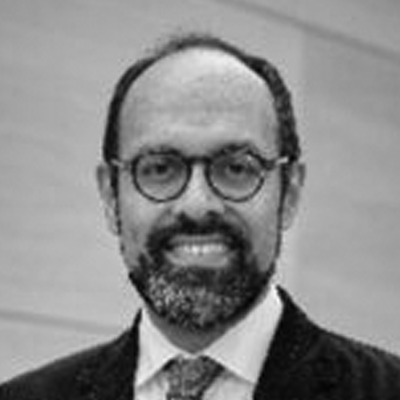
Hasit Thankey
Head, Enablement and Resilience Defence Policy and Planning Division NATO HQ International Staff
Hasit Thankey leads the NATO International Staff team responsible for policy and planning support for national resilience through civil preparedness and for the logistics enabling capabilities and services required to support Alliance military forces.
Before joining the International Staff, Mr. Thankey spent more than fifteen years in the Policy Group of Canada’s Department of National Defence. He has previously served as Defence Counsellor at Canada’s Joint Delegation to NATO and as Political Advisor at the Canadian command element supporting the NATO enhanced Forward Presence battlegroup in Latvia.
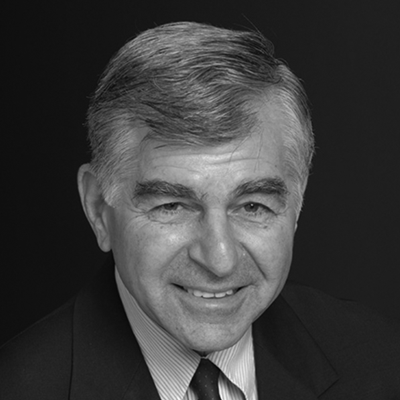
Governor Michael Dukakis
Co-Founder, Chairman of The Board of Directors, The Boston Global Forum;
Chairman of The Michael Dukakis Institute for Leadership and Innovation;
Three-term Governor of Massachusetts
To promote the work of the Boston Global Forum and to recognize those who support its goals, Gov. Dukakis co-created: “World Leader in Peace and Cybersecurity” Award; “World Leader in AI World Society” Award, and the AI World Society Initiative. Together with Nguyen Anh Tuan he also established December 12 as the annual Global Cybersecurity Day. Gov. Dukakis also coauthored, “The concepts of AI-Government,” “Ethics Code of Conduct for Cyber Peace and Security (ECCC),” and the “BGF-G7 Summit Initiative Report.”
Democratic Party Nominee for President of the United States, 1988;
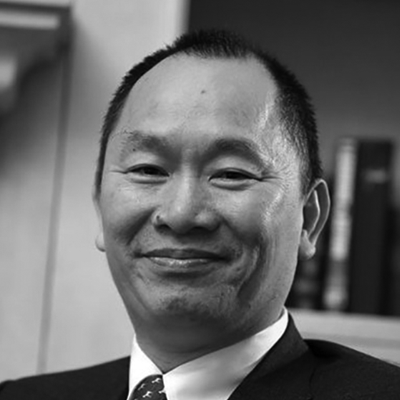
Nguyen Anh Tuan
Co-founder and Director of The Michael Dukakis Institute for Leadership and Innovation (MDI), co-founder and CEO of The Boston Global Forum (BGF), co-founder of the AIWS City (AIWS.city)
For his AI World Society Initiative and the concepts of AI-Government he developed, Vietnam National Television (VTV) named him Person of The Year 2018.
He is the Founder, CEO, and the first Editor-in-Chief of VietNamNet (1997-2011), Vietnam’s preeminent online newspaper. Tuan was the Founder and CEO of VASC Software and Media Company and VietNet, the first Internet service provider based on TCP/IP in Vietnam.
As a Shorenstein Fellow at Harvard Kennedy School in 2007, Tuan researched major trends in the development of electronic media in Vietnam.
In November of 2017, Tuan and Governor Michael Dukakis founded AI World Society (AIWS.net). In 2020, Tuan became coauthor of the Social Contract for the AI Age, of the book “Remaking the World – Toward an Age of Global Enlightenment”, of AI Social Contract Index, and of the AIWS City (AIWS.city). In July 2022, Tuan co-founded the Shinzo Abe Initiative for Peace and Security.
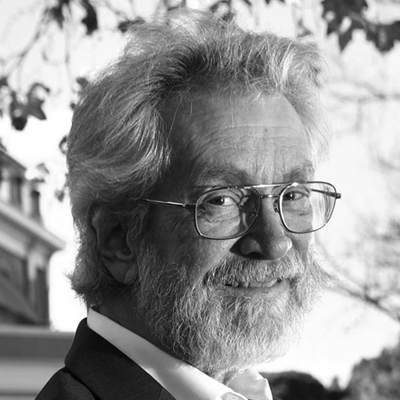
Alex Pentland
Director of MIT Connection Science, an MIT-wide initiative
Professor Alex 'Sandy' Pentland directs MIT Connection Science, an MIT-wide initiative, and previously helped create and direct the MIT Media Lab and the Media Lab Asia in India. He is one of the most-cited computational scientists in the world, and Forbes declared him one of the "7 most powerful data scientists in the world". He is on the Board of the UN Foundations' Global Partnership for Sustainable Development Data, co-led the World Economic Forum discussion in Davos that led to the EU privacy regulation GDPR, and was one of the UN Secretary General's "Data Revolutionaries" helping to forge the transparency and accountability mechanisms in the UN's Sustainable Development Goals. He is a distinguished contributor to the book “Remaking the World – Toward an Age of Global Enlightenment”.
Sharad Sharma
Co-founder, iSPIRT Foundation
Sharad Sharma has been leading ecosystems and companies through orbit changes for three decades. He co-founded iSPIRT Foundation a non-profit technology think tank that has conceptualized India Stack, Health Stack and other digital public goods. Sharad also co-founded Teltier Technologies, a wireless infrastructure startup now part of CISCO. An active angel investor with over two dozen investments, he was also instrumental in the success of India's first IP focused fund, India Innovation Fund. Sharad is a member of National Startup Advisory Council and SEBI's Financial and Regulatory Technology Committee. An alumnus if Delhi College of Engineering, he previously held R&D leadership positions at Yahoo, VERITAS, Symantec, Lucent and AT&T.
Yasuhide Nakayama
Coordinator of the Global Alliance for Digital Governance in Japan and Taiwan
Yasuhide Nakayama was first elected as a member of the House of Representatives in 2003, and since then has been reelected to the Diet on five occasions as a representative for the ruling Liberal Democratic Party (LDP).
During that time he served as State Minister for Foreign Affairs (under Prime Minister Abe) and most recently as the State Minister of Defense/State Minister of Cabinet Office (under Prime Minister Suga). He has also occupied various key Diet posts, including Chair of the House of Representatives Committee on Foreign Affairs.
In November 2021, Nakayama was appointed Special Advisor for Foreign Affairs to the LDP(to the Chairperson of the Policy Research Council for Foreign Affairs,
Defense and Game-Changing Fields.)
Sandra Kalniete
Experienced diplomat, Latvian politician, Member of the European Parliament since 2009
Sandra Kalniete is a Latvian politician, member of the European Parliament since 2009, experienced diplomat and writer. She’s a former Foreign Affairs Minister of Latvia and European Commissioner and has also served as Ambassador to the United Nations, France and UNESCO. Sandra Kalniete entered politics in 1988 as one of the founders of Latvian Popular Front, the main pro-independence political organization.
She`s a member of the European Parliament’s Foreign Affairs Committee, the Security and Defense Subcommittee, the International Trade Committee and the Special Committee on Foreign Interference in all Democratic Processes in the European Union, including Disinformation, where she serves as Rapporteur. Kalniete has actively worked on the Eastern Partnership agenda to advance democratic processes in Ukraine, Moldova, and Georgia. In addition, one of her priorities has been work on EU policy in the domain of historical memory.
Sandra Kalniete is the author of six books. To mention two: Song to kill a Giant: Latvian Revolution and the Soviet Empire's Fall, a detailed and accurate account of the Baltic revolution and With Dance Shoes in Siberian Snows, a first-person account of her family’s trials and tribulations in the Soviet Gulag, translated into 16 languages.
Pauls Raudseps
Journalist, Chairman of the Board at the Cits Medijs
Pauls Raudseps is one of Latvia's leading journalists and commentators. He writes on a wide variety of topics, including politics, economics, international affairs, and history.
Born in the United States, Mr. Raudseps received a degree in Russian and Soviet Studies from Harvard University. In 1990 he moved to Latvia to work for the Popular Front, the organisation that led the fight for Latvian independence. He was one of the founders of Diena, which for many years was Latvia's leading daily newspaper. Having worked for almost 19 years at the newspaper as managing editor and editorial page editor, he left Diena in October, 2009, to help found the independent weekly news magazine "Ir", where he is both a commentator and chairman of the advisory board.

Patrick Turner
Former Assistant Secretary General for Defence Policy and Planning, NATO
Patrick Turner was the Assistant Secretary General for Operations and then the Assistant Secretary General for Defence Policy and Planning at NATO from 2015 to July 2022. In the latter role he was responsible for work to increase defence spending by Allies, improve Allies’ defence capabilities, strengthen the force structure and military posture of NATO and Allies, assure NATO’s nuclear deterrent capability, and build resilience amongst Allies. Prior to that he was the Deputy UK Ambassador to NATO from 2011 to 2015. In the 1990s, he served in the Private Office of 3 NATO Secretaries General (Manfred Worner, Willy Claes and Javier Solana).
He joined the UK Ministry of Defence in 1984 after studying history at Merton College, Oxford. He held a wide of variety of roles, including Private Secretary to the Minister for the Armed Forces and to the Cabinet Secretary and Head of the Civil Service at the time of Mrs Thatcher. He helped to build new defence relationships between the UK and the countries of the former Warsaw Pact and the former Soviet Union at the beginning of the 1990s. Later, he led work to implement the 1998 UK Strategic Defence Review (SDR) and was subsequently the Director of Defence Policy in the Ministry of Defence at the time of 9/11, when he led work on the UK defence response. Later, he led work on the renewal of the UK nuclear deterrent, in 2005-7, and then led a team in the Cabinet Office which produced the first UK national security strategy in 2008. From 2008-10 he was the Minister Counsellor (Defence) at the British Embassy in Washington DC.

Chris Riley
Head of Strategic Communications Unit, Public Diplomacy Division, NATO HQ
Chris Riley is a former British Army Officer in the Parachute Regiment. He spent 10 years in the service, including operational tours of duty in Northern Ireland and Bosnia where he was Media Spokesman for the NATO-led Stabilisation Force. In 1998, he joined the Office of the High Representative, the lead civilian body responsible for implementing the civilian aspects of the Dayton Peace Agreement in Bosnia serving in Mostar and Sarajevo.
In 2004, Chris joined The Asia Foundation in Kabul, where he designed and helped to establish media regulations the 2004 Presidential Elections. Chris joined NATO HQ and led the Afghanistan Media Operations Centre at NATO HQ from June 2006 until December 2012.
In December 2012, Chris took up a new post as Head of the Strategic Communications Team and Principal Editor in NATO’s Public Diplomacy Division where he was responsible for NATO’s web, social media and audio visual content.
Since 2016, Chris has led the NATO HQ Strategic Communications Unit, providing StratCom advice to the Assistant Secretary General for Public Diplomacy, developing NATO HQ level communications strategies, frameworks and campaigns, and synchronization of communications efforts between NATO’s civilian and military staffs, and with Allies.
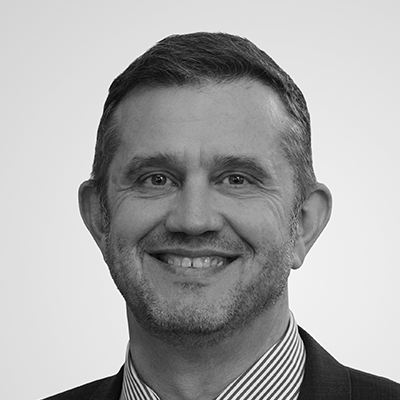
Amb. Edgars Bondars
Ambassador for the Three Seas Initiative
Serving as a Latvian diplomat, working at the MFA Latvia since 1994. Edgars Bondars started his diplomatic career in MFA's Consular department's legal division. Later on Edgars worked a s the head of division on multilateral diplomacy projects specifically in relation to the UN. He was also the director of the political department on bilateral agenda with Russia, Ukraine, Moldova, Central Asian and Southern Caucasus countries.
Edgars has worked at the Embassies of Latvia in Washington DC, Moscow, and Prague, and was appointed Ambassador in two postings - in Tashkent (2014 - 2017) and Warsaw (2017 - 2021). After returning to Riga in 2021 he was appointed as Ambassador at Large for the preparation of the 3 Seas Initiative Riga Summit 2022. E. Bondars is currently overseeing the connectivity agenda at the MFA.
Robert Lee
Office Director for European Union and Regional Affairs at U.S. Department of State
As Director for the Office of European Union and Regional Affairs, Rob is responsible for formulating and implementing U.S. policy related to and engagement with the European Union at the Department of State. He served as Director for the Office of Regional and Security Policy in the Bureau of East Asian and Pacific Affairs from 2016 to 2018. In this position, he helped formulate the United States’ Indo-Pacific strategy. Prior assignments included: Canberra, Guangzhou, Ankara, EUR’s NATO Desk, the Intelligence and Research Bureau’s Office of Current Intelligence, Shanghai, and Athens.
Rob is a Thomas R. Pickering Fellow and has a master’s in public policy from Harvard's John F. Kennedy School of Government and a master’s in national security and resource strategy from the National Defense University’s Eisenhower School. He has a bachelor's degree in government and politics from the University of Maryland. Rob speaks fluent Mandarin and conversational Turkish and Korean. He is married to Julia Fu and they have two children.

H.E. Kolinda Grabar-Kitarović
Former President of Croatia
H.E. Kolinda Grabar-Kitarović is the 4th and 1st female President of Croatia (2015-2020) with broad national and international experience in politics, diplomacy, and security studies. During her career as an elected official and in national and international civil service, among others, she was elected a Member of the Croatian Parliament (2003), and served as Croatia’s first female Minister of Foreign Affairs (2003-2008) and Ambassador to the United States, Mexico, Panama and the Organisation of American States (2008-2011), as well as the first female Assistant Secretary General and member of the North Atlantic Treaty Organisation (NATO) Senior Leadership (2011-2014). She was elected an independent member of the International Olympic Committee in 2020, and was appointed Chair of the Future Hosts Commission for the Games of the Olympiad in 2021. Currently, she is a Special Advisor to the Dean of the Zagreb School of Economics and Management and serves on the boards of a number of not-for-profit institutions, such as Friends of Europe, the US Atlantic Council, GLOBSEC, Halifax International Security Forum, the Nizami Ganjavi International Center. She is a Member of the High-Level Advisory Council for the High Representative for the UN Alliance of Civilizations (UNAOC), the Global Ambassador for Immunization for Women Political Leaders (WPL), and chair emerita of the Council of Women World Leaders. Parallel to her diplomatic and political careers, she has pursued an academic career in government, international relations, and security studies at the Vienna Diplomatic Academy (1994-1995), the George Washington University (2002-2003), Harvard University (2009), the Johns Hopkins University (2011), and the University of Zagreb. She holds a Master’s degree and is currently writing a Ph.D. thesis in the field of International Relations and Security Studies on the Responsibility to Protect. She is a recipient of the 2019 Fulbright Lifetime Achievement award for her “remarkable contributions as a leader, diplomat, and public servant”, the George Washington University President’s Medal, and a number of other national and international awards, decorations, recognitions, honorary doctorates, and honorary citizenships.
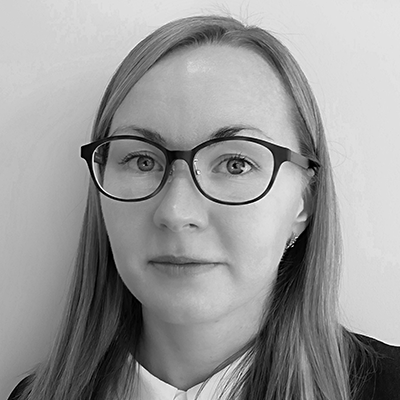
Dr. Maria Shagina
Diamond-Brown Research Fellow for Economic Sanctions, Standards and Strategy at the International Institute for Strategic Studies
Dr. Maria Shagina is a Diamond-Brown Research Fellow for Economic Sanctions, Standards and Strategy at the International Institute for Strategic Studies. Dr Shagina's research interests cover economic statecraft, international sanctions and energy security, with a particular focus on post-Soviet states. Previously, she held senior research positions at the Finnish Institute of International Affairs and the University of Zurich. Her research has been cited in The New York Times, The Washington Post, The Financial Times, The Wall Street Journal, Foreign Policy and CNN.
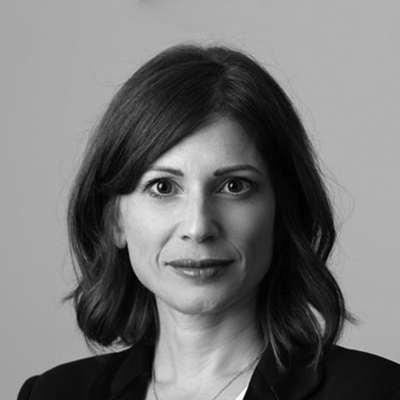
Irene Fellin
NATO Secretary General’s Special Representative for Women, Peace and Security
Ms. Fellin is a WPS expert and peacebuilder who has worked as a Senior Gender Adviser with Women in International Security (WIIS), the International Affairs Institute (IAI) in Rome, NATO HQ in Brussels, as well as international consultant for UN agencies and other national institutions for more than 15 years. She was instrumental in establishing and coordinating the Mediterranean Women Mediators Network (MWMN), a project promoted by the Ministry of Foreign Affairs and International Cooperation of Italy aimed at fulfilling the need to increase the number of women involved in peacemaking efforts and at facilitating the appointment of high-level women mediators at local and international level.
Born in Bolzano (Italy), Ms. Fellin studied Conservation of Cultural heritage in Parma (Italy) and Museology at the Louvre, in Paris, and started her career working at the Italian Ministry of Foreign Affairs and International Cooperation in the field of cultural diplomacy. She later obtained her Master’s Degree in “Gender and Women Studies” from the Middle East Technical University (METU) in Ankara, where she lived for almost 5 years.
Ms. Fellin is a strong supporter of female leadership and in 2016 she founded the Italian chapter of Women In International Security, an organisation dedicated to advancing the leadership and professional development of women in the field of international peace, security and defence.
Since 2017 she has been working with women mediators and peacebuilders across the Globe, supporting projects aimed at facilitating peacebuilding and mediation initiatives at the national and international level. She works on education and training programs about the “Women, Peace and Security” agenda and about “Gendered inclusive mediation and peace processes”. Furthermore, since 2019 she is visiting Lecturer on “Gender, Security, and Post-Conflict Reconstruction” at Durham University (UK) and she continues to mentor young women within the framework of WIIS’s mentoring program “Global Women Leaders”
Ms. Fellin is an Eno gastronomy and art lover. In her free time, she loves hiking, reading and travelling. She is married and is mother of twin girls.
Col. Liudmyla Kulchytska
Ukrainian Armed Forces
Col Liudmyla Kulchytska, Colonel of the Security Service of Ukraine, Head of the Situation and Information Unit (of SSU) at Battle of Kyiv 2022
Mykola Bielieskov
Senior Analyst of NGO Come Back
MA in international relations in 2016 (Taras Shevchenko National University of Kyiv). In September 2016-September 2019 analyst in UA NGO "Institute of World Policy". Since October 2019 Research Fellow at National Institute for Strategic Studies under Ukrainian President (Defence policy department). Since August 2022 senior analyst of "Come back alive" charity. Field of interest - evolution of operational art, Ukrainian and Russian Armed Forces.
Vitālijs Rakstiņš
Defence Counsellor to the UK and a non-resident Resilience Advisor to Ukraine
Vitālijs Rakstiņš is a security practitioner with more than 17 years of experience in the Ministry of Defence and Ministry of Interior. He is a Defence Counsellor to the UK and a non-resident Resilience Advisor to Ukraine.
Before that, he was Director of the Legal Department (2010-2012), Counsellor to the Representation to NATO (2012-2015) and Director of the Crisis Management Department (2015-2021). Before that, he served in the Ministry of Interior (2006-2008) and the Office of Citizenship and Migration (2005-2006). He holds a Master of Laws (LL.M.).
Areas of expertise: resilience, cyber and information security.
Janis Rungulis
Managing partner at the East Stratcom Consulting
Janis Rungulis is a managing partner at the East Stratcom Consulting, implementing strategic communication campaigns for the European Union in the Eastern Partnership countries (Armenia, Azerbaijan, Belarus, Georgia, Moldova and Ukraine) & delivering stratcom capacity building projects. From 2015-2021 he was part of the EU's East Stratcom Task Force, involved in the EUvsDisinfo team's efforts to address pro-Kremlin disinformation in the EU and the Eastern Partnership countries. Before that Janis was the spokesperson of the Latvian Presidency of the Council of the EU in Brussels dealing with telecommunications, transport, energy, environment, education and other topics. Janis has also worked for the leading public relations (Porter Novelli), advertising (DDB) and media agencies (Omnicom Media Group) in Latvia.
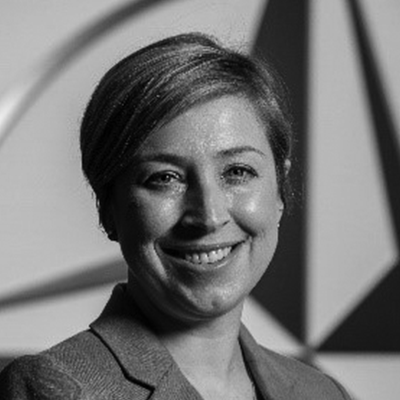
Jessica Cox
Director of Nuclear Planning Directorate, NATO HQ
Jessica Cox is the Director, Nuclear Policy Directorate at NATO. She is responsible for developing and implementing NATO nuclear policy; organizing exercises, policy symposiums, and training programs; and providing policy support to Secretary General on nuclear deterrence. Ms. Cox chairs the Nuclear Planning Group Staff Group.
Prior to NATO, Ms. Cox was detailed to the U.S. National Security Council as the Director for Arms Control. She was instrumental in developing the U.S. response to Russia’s violation of the Intermediate-Range Nuclear Forces Treaty, implementing the New Strategic Arms Reduction Treaty, and restarting bilateral U.S.-Russia Strategic Stability Talks.
Ms. Cox was a policy analyst in the Office of the Secretary of Defense for Policy, U.S. Department of Defense for 15 years. She served in a variety of positions, including as: Director for Russia Policy and Conventional Arms Control; Lead Negotiator for the Open Skies Treaty; Country Director, Pakistan; Country Director, Iran; and Policy Analyst, Countering Weapons of Mass Destruction.
Ms. Cox holds a Juris Doctorate from Georgetown University Law Center and a Bachelor’s of Science in International Relations from the Georgia Institute of Technology. Ms. Cox entered government as a Presidential Management Fellow.

Dr. Ieva Karpavičiūtė
Senior Adviser of Euro-Atlantic Cooperation Department, Ministry of National Defence, Republic of Lithuania
In 2004, Ieva Karpavičiūtė joined the diplomatic service of the Republic of Lithuania, worked at the Security Policy Department, NATO unit of the MFA. Since 2010 held a position at the Lithuania‘s delegation to NATO, in charge of operations policies and arms control. 2013-2017 served as a policy officer at NATO IS, PASP, Arms Control and Coordinating Section, responsible for nuclear arms control. 2017-2020 worked at the Arms Control and Non-Proliferation unit at the Lithuanian MFA. In 2020, Ieva joined
the MOD department of Euro-Atlantic Cooperation, responsible for nuclear policy.
She holds PhD degree in Political Science from Vytautas Magnus University, Lithuania. Her research areas: regional security, defence, deterrence and arms control, foreign policy analysis, and theories of International Relations. She is an author of a number of scientific articles on defence and deterrence, arms control, Transatlantic security, Lithuania’s foreign policy, and regional security orders.
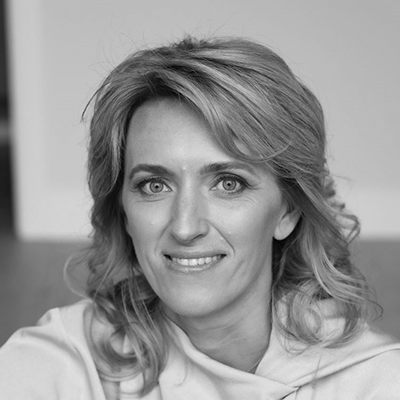
Ieva Ilves
Advisor on Digital Policy to the President of Latvia
Ms Ieva Ilves is a diplomat, an expert on foreign and security policy, digital politics, and cyber security with over 20 years of experience in national and international institutions in Latvia, NATO, and the EU. She has worked as an Adviser to the State Secretary of the Ministry of Defence of Latvia and the Head of the National Cyber Security Policy Coordination Division, as well as has led the establishment of the NATO Centre of Excellence for Strategic Communication in Riga. Ms Ilves has worked for Latvia's joining NATO, in organisation of the 2006 NATO Summit in Riga, as well as representing Latvia in NATO in Brussels and being a Political Advisor to the European Union Special Representative for the South Caucasus, Azerbaijan. Together with the US Ambassador to NATO Mr Kurt Volker, she has compiled and edited a book "Nordic–Baltic–American Cooperation: Shaping the US – European Agenda". She holds a Master's degree in Political Science from the University of Latvia and a Master's degree in International Politics from John Hopkins University, Washington. MS Ieva Ilves has received the state award, the Cross of Recognition for her distinguished service in organising the NATO Summit.
Ms Ieva Ilves is the spouse of former President of Estonia Tomas Hendrik Ilves, and as the First Lady of Estonia, she has been involved in several public activities.
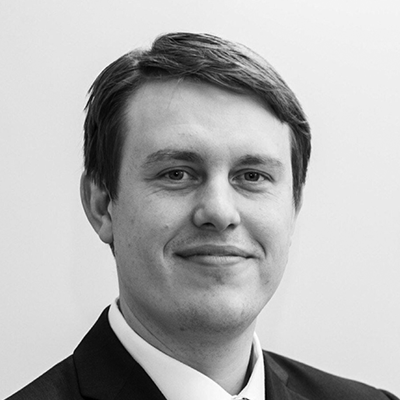
Michał Baranowski
Senior Fellow and Director, Warsaw Office at the German Marshall Fund of the United States
Michał Baranowski is a senior fellow and the director of GMF's Warsaw office, where he provides overall strategic direction and leadership for the organization's work in Poland, the Baltic states, and the V4 countries. He writes and speaks extensively on NATO, transatlantic relations, and U.S. foreign policy, and is frequently quoted in outlets such as Associated Press, Financial Times, New York Times, Wall Street Journal, Die Welt, Rzeczpospolita, Reuters, Axios, Le Soir, Washington Post and Foreign Affairs. He publishes in Polish, American, and European media and policy journals. He is a member of the Polish-German reflection group established by presidents of Poland and Germany. He holds a master's of European public affairs from Maastricht University, and has studied at Mercer University in the United States and the University of Oxford.

Elīna Lange-Ionatamišvili
Senior Expert, NATO StratCom COE

Pēteris Strautiņš
Economist at Luminor Latvija

Marta Musidłowska
Instrat Digital Economy Analyst
A graduate of the University of Warsaw Law School and CopyrightX at Harvard Law School. She specializes in areas related to digitization, in particular concerning personal data protection and ethical artificial intelligence. For several years she has been involved in policymaking in the field of Internet governance as a member of the Steering Committee of Youth IGF Poland, co-organizing the Youth Summit at the Internet Governance Forum in Katowice, Poland. She is currently an analyst for the Digital Economy research program at the Instrat Foundation, where she works on topics related to data governance and the digitization of the medical sector. She is co-author of the report "Unleashing the Potential of Data. Managing Data as a Shared Resource". She is actively working to raise public awareness of the value of sharing data, especially health data, participating in consultations before the European Commission on the creation of the European Health Data Space. Given her year-long studies at the Center for American Law Studies, she also provides legal support to a Polish-American startup developing the Actaware app for more informed consumer choices. She represented Poland at the School for Women Leaders organized by the European Leadership Academy, and was a Scholarship Holder of the European Forum Alpbach.
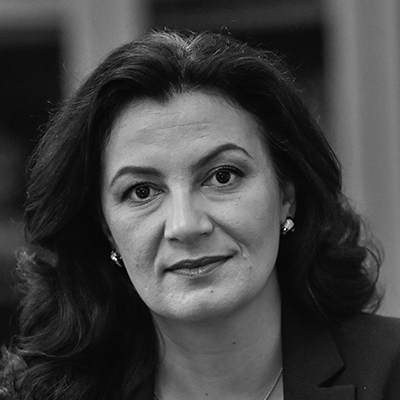
Ivanna Klympush-Tsintsadze
Member of Verkhovna Rada of Ukraine, Chair of the Committee of Ukraine's integration into the European Union
Deputy Prime Minister for European and Euro-Atlantic Integration of Ukraine (2016 – 2019).
Member of the Ukrainian Parliament, First Deputy Chairperson of Foreign Affairs Committee, Ukraine's Parliamentary Delegation to NATO PA leader (2014-2016).
Ivanna entered politics after the Revolution of Dignity in 2014. Prior to that, she worked in civil society and journalism sector. In 2007-2011, Ms. Klympush-Tsintsadze chaired International Charity Organization “Open Ukraine Foundation”. Between 2011 and 2014 she was heading Yalta European Strategy network.
For 5 years (2002-2007) Ivanna was Radio BBC Ukrainian Service correspondent in the USA (Washington D.C.) and in the Caucasus (Tbilisi).
Prior to that, Ivanna worked in the East-West Institute’s Kyiv Center (1998 to 2002). She began her career in 1993 with the Ukrainian Center for Independent Political Research (UCIPR).
Mrs. Klympush-Tsintsadze is co-editor of the book: “Black Sea Region: Cooperation and Security Building”.
Education: In 1993 Mrs. Klympush-Tsintsadze studied International Relations at the State University of Montana, USA. In 1992 she completed summer school course "History of Ukraine. Ukrainian Literature" at the Harvard Ukrainian Research Institute of the Harvard University (USA).
Ivanna holds Master’s degree in speech therapy from Dragomanov State Pedagogical University (1994), Bachelor’s degree and Master’s degree in International Relations from Taras Shevchenko National University (1998).
Ivanna is fluent in Ukrainian, English, Russian, understands and speaks Polish, Hungarian and Georgian languages.
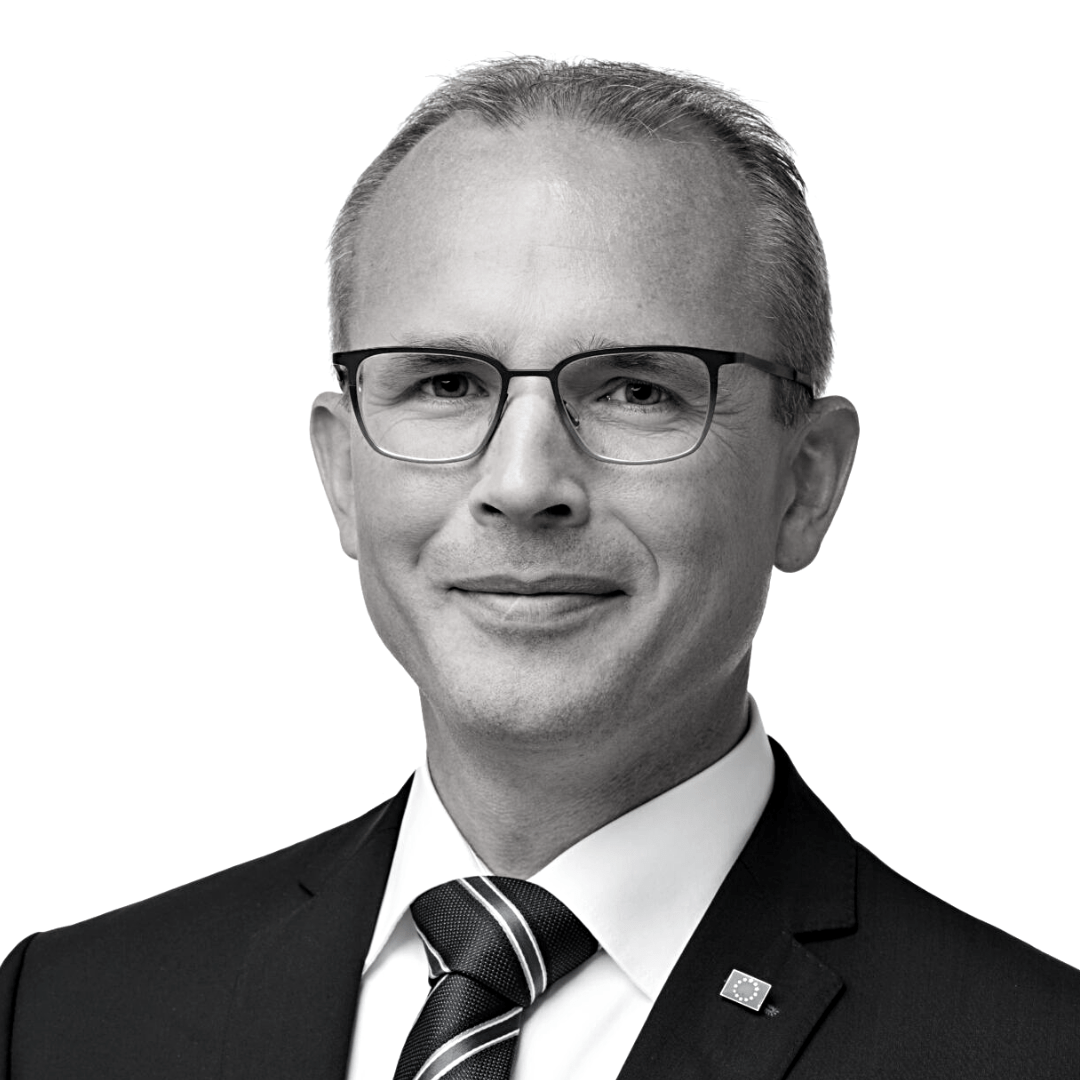
Tobias Winkler
Tobias Winkler has been a member of the German Bundestag since 2021 and
is a directly elected Member of Parliament for Western Middle-Franconia.
For the CDU/CSU Parliamentary Group he serves as a member of the
Committee on European Union Affairs, where he is rapporteur for the
Baltic States. He also works as substitute member of the Foreign Affairs
Committee and as member of the Bundestag delegation to the OSCE
Parliamentary Assembly.
After graduating from Political Sciences in Munich, Tobias Winkler
worked for ten years as Head of Office for Members of the European
Parliament. From 2009, he managed the office of former President of the
European Parliament Dr. Hans-Gert Pöttering, focusing on Foreign Policy.
From 2015 - 2021 he headed the European Parliament's Liaison Office in
Munich.