Download App


Agenda
For two days, dozens of distinguished leaders and experts presented their opinions on the most touching issues in foreign policy and defence of the Baltic Sea region and beyond.
Programme
- Day 1September 29, 2017
- Day 2September 30, 2017
- 14:30 - 15:00REGISTRATION
- 15:00 - 15:15WELCOMING REMARKS BY H.E. Mr Raimonds Vējonis, President of the Republic of Latvia
- 15:15 - 16:45JULY 2018, BRUSSELS: NATO LEADERS AGREE ON ...
NATO has been a cornerstone of Trans-Atlantic security for six decades. Looking back on the “game-changing” summits in Warsaw and Wales, NATO has rapidly adapted to the newly emerged challenges. The rise of both conventional and asymmetric threats has led to the increase of defence budgets in most NATO countries. It seems that this trend will continue and the amount of money available for defence establishments will grow. In the meantime, driven by a Franco-German vision, European defence is on the rise. With strong sentiments about non-duplication with NATO, the European project clearly has its own agenda. Will we be able to manage the new momentum and spend our resources wisely for the most pressing common security needs? What will be on the table for NATO leaders one year from now?
Mr Raimonds Bergmanis, Minister of Defense of the Republic of Latvia
Hon. Mr Harjit Singh Sajjan, Minister of National Defense of Canada
Dr. Claudia Major, Senior Associate, German Institute for International and Security Affairs
Mr Paolo Alli, President of the NATO Parliamentary Assembly
Dr. Hans Binnendijk, Senior Fellow, Center for Transatlantic Relation, John Hopkins University’s School of Advanced International Studies
Moderator: Dr. Žaneta Ozoliņa, Vice Chairman of Latvian Transatlantic Organisation, Professor of the Department of Political Science, University of Latvia - 16:45 - 17:15COFFEE BREAK: MODERN LEADERS: BREAKING OR MAKING TRANSATLANTIC RELATIONS
Populism is gaining traction on both sides of the Atlantic. Some leaders are seizing the opportunity, but the cornerstone security institutions and governments are losing their political trust. Who or what will defend our present values and political establishments to bring us back to where we were before we lost ground? Does the rise of nationalism mean the rupture of present security designs? Do we need to revise NATO’s values to leave the trans-Atlantic relationship intact against populist assaults?
Mr Tod Lindberg, American political expert and a Research fellow at Stanford University's Hoover Institution
Moderator: Mr Adam Reichardt, Editor-in-Chief of New Eastern Europe - 17:15 - 18:45IS THE END OF GLOBALISATION LOOMING AHEAD?
It seems that the current US administration has given up on being leaders for the advancement of liberal international order, including global movement towards greater economic, financial and trade integration. Globalisation is driven by international trade, investment and information technology. It has significant effects on economic development and prosperity, for individuals and societies around the world. Although extreme poverty has been cut by half during last 30 years, inequality levels in "rich" countries have left low-income “blue collars feeling bitter across the US and Europe resulting in electoral choices that oppose further and deeper global economic integration. With India and China on the economic rise and defending globalisation will EU come forward to reclaim the global economic leadership?
Mr Valdis Dombrovskis, Vice – President for the Euro and Social Dialogue, also in charge of Financial Stability, Financial Services and Capital Markets Union
Dr. Sergei Guriev, Chief Economist, The EBRD
Mr Michael Stumo, CEO, Coalition for a Prosperous America
Mr Martin Gauss, Chairman of the Board, Air Baltic Cooperation
Moderator: Mr Brooks Newmark, Researcher in Oxford University, United Kingdom
- 19:00 - 20:30OPENING BUFFET DINNERVenue: Railway Museum
- 19:00 - 19:45COFFEE BREAK CONVERSATION: UKRAINE: EASTERN OUTPOST OF EUROPEWith the complicated security context and up-coming Presidential and Parliamentary elections, how well Ukraine is balancing its domestic policy priorities with maintaining a good pace for the required reforms to stay closer to the EU?
H.E. Pavlo Klimkin, Minister of Foreign Affairs of Ukraine
Mr Valdis Dombrovskis, Vice – President for the Euro and Social Dialogue, also in charge of Financial Stability, Financial Services and Capital Markets Union
Moderator: Mr Simon Nixon, Chief European Commentator of the Wall Street Journal - 20:45 - 22:15NIGHT OWL SESSION: EASTERN PARTNERSHIP STUCK ON THE ROAD?
The Eastern Partnership was established to establish a free trade area, to define and build its relationship with Armenia, Azerbaijan, Belarus, Georgia, Moldova, and Ukraine. It provides an avenue for discussions on trade, economic cooperation, travel and other issues. However in Georgia, Ukraine and Moldova EU has much higher expectations that are not always met within the framework of the Eastern Partnership. Many in these countries believe that the Eastern Partnership program is designed to bring neighbouring countries closer to the European Union. Is the Eastern Partnership stuck on the road? Could it provide broader reassurances for citizens of EaP countries of an open door policy in the future?
Sessions are held under "Chatham House Rule" and will not be broadcasted
H.E. Mr Andrei Galbur, Deputy Prime Minister, Minister of Foreign Affairs and European Integration of the Republic of Moldova
Amb. Ojārs Kalniņš, Chairman of Foreign Affairs Commission, Saeima
Ms Tamar Khulordava, Chairperson of the European Integration Committee of the Parliament of Georgia
Moderator: Mr Damien McGuinness, Correspondent, BBC Berlin, Germany
- 20:45 - 22:15NIGHT OWL SESSION: UKRAINE: FUTURE ALTERNATIVES
Three years after the occupation of Crimea, Ukraine is facing a stalemate. Although Ukraine and Russia are both trapped in Donbass, none have declared being at war. More so both countries maintain diplomatic relations and trade with each other; both President Poroshenko and President Putin refused to renegotiate the Minsk-2 agreement, which was signed two years ago calling Russia to return control of separatist territories to Ukraine. Neither Ukraine nor Russia is interested in taking formal responsibility of Donbass due to many reasons. For Russia, Donbass is the perfect reason for interfering in the rest of Ukraine. Neither of the two countries can afford the reconstruction costs of the destroyed region. The current state of affairs can not stay this way forever. What are the available alternatives for Ukraine?
Sessions are held under "Chatham House Rule" and will not be broadcasted
H.E. Pavlo Klimkin, Minister of Foreign Affairs of Ukraine
H.E. Mr Linas Linkevičius, Minister of Foreign Affairs of Republic of Lithuania
Dr. Paul D. Miller, Associate Director of the Clements Center for National Security, The University of Texas at Austin
Amb. Robert Brinkley CMG, Chair of Ukraine Project, Chatham House
Dr. Anders Åslund, Resident Senior Fellow, Dinu Patriciu Eurasia Center, Atlantic Council
Moderator: Dr. Jana Puglierin, Head of the Alfred von Oppenheim Center for European Policy Studies
- 20:45 - 22:15NIGHT OWL SESSION: BREXIT INPUTS AND OUTCOMES: LESSONS LEARNED
As for today, Britain is politically dominated by Brexit. Sufficient progress in negotiations between the European Commission and the British government is lagging behind schedule. Consequently, the end-date of formal negotiations is impossible to define. And the successful completion of much more difficult talks on trade might be a phantasy for Britain. Meanwhile British consumers grapple with increasing prices and an economy that is losing its steam. Therefore both sides need to avoid the risk of “no deal” which wouldn’t be beneficial to either Britons or Europeans. Will the Brexit promises to the electorate match the real policy outcomes for the British people? What lessons do Britons and Europeans need to draw from the tricky divorce called Brexit?
Sessions are held under "Chatham House Rule" and will not be broadcasted
Mr Mark Andrew Pritchard MP, Member of the UK Delegation to the Council of Europe Parliamentary Assembly
Sir Simon Fraser, Deputy Chairman at Chatham House, Managing Partner at Flint Global
Dr. Alasdair Allan, Minister for International Development and Europe, Scottish Government
Mr Ian Bond, Foreign Policy Director, Centre for European Reform
Moderator: Ms Natalie Nougayrède, Editorial Board Member, The Guardian
- 20:45 - 22:15NIGHT OWL SESSION: MEDIA TECHNOLOGIES DISRUPTING REPRESENTATIVE DEMOCRACY
We have witnessed Russian interference in democratic elections in the US, the Netherlands, France, Germany, Montenegro, Ukraine, Moldova and other European countries. Interference is carried out through supporting a political candidate of choice with financing, on-line activist groups and bot-driven networks pushing through positive narratives in social media. At the same time, political opponents are slandered using hacking and disinformation by disseminating sensitive information, lies and fake stories. The influence of foreign agents’ operations can be best defended by societal awareness, collaboration between government agencies, media, and internet technology companies. How can the election process be legitimated in a representative democracy if foreign agents implement broad scale operations to systematically influence election results?
Sessions are held under "Chatham House Rule" and will not be broadcasted
Amb. Alexander Vershbow, Distinguished Fellow, Brent Scowcroft Center on International Security, Atlantic Council
Ms Carmen Romero, Deputy Assistant Secretary General, NATO Public Diplomacy Division
Mr Julian Röpcke, Political Editor for the Bild
Mr Patrik Maldre, Senior Cyber Threat Intelligence Analyst, FireEye iSIGHT Intelligence
Moderator: Mr Jānis Sārts, Director of the NATO Strategic Communication Center
Tweets about us
#RigaConf17 Tweets- On behalf of #RigaConf17 team we express our sincere condolences to the family, friends and colleagues of Ms Sylke Tempel.07.10.2017 (11:19)
- Should the army defend values, and how? Topical debate in the context of Spanish police in #Catalonia. #RigaConf17 https://t.co/9MviVGwdbt02.10.2017 (09:02)
- West must pay attention to what #Russia does to neighbors. #Ukraine was getting hacked "before it was cool." —… https://t.co/k5FhHYZN2V01.10.2017 (21:56)
- #Russia's proposal of UN peacekeepers in east #Ukraine could just be attempt to freeze or prolong the conflict. —… https://t.co/2Id0dgZNbh01.10.2017 (21:16)
- This is 1st year when almost every country in the EBRD region will be experiencing economic growth — @sguriev tells… https://t.co/yJPGbJQwfr01.10.2017 (21:14)
- There is a consensus that #Ukraine's economy is now growing by 2-3%. — @sguriev at #RigaConf17 https://t.co/NCcuAq866Q01.10.2017 (21:12)
- #Ukraine's free trade agreement w/ Canada will give the country greater access to Canadian defense industry. —… https://t.co/Fx1fDiwpM101.10.2017 (21:10)
- Starting NOW! Hromadske's Sunday Show from Riga Conference in #Latvia. Tune in for exclusive interviews! #RigaConf17 https://t.co/bD7A8njfhN01.10.2017 (21:02)
- Watch https://t.co/hQYbTiYYK6 Katalonijasِ #BriedisPerezِ #RigaConf17ِ #GermanyRXِ #florbolsِ #E_konsultācijaِ01.10.2017 (20:04)
- Šobrīd aktuālākās tēmas tviterī: Katalonijā #RigaConf17 #GermanyRX #florbols Pasaules Krievijas NEPLP #olybetlbl #Latvia.01.10.2017 (20:00)
- Tune in tonight for @Hromadske's Sunday Show w/ exclusive interviews from #RigaConf17 on #Ukraine & global security! https://t.co/UQGqn123cX01.10.2017 (18:10)
- 01.10.2017 (17:29)
- RECOMMEND, NEW SITE TO GET FREE #FOLLOWERS01.10.2017 (14:49)
- Kamēr Spānijas policija apkauj miermīlīgos Katalonijas Brīvības Referenduma dalībniekus,@EmbajadaEspRiga atsēž @… https://t.co/gkRzKFUUz401.10.2017 (12:49)
- This year's Riga Conference ended yesterday, but you can already watch it online: https://t.co/xnb2H7nNGr #RigaConf1701.10.2017 (10:58)
- Moving on this morning from #Riga - thanks @LATO_LV for #RigaConf17. Next stop, #Kyiv, to get first hand impression of #Ukrainian reforms.01.10.2017 (10:53)
- Thank you to all partners, supporters and friends for making #RigaConf17 possible already 12 years in the row. https://t.co/Na5nZAcXPx01.10.2017 (09:55)
- Exercise at #RigaConf17 worth repeating a couple of times. See the full video of all panels at:… https://t.co/cxwLw5Fv3C01.10.2017 (09:53)
- watch https://t.co/JM1TuQpAoZ #SpareMyRibsِ #WIW2017ِ #BriedisPerezِ #RigaConf17ِ #E_konsultācijaِ #florbolsِ01.10.2017 (07:27)
- Retweeted Eesti NATO Ühing (@EstonianATA): Second day has started at #RigaConf17 on topic quo vadis #Russia ?... https://t.co/PRwG3LDQ0r01.10.2017 (05:48)


About Riga
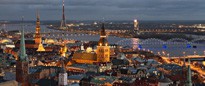
Founded in 1201, Riga offers its visitors a vast historical heritage and modern dynamism that is unparalleled.
 READ MORE
Contact Us

Ms Sabīne Štāla
Contact person for speakers,partners, security & general issues
- [email protected]
- (+371) 25638336

Ms Elīne Dembska
Media coordinator
- [email protected]
- (+371) 26834171