Download App


Agenda for Future Leaders' Forum
Please note that the agenda and speakers' list is subject to change.
FRIDAY, OCTOBER 28
|
09.30 – 10.00 |
Registration |
|
|
21ST CENTURY NATO: DEFENSE OF EASTERN AND SOUTHERN FLANKS |
|
Since Wales summit NATO has moved from reassurance to deterrence erasing peculiar distinction between “old” and “new” members. NATO has finally adopted credible deterrence for its Eastern flank by establishment of the Enhanced Forward Presence. It has also approved a long list of measures to deal with the situation in the Southern flank. However, the question remains if this will be enough to provide 360° protection and security to all the Allies in circumstances where adversaries and potential adversaries don’t abide by any rules or previously agreed commitments and are keen on using escalatory rhetoric. Will NATO’s Warsaw Summit decision be enough in these circumstances? |
|
|
10.00 – 11.30 Opening Discussion |
Dr Balkan Devlen, Associate Professor at the Department of Political Science and International Relations in Izmir University of Economics, Turkey Gen Sir Richard Shirreff, former Deputy Supreme Commander NATO Europe Dr Ieva Bērziņa, Senior Researcher at the Centre for Security and Strategic Research of the National Defence Academy of Latvia
Moderator: Ms Guna Šnore, Programme Officer of the Engagement Section, NATO
|
|
11.30 – 12.00 |
Coffee Break National Library of Latvia |
|
|
WEAPONISATION OF INFORMATION IN MODERN CONFLICTS |
|
Information has been an important element of conflicts since ancient times. Misleading opposing commanders, robbing soldiers of the will to fight or even frightening civilians – were the methods used in conflicts of previous centuries. Yet, since the annexation of Crimea and the rise of DAESH, the term “information warfare” is becoming a more visible part of political discourse of the transatlantic community. This panel will focus on several questions: What is the role of information in contemporary conflicts? What has changed from previous centuries? What are the implications for modern commanders and political decision makers? |
|
|
12.00 – 13.30 Panel Discussion
|
Mr Jānis Sārts, Director of NATO Strategic Communications Centre of Excellence, Latvia Mr Giles Portman, Head of East Stratcom Task Force at European External Action Service, United Kingdom Mr Stanislavs Hilcuks, Member of the Board & COO of APPLY Inteligent Technologies, Latvia
Moderator: Mr Maris Cepurītis, Researcher, Centre for East European Studies, Latvia
|
|
13.30 – 15.30 |
Lunch National Library of Latvia |
|
|
DOMESTIC DEVELOPMENTS IN MEMBER STATES IN THE FUTURE OF ALLIANCE |
|
NATO's Open Door policy has helped close the Cold War-era divisions in Europe. NATO enlargement has contributed to spreading democracy, security and stability further across Europe. Member states have overcome economic crisis and reached new agreements with each other. However, the alliance faces new security challenges. Will there be harmonization policies between NATO member states? Can the alliance find a solution to the migrant crisis in Europe, political volatility in Turkey, and most importantly, can it successfully fight terrorism in all of its forms? |
|
|
15.30 – 16.30 Panel Discussion |
Mr James Kirchick, Fellow with the Foreign Policy Initiative, journalist and foreign correspondent in Washington, USA Mr Tod Lindberg, Research Fellow at the Hoover Institution, Stanford University, USA H.E. Mr Hayri Hayret Yalav, Ambassador, Turkish Embassy in Riga, Turkey
Moderator: Ms Elisabeth Braw, Senior Consultant at Control Risks and a Nonresident Senior Fellow at the Atlantic Council
|
|
16.30 – 17.00 |
Coffee Break National Library of Latvia |
|
|
|
||||||||||
SATURDAY, OCTOBER 29
|
|
MORNING PANEL OF EMINENT PERSONS ON COMMON EUROPEAN SECURITY PROSPECTS OF COOPERATIVE SECURITY IN EUROPE: BACK TO DIPLOMACY? Session is held under the 'Chatham House Rule' |
|
8.30 – 9.30 Morning Session |
Dr Vaira Vīķe-Freiberga, Former President of Latvia and member of the Panel of Eminent Persons on European Security
Sir Robert Cooper, Former diplomat, Member of European Council on Foreign Relations and Head of Editorial Team of the Panel of Eminent Persons on European Security Special Advisor at the European Commission
Ms Rasa Ostrauskaite, Deputy Director of the Conflict Prevention Centre for Policy Support Service, OSCE Secretariat
Mr Andris Pelšs, Under-Secretary of State - Political Director, Ministry of Foreign Affairs of the Republic of Latvia
Moderator: Dr. Žaneta Ozoliņa, Vice Chairman of Latvian Transatlantic Organisation, Professor of the Department of Political Science, University of Latvia
|
|
9.30 - 10.00 |
Coffee Break |
|
10.00 - 13.30 |
Scenario Simulation in Workgroups |
|
13.30 - 15.00 |
Lunch |
|
15.00 - 16.30 |
Presentation of workgroup scenarios |
|
16.30 - 17.00 |
Coffee Break |
WHAT IS THE FUTURE OF THE EUROPEAN ORDER LIKE?
The EU has been one of the cornerstones of European order in the post – Cold War age. For more than 20 years, EU integration has been shaping the European political landscape. Enlargement and the transfer of competences were accompanied by the spread of democracy and market economy. The UK vote to leave the EU marks the end of that grace period in European history. The global financial and migration crisis have weakened the EU and exposed its vulnerabilities. If the British indeed follow through on Brexit, their departure will be a further blow to the EU, its influence and global standing. Uncertainties released in the wake of Brexit will be perceived as an opportunity by other global players to pounce. Therefore discussions about the EU’s future and European order are more important than ever before. What should be done in order to strengthen the EU? How will Brexit change the European order? How best to retain citizens’ support for the EU?
|
17.00 – 18.30 Concluding Discussion |
Sir Robert Cooper, Former diplomat, Member of European Council on Foreign Relations and Head of Editorial Team of the Panel of Eminent Persons on European Security Special Advisor at the European Commission H.E. Mr Thomas Hendrik Ilves, President of Estonia Dr. Constanze Stelzenmüller, Robert Bosch Senior Fellow with the Centre on the United States and Europe at Brookings
Moderator: Mr Anton La Guardia, Deputy Foreign Editor at the Economist
Concluding remarks: H.E. Mr Edgars Rinkēvičs, Minister of Foreign Affairs of the Republic of Latvia
|
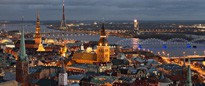
About Riga
Founded in 1201, Riga offers its visitors a vast historical heritage and modern dynamism that is unparalleled.
 READ MORE
Contact Us

Ms Sabīne Štāla
Contact person for logistics, security & general issues
- [email protected]
- (+371) 25638336
- View Map