

A modern political empire, trying to live the modest dream of pragmatic regional functionalism
18.10.2016The 2015 public consultation process on the European Neighbourhood Policy (ENP), initiated by the EU’s External Action Service and the European Commission, explicitly formalised the entity’s self-admitted necessity to redesign or even, perhaps, reformulate its framework on cooperation with the lot of designated neighbours. It became too obvious that the Eastern Partnership Programme’s Vilnius Summit in November 2013 was a dramatic failure for both High Representative for Foreign Affairs and Security Policy/Vice-President of the European Commission Catherine Ashton and Commissioner Štefan Füle. Something had to be done.
It did not take too long before a Joint Communication was issued in November 2015, delivering ‘Review of the European Neighbourhood Policy’ for the inner- and outer-audience. The 21-page document that was based on the feedback given by “Member States, partner governments, EU institutions, international organisations, social partners, civil society, business, think tanks, academia and members of the public” had to confirm yet another humiliation for the EU – a home for a half a billion people (out of whom about 20 million are tertiary education students), 25 million active enterprises, presumably a good hundred of world-class think tanks, and 28 Member States brought only 250 odd responses to the public consultation on a major policy initiative. Is the EU losing it completely? Arguably, the answer to this difficult question can be found if we try look at the EU from a post-Yalta-45 perspective.
Indeed, our time is when the Yalta-45-based range of paradigms are becoming overshadowed by new realities. What makes the post-WWII international system non-compatible with actuality is that some of its highly influential actors “‘look, talk and walk’ like empires” (Zielonka, 2012, p. 502), while often pretending that they are not. Certainly, there was a distinctly globalist ‘aftertaste’ detected when a vision on post-imperialism was offered by the Hardt and Negri’s seminal work, but “a single logic of rule” (2000, p. xii) is not quite what could be observed today. Therefore, an imperial paradigm has plenty of justification to appear and stay on in order to improve our understanding of interlinkages between those entities that, in Orwell’s surprisingly non-dystopian terms, are “more equal than others” (1945) and their periferia designato.
Most probably, the ulterior nature of modern empires can frame up a big challenge for any observer – as it was noted by Parker (2010, p. 127), “[a]n irony of arguing for the prominence of empire in geopolitics is that it is so often a form of geopolitics which dares not to speak its name”. However, there is something specific in an imperial course of action, and this factor dramatically increases a degree of a modern empire’s detectability by watchful observers in the field. It has almost become a daily routine for scholars of political science to converse on modern imperial entities, splashing the debate by the academically picturesque examples of the United States, China, Russia, and, would you believe, the EU. Rephrasing Luc Plamondon’s immortal line of lyrics from a popular musical, “Il est venu le temp des … [empires]” (1998). What is no less significant, a good number of the front-rank theoretical works on empires distinctly underscore the particularity of relations between an empire’s ‘centre’ and its ‘periphery’.
In the EU’s case, it took plenty of time for the large entity to realise that it has got a neighbourhood. The EU established the ENP in 2004 only, hectically responding in a functionalistic way to an obvious requirement to create a working framework, which would be in existence for accommodating an intricate set of relationships with the entity’s ‘piquant’ neighbourhood. The Policy appeared to become a multi-dimensional one, in an ironic way highlighting the privilege and luck of an EU’s neighbour to be designated by the entity as an EU’s neighbour. The 2001-2002 Romano Prodi-originated discourse on “where the limits of Europe lie” and how to “prevent these limits being determined by others” (2002) was one of the major elements of the EU’s sudden interest in designating its neighbourhood. The noble task to avoid “the emergence of new dividing lines […] [and strengthen] the prosperity, stability and security of all” (European Neighbourhood Policy, 2015) was supposed to assist the EU in communicating its messages through to the defined periphery.
On a practical side, as it was noted by Dimitrovova (2012, p. 253), the 2004 European Neighbourhood Strategy Paper declared the EU’s wish “to establish a ring of friends that will be gradually connected and integrated into the EU space of governance” – a definite sign of imperial behaviour. From the other angle, however, the Policy’s distinct bilateral nature framed conditional and somewhat neo-functional relationships with the neighbours on the case-by-case basis via Action Plans. Intriguingly, as suggested by Gould (2004, pp. 172-173) in a critical manner, the EU “was reaching the limits of its […] ability and willingness to resolve Europe’s strategic dilemmas through the process of enlargement”, therefore it was in search for a working framework “to halt further enlargement for those potentially eligible” (Edwards, 2008, p. 46). As a result, the EU, while arguably being in the list of modern empires, switched all its persuasive power on to divert the talk with the Eastern neighbours into a strictly functional debate.
Interestingly enough, as noted by Emerson (2011, p. 50), the EU’s idea on designating its neighbouring area was based on a genuine wish “to avoid neglecting ‘the new neighbours’” in the aftermath of the 2004 Enlargement. What is even more intriguing – the thought was on targeting Belarus, Moldova and Ukraine only. It was undoubtedly related to the then EU Commission President’s position on further enlargement and the declared necessity for the EU to actually have borders. When a reporter asked Prodi (cited in Hemmer Pihl, 2002) about ‘European’ political perspectives for Armenia, Azerbaijan and Georgia, the President’s reply was heard even in South Pacific:
People in New Zealand also feel that they are European. That is the problem. We cannot limit ourselves to considering the historical roots. We also have to give a natural size to the EU.
The above statement carried plenty of pragmatism and allowed for a discussion about the EU’s neighbourhood-connected initiatives as of been functionally orientated from their inception. Were it a strict policy to implement, it would be the policy to do so. Nevertheless, the EU’s ‘neighbourhood debate’ resulted in the acceptance of the most accommodating and super-holistic framework – the ENP. Not only did the Caucasus trio become parts of the deal, but also the EU’s Mediterranean neighbours were included in the list. In itself, the fact that the Policy’s bilateral Action Plans, designed by the Commission for the designated neighbours, were “bearing a strong resemblance to most of the 35 chapters of the accession process” (Emerson) had underlined the obvious – the EU was counting on the neo-functional spillover effect to do its magic, but this time it had to be done in the outer world.
It would mean that a serious clash between the EU’s exigent functional approach and the imperial aspiration would be detected. Without even admitting it for itself, the EU wanted to do few imperial ‘exercises’, even though those actions were clearly of ‘gentle’ political character.
It worked but only just, and after the five years that were spent on building interconnectedness with countries as diverse as Tunisia and Ukraine, the EU decided to ‘split’ the neighbourhood up into different cohorts. Prodi’s “the others” acquired shape during the 2008 Russo-Georgian War, and the Eastern Partnership Programme became reality after May 2009. By crafting it up, the EU sent its unnaturally clear geopolitical message to the world in regards of the entity’s Eastern European ‘targets’. The Treaty on European Union was pulled out from a dusty drawer to remind the international audience that the EU was designed to be open to all European countries.
In short, if an interpretational type of theoretical analysis is employed to study this and similar situations, one could underline a principle reason, because of which the EU was not fully capable to establish and maintain a proper strategy-driven framework on communication with its immediate neighbourhood, especially those in the European East. In this context, it could be argued that the ENP’s functionalistic nature has been constantly clashing with the EU’s status of a de facto contemporary political empire. The main claim here could be that if the EU would like to position itself as a functions-driven entity, while cooperating with its designated neighbourhood, it has all the geopolitical rights to enjoy relative freedom in clenching its gear in reverse. However, if the EU eventually admits who it actually is (literally – its imperial stance), then it is required to act in a less hesitant way in the process of expanding into periphery. Having looked at how cumbersomely the EU has been answering, for example, its ‘Ukrainian question’, it is relatively easy to identify that, say, the Eastern Partnership Programme has been in systemic conflictual situation with the EU’s empire-building process that is of inertial as well as unstoppable character.
For a more nuanced view on the topic, please see: Vernygora, V., Troitiño, D.R., & Västra S. (2016). The Eastern Partnership Programme: is pragmatic regional functionalism working for a contemporary political empire?. In T. Kerikmäe & A. Chochia (Eds.), Political and Legal Perspectives of the EU Eastern Partnership Policy (pp. 7-22). Springer International Publishing.
Tweets about us
#RigaConf TweetsAbout Riga
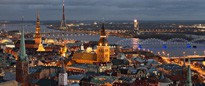
Founded in 1201, Riga offers its visitors a vast historical heritage and modern dynamism that is unparalleled.
 READ MORE
Contact Us

Ms Sabīne Štāla
Contact person for logistics, security & general issues
- [email protected]
- (+371) 25638336
- View Map