

Reducing the Risk of War in Northern Europe
01.10.2016After more than two decades of peaceful relations following the Cold War, northern Europe is again experiencing escalating political and military tensions. With both NATO and Russia’s rhetoric and military activity becoming more combative, there are numerous ways in which the situation could deteriorate into war and, conceivably, even the use of nuclear weapons.
Any use of nuclear weapons would be disastrous. The Stimson Center has conducted a series of simulations of possible NATO-Russian nuclear confrontations and found that even a “small” war, involving just four nuclear strikes against military targets, could cause roughly 100,000 fatalities, 70 percent of which would be civilians. A bigger war, one that ended, say, after twenty nuclear strikes in the region, would be catastrophic. The immediate results could include nearly 800,000 deaths; secondary effects would cause total fatalities to approach one million. In large swaths of the war zone, as well as in neighboring Nordic countries, civilian life and agriculture would be unsustainable for decades.
Nuclear war in northern Europe is clearly only a remote danger. But the escalating political and military tensions that have beset the region are increasing the risk, and any NATO/Russia military confrontation could escalate to conventional conflict and, conceivably, the possibility of nuclear use. However small, it is in everyone’s interest to take steps to reduce this danger. Both NATO and the neutral nations bordering the Baltic Sea can take separate, but equally important, steps toward reversing this rising danger.
NATO’s defense of its Baltic members
NATO officials have made clear repeatedly that the alliance stands as one in defense of all its members – both those in Eastern Europe and those in the West, both new members and the original founders. To bolster these words, the Alliance should strengthen significantly its conventional military capabilities to defend the Baltic nations and other members in Eastern Europe, thus eliminating any misperception on the part of Russian leaders that they could intervene and win a quick victory. The Alliance is already taking small steps to improve its relevant conventional capabilities, but should consider more robust options to avoid any temptation on the part of Russian leaders to orchestrate internal problems in a Baltic nation or nations, and occupy those nations so quickly that NATO would not be able to respond in a timely manner. Importantly, these steps should include the pre-positioning of equipment for a U.S. armored brigade in each of the Baltic States, along with establishment of a divisional headquarters and support units in Poland. The ground and air forces that NATO rotates through the region to exercise with local forces also should be enlarged and should be engaged continuously. Finally, as demands for US forces in the Middle East draw down, the US should return an armored division to Germany, where the infrastructure to house it largely still exists.
The Russians will complain bitterly about such moves, just as they have about the small improvements already made. But the history of relations between Russia and western nations shows that demonstrations of strength tend to deter Russian aggressiveness and failures to repair weaknesses only encourage greater demands and assertiveness.
An opportunity for Nordic disarmament leadership
Second, there should be a complementary diplomatic initiative, the beginnings of a dialogue on creating a nuclear weapons free zone (NWFZ) encompassing all nations and regions bordering the Baltic Sea. NWFZ already cover most of the Southern Hemisphere, including Latin America and the Caribbean, the South Pacific, Africa, and Southeast Asia. Establishing a new such zone covering the Baltic would be a logical extension.
Implementing a Baltic NWFZ would necessitate removal of NATO nuclear weapons from Germany and Russian weapons from Kaliningrad, if they are there already. All other nations bordering the Baltic Sea are already nuclear free. Removing the weapons from Germany would be opposed by some NATO members, who see them as important political symbols – despite broad agreement that they are useless militarily. But the gain of ensuring that Russian nuclear weapons are not placed in Kaliningrad is well worth the loss of empty political symbols.
Working toward such a zone would create a positive political alternative to the escalating rhetoric about nuclear threats and dangers. It would provide a rallying point for those seeking to turn Northern Europe into a zone of greater peace and tranquility. And it would reinforce long-standing norms against the use or threatened use of nuclear weapons.
Both Sweden and Finland have a historic track record of pioneering new ideas concerning the reduction of nuclear tensions and movement toward disarmament and, indeed, separately proposed Nordic/Baltic nuclear-free zones in the 1970s. They would be the logical initiators of such a dialogue.
In current political circumstances, establishing a Baltic NWFZ may be unacceptable to Russia and, as noted, some NATO governments. A discussion of such possibilities, however, could have positive political effects. And, if political relations between Russia and NATO improve in the future, implementation of the Baltic NWFZ might just become a reality.
Tweets about us
#RigaConf TweetsAbout Riga
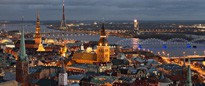
Founded in 1201, Riga offers its visitors a vast historical heritage and modern dynamism that is unparalleled.
 READ MORE
Contact Us

Ms Sabīne Štāla
Contact person for logistics, security & general issues
- [email protected]
- (+371) 25638336
- View Map